2022 in review: Modesto Bee journalists share the work that meant the most to them
The Modesto Bee published more than 2,300 local stories over the past year. We covered business openings and closings, major weather events, countless city council and board of supervisors meetings, the third year of the COVID pandemic, football championships and a host of other stories.
We aimed to tell the story of Modesto and Stanislaus County as fully as we could, knowing our readers depend on us. Some of the stories were heartbreaking; others revealed major problems with the way our government works. Some focused on keeping you safe and helping you live your daily lives more effectively. Some focused on resilience, others on despair.
Our journalists take immense pride in the work they do. Today, they look back on a few of the stories that moved them and share their insights about those.
We look forward to bringing you vital stories throughout the coming year. Thanks for reading.
Keith Campbell, Interim Senior Editor
The Modesto Bee
Changes to California’s murder felony law
This time of year, you often find articles about new laws going into effect on New Year’s Day. It’s important for people to know about these laws, but their impact sometimes won’t be known for years.
As the criminal justice reporter, I saw how a 2019 change to a murder law affected some local cases and I wanted to examine it further — from the second chances it brought some defendants to the reactions of the victims and their families.
I highlighted one case that involved many victims of a home invasion robbery crew. The victims were told the criminals would be behind bars the rest of their lives, mostly due to convictions for the attempted murder of two sheriff’s deputies in the hours leading up to their arrests. So when I called them or showed up at their doorstep to tell them the getaway driver had been released from prison, some were angry, some were scared and all shocked.
I also talked to the getaway driver, a woman who said she is remorseful for her actions and is committed to living a different life now that she has been given a second opportunity.
Automatically stigmatized, she took a chance when she agreed to be interviewed for the story. When I was done writing this story, I empathized with everyone involved and hoped readers did as well.
-- Erin Tracy, criminal justice and breaking news reporter
Basic access most take for granted
How to reduce homelessness and the problems caused by some homeless people are top concerns for many. And I share them.
I’m beyond frustrated when I can’t use a park bathroom because the city has locked it after it has been vandalized or misused too many times. And I hate seeing the clothing, leftover food and junk left along the Virginia Corridor Trail.
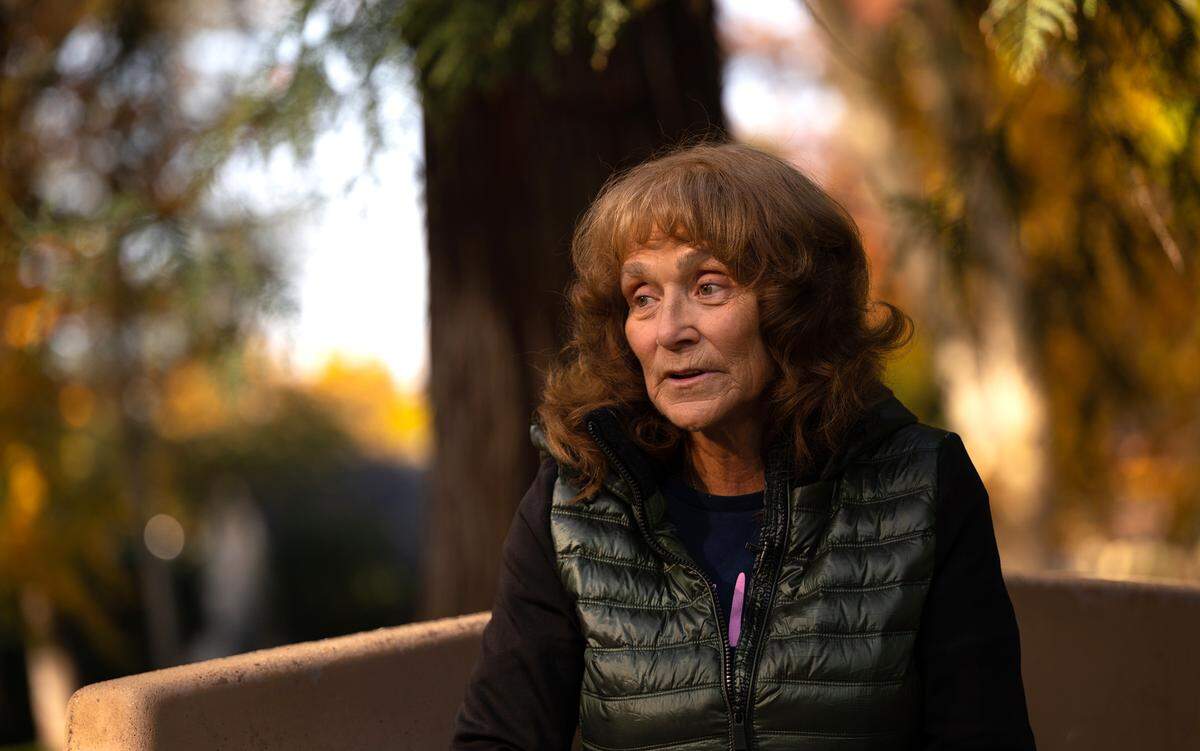
In January, I wrote a story about what some Modesto homeless people thought of a city safe parking program that would provide a place for people who live in their cars to sleep at night.
The story reminded me that the homeless are like everyone else. They’re people with quirks who are doing their best. That means they can be stubborn and not always act in their best interests.
The story also reminded me of the indignities and fears they endure, from not having ready access to clean bathrooms to worrying whether they will be attacked when they are sleeping. And it reminded me that despite their best intentions, the solutions officials offer can fall short.
-- Kevin Valine, local government and homelessness reporter
An unmistakable feeling, an indelible image
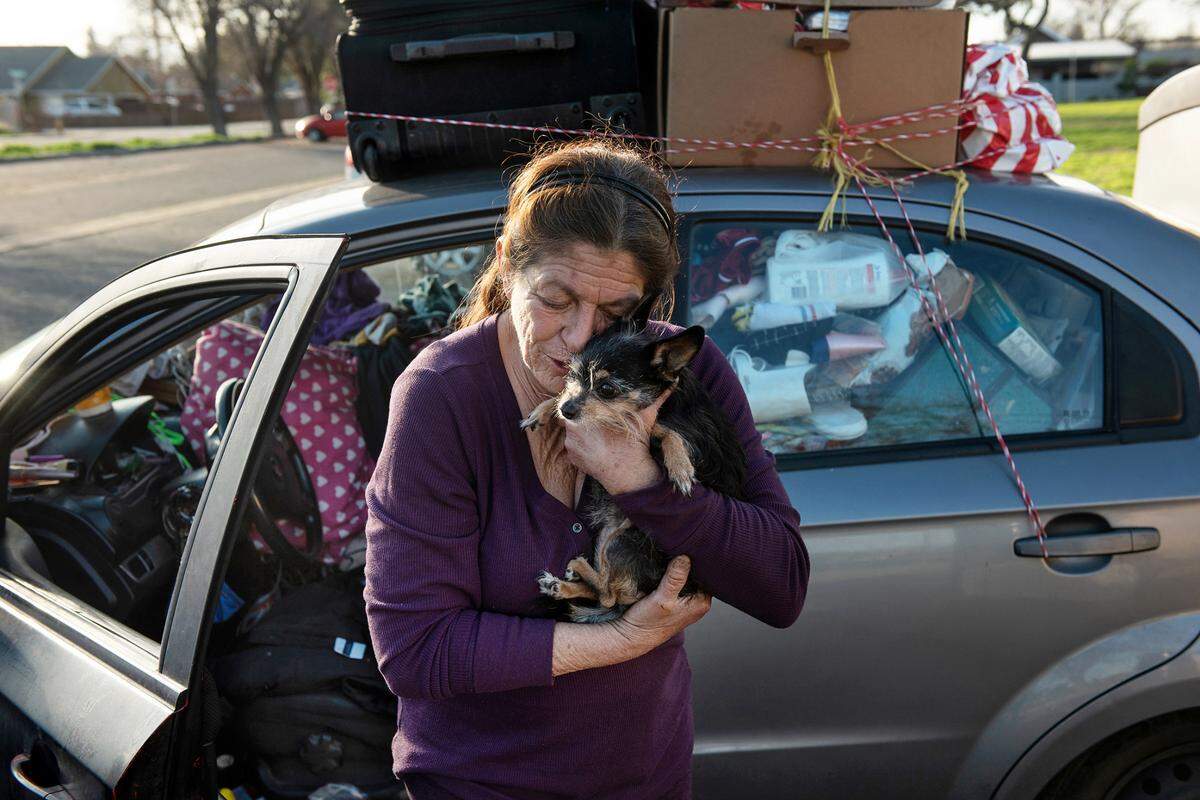
It’s an unmistakable feeling when you see someone living out of his or her car. You’re immediately aware that this person needs help. Ladonna Doshier is one of dozens of people living out of their cars in Modesto, fiercely independent, maybe stubborn, waiting for a chance to have a home.
Having covered homelessness over the past few years, I see that shelter services for the unhoused in Modesto have improved. More people are using the shelters, but as economic conditions have degraded, I see more people on the streets, living in their vehicles.
Some people prefer living alone. With the comfort of her dog, Li’l Miss Missy, Doshier proclaims her self-sufficiency, refuses to go to a shelter and chooses to live in her car.
In January, Kevin Valine and I were out on a story about the city proposing the creation of a parking area for car campers. We talked to Doshier and several other people who were holding onto their independence in this unpredictable living situation. Most said they would support the idea of a safe parking area.
My video choice is from March. Ronald Ray Anderson, one of several young men involved in the June 1979 killings of Kathy and Phillip Ranzo, had been granted parole during a Dec. 28 hearing. Gov. Newsom eventually reversed the decision of the parole board. The video was about the family’s efforts to keep the Ranzos’ killers behind bars.
--Andy Alfaro, photographer and videographer
The struggles of small business owners
While I’ve written several stories I’m proud of this year — from revealing a sudden policy change from the new hedge fund owners of Valley-born Save Mart Supermarkets that hurt its longtime retirees to rediscovering the long-ago history of downtown Modesto’s once-thriving Chinatown neighborhood — the story I think had the most impact was about a locally owned cafe that closed after almost 30 years.
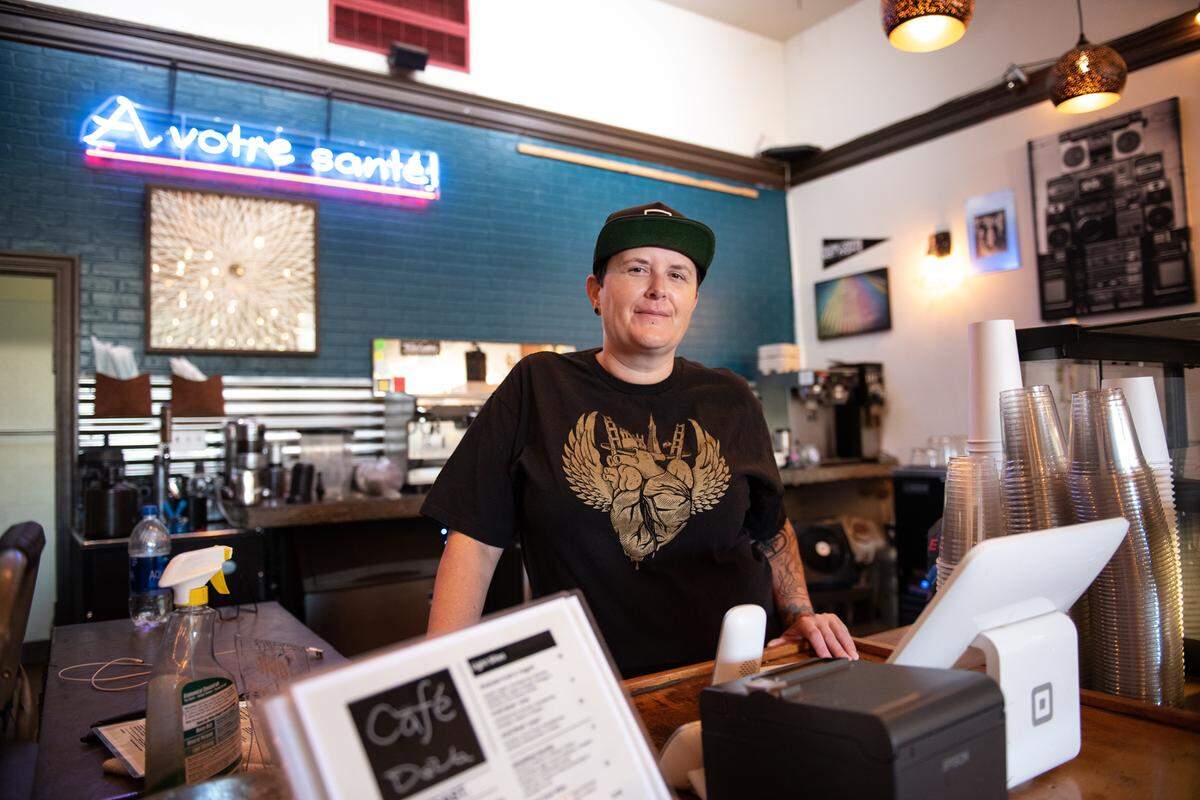
The closure of Deva Cafe, which over the decades became a downtown Modesto arts mecca for live shows and local artwork, was about more than one small business shutting down. It reflected the unfortunately growing reality for many local restaurant owners coming out of the pandemic. After more than two hard years on the roller coaster of COVID restrictions and safety guidelines, life is still hard for these small mom-and-pop business owners to make ends meet.
Deva Cafe owner Heather Elkins, who took over the cafe near the start of the pandemic, was simply burned out from first dealing with COVID and then staffing issues and now the ongoing inflation crisis. A dozen eggs have more than tripled in price, yet owners can raise their menu prices only so high before customers stop coming in. Sadly, her decision to close now in the twilight of the pandemic is one I think more and more small business owners will be making as they take stock of the past few years and what’s ahead. The story was followed by a series of other locally owned longtime small business closures, from Yesterday’s Books to Concetta and Edwards Jewelers to Beijing Restaurant.
-- Marijke Rowland, business and development reporter
The long road to COVID recovery
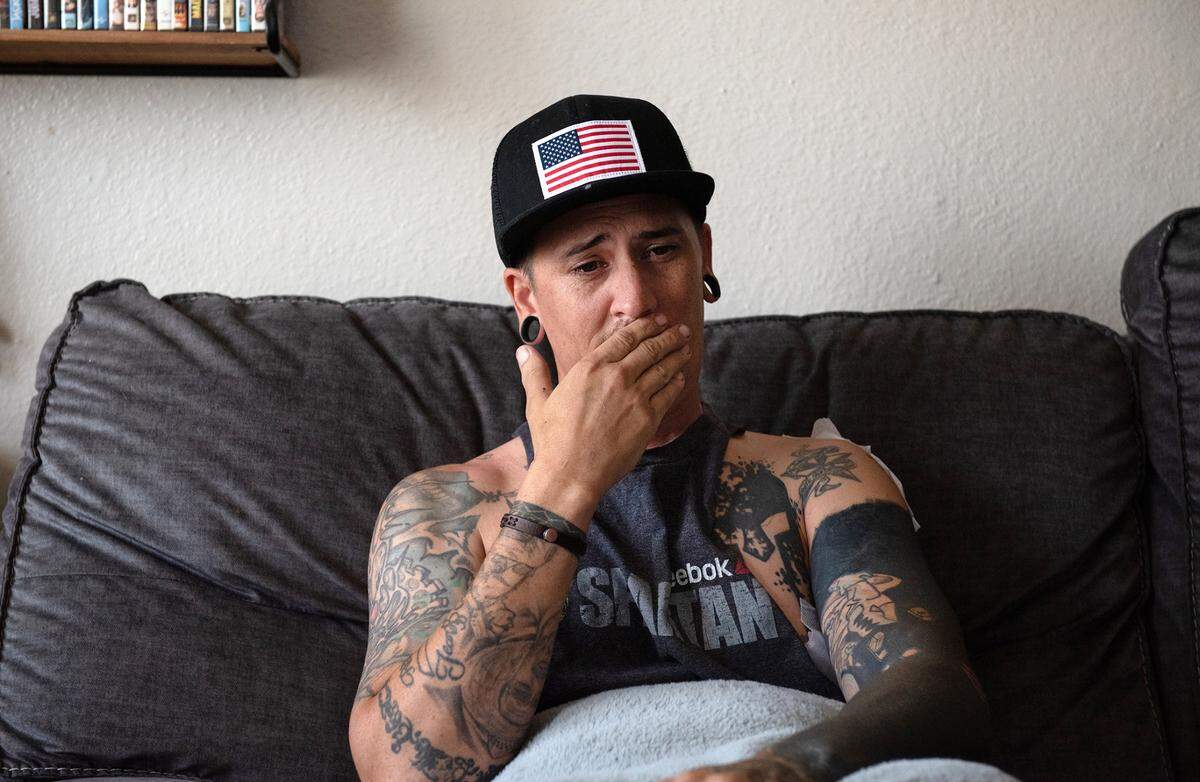
Last February, I decided to find COVID-19 survivors to see how they fared months or even years after release from hospitals. We have all heard about the mysterious “long COVID” — people who barely had symptoms at first and are sadly struggling with long-term health problems a year or more later.
But much less has been reported on people who were hospitalized and discharged home with scarred lungs, oxygen tanks and damaged organs and facing months of recovery or long-term disability. Blood clots are on the list of COVID symptoms, but I heard this one symptom may involve months of rehab and complications.
I routinely reported the COVID-19 death toll in Stanislaus County and other available data, but it’s not a true picture if we ignore the survivors whose lives were marred by this awful virus.
-- Ken Carlson, county government and health care reporter
A game-changing way to fight megafires
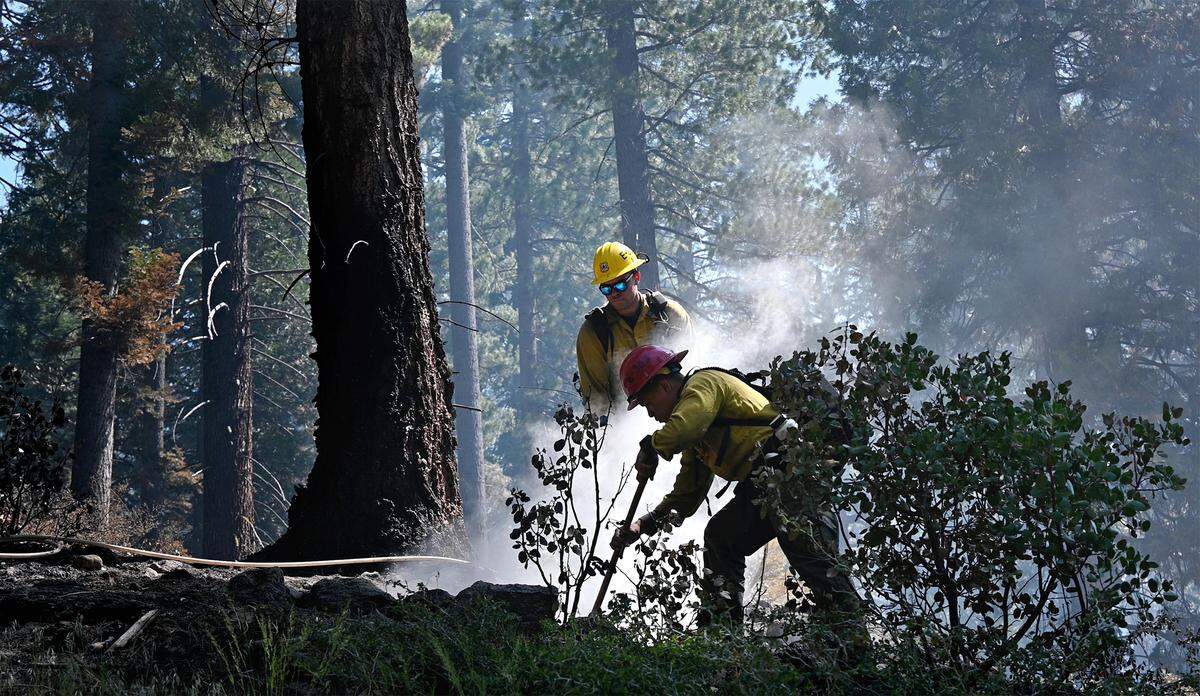
I spent a Friday in May with loggers and environmentalists who had agreed, finally, on what to do about megafires.
The Stanislaus National Forest hosted a tour of areas that had become too dense over the past half-century. Crews are using selective logging, prescribed burning and other measures to get the woods back to a more natural condition.
The work leaves larger conifers in place that capture some of the carbon involved in climate change. Fewer trees sucking up moisture also means more runoff to farms and cities. And Central Valley residents will breathe easier if huge fires no longer send smoke their way.
This is personal. I began my journalism career at the Sonora Union Democrat in the 1980s, when environmentalists and the timber industry were far apart. The forest got more and more dense, fueling megafires in 1987 and 2013. Today there is agreement, and government funding, to make real progress.
-- John Holland, agriculture and transportation reporter
Struggling to deliver on the American Dream
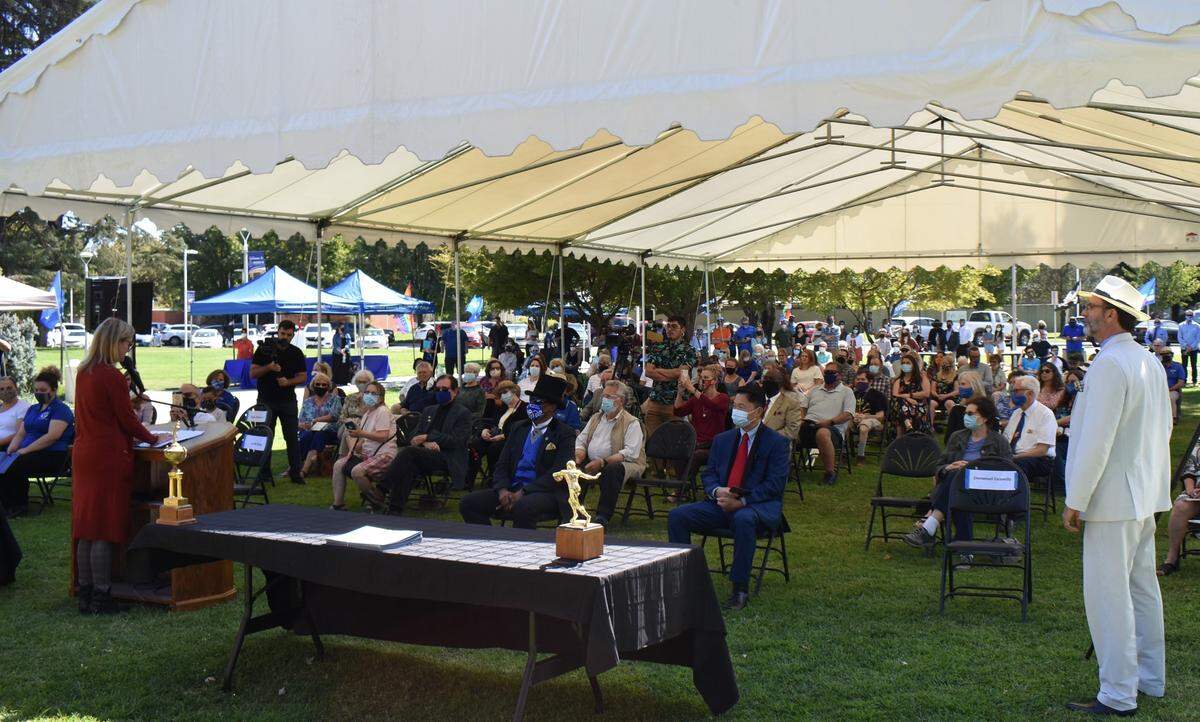
Modesto Junior College has roughly 23,000 students, and the majority are considered “economically disadvantaged.” It’s the kind of institution where the American Dream is possible, where someone can attain an education and graduate with opportunities beyond their parents’ imagination. But MJC has struggled to live up to that dream.
The college has the highest CEO turnover rate out of any California community college, with 16 presidents in the past 22 years. The Bee has covered that leadership issue extensively over the years. I took a new approach to MJC’s issues by looking into a different but related trend: high school students who struggle to enroll in MJC classes.
Long considered an option only for high-achieving students, taking college classes in high school, otherwise known as dual enrollment, has grown over the past few years as educators see it as an opportunity to increase college readiness.
A source sent me a slide presentation from 2020 showing that MJC had the lowest rate of dual enrollment in the Central Valley. I wanted to know why.
I met with experts who study dual enrollment. Then I started interviewing high school teachers and administrators off the record. They were frustrated with MJC but feared that by speaking out, they might lose the little progress they’ve made. I talked with MJC to understand how leadership turnover had affected the program and left high school students in a lurch when they tried to enroll. Finally, I met a student named Nataly who had saved thousands of dollars by taking college classes while in high school. She reminded me what this story was really about: helping students graduate college with less debt.
The Yosemite Community College District has known dual enrollment is a problem area and has quietly chipped away at it. The problem, high school administrators explained, is that the progress is too slow. At next month’s YCCD board meeting, progress on dual enrollment will be shared with the public. I’ll be covering it.
-- Adam Echelman, equity/underserved communities reporter
Supply chain issues on the gridiron
While talking to coaches in preparation for my preseason high school football coverage, I noticed a few programs had a common problem: not enough equipment, mostly helmets.
One Patterson High player had to miss the first few games because he didn’t have a helmet. Hughson High uses black helmets, but for a few weeks had one player with a blue helmet because it was all the coach could find.
It isn’t just a California problem. States like Michigan and West Virginia experienced it in 2021. It could stretch into next season, too.
I found out that it was due to a variety of factors.
First, factories were simply overwhelmed. Schutt and Riddell are the two main on-field headwear manufacturers and they have to repair pro, college and high school helmets every offseason. In that order.
Local participation is back up after COVID, so extra players mean extra helmets must be ordered. Companies ran out.
While it looks like it will continue to be a problem, the solution can be as simple as ordering necessary football equipment just a couple of months earlier to make up for delays in shipping.
-- Quinton Hamilton, sports reporter

Shedding a light on leaders and their views
The Modesto Bee Editorial Board’s interviews with candidates for political office continue to be well-received by readers — and by viewers checking out these debates posted on our website. They seem to appreciate this way of getting to know leaders and future leaders, hearing their views on issues important to all of us and seeing how they interact with others.
In all, we posted 11 of these forums before the fall election (not counting those done for the June primary) and produced 18 endorsements (some forums featured candidates for multiple offices). And for the first time, we jointly held forums with The Fresno Bee, a sister paper, and with The Stockton Record, which is not in the McClatchy company, when political districts overlapped with those newspapers’ coverage areas.
I write columns periodically. Here’s one that stands out for me:
A customer waiting for McNuggets in a Ceres McDonalds was stabbed in a confrontation with a food delivery driver, and almost died. The victim felt that our article, which relied on a police version of events, was incomplete and shared with me his side of the story. He said he was sticking up for harried restaurant workers harassed by the driver’s wife when the driver attacked him. More online readers clicked on that column than any other I wrote in 2022.
-- Garth Stapley, opinions page editor