‘It’s horrible’: How supply chain issues are affecting Modesto-area high school football
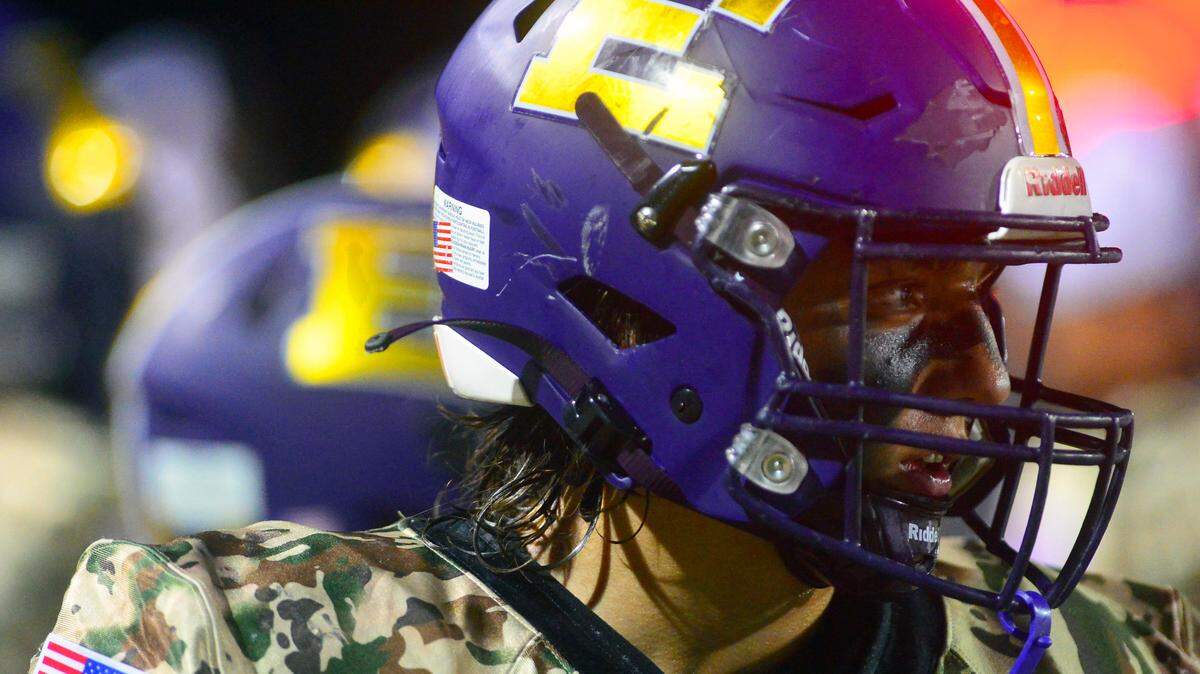
When the Patterson High football team started official practices July 25, coach Rob Cozart realized he had a problem: He didn’t have enough helmets for his team.
Before sending the school’s helmets to Schutt Sports in Texas for reconditioning in December, Cozart ordered 12 new ones. This came in handy when he found out in May that his equipment hadn’t even made it into the Schutt building yet.
He was told that instead of getting his helmets back in April or May, he’d get them in June. Which would have been OK. Then it was pushed back to July. Then he was told they wouldn’t be ready until later.
“Basically, in June, I only had 12 helmets that I could use,” Cozart said. “And I could not buy any more new ones anywhere.”
He had to have the helmets rerouted and shipped to Continental Athletic Supply in Gridley, which got Patterson 85 of its 105 helmets inspected, reconditioned and back in time to hand out July 21.
As for the rest of the helmets?
Cozart says he just got back four last week.
For the past few football seasons, it seems like if it wasn’t one thing, it was another.
The helmet issue is nationwide. States including Michigan and West Virginia were impacted before the 2021 season. This season, the problem made its way west.
“It’s horrible,” said Hughson coach Shaun King, who scrambled to outfit his team prior to the season. “It’s still a problem and I’m already worried about next year. I was able to buy a couple more (helmets) online. They’re just not black. So I’m willing to take anything there is out there.”
Some teams are seeing player numbers rise, which is good, but that means after two down years where they had more than enough equipment, schools now are coming up short.
“We have about 18 to 20 extra guys this year,” Escalon coach Andrew Beam said. “We have 118 players this year versus only having usually about 98.”
Patterson is also experiencing record numbers in its program. Players can’t share helmets, so one player missed the first three games because he didn’t have one until last week. He will also miss Friday’s contest because of the 10-day practice rule. Students have to practice 10 days before they can play in a game. Getting reps in a helmet isn’t required, but Sac-Joaquin Section Assistant Commissioner Will DeBoard says it is recommended.
Combine that with a Riddell factory fire in 2020 and supply chain issues and it makes for a tough time.
Hughson was able to scramble to get helmets for the season, but for a period of time could find them only in blue. “It’s brand new and it fits perfectly, I’m not really worried about what color it is,” King said. “The kid is safe. If we had to have all the same color helmets, there’d be a lot of high schools not playing football this year.”
Recertification causing issues
Losing some helmets is common.
Coaches send helmets to Riddell and Schutt factories after every season for inspection and recertification. Helmets are sent in months ahead of time and usually returned in weeks. This year, things were different.
In a normal offseason, an average of 5% to 10% of helmets don’t pass inspection. The more helmets that get rejected, the more new ones a school district has to buy.
“In a normal year, if you buy a helmet, you’re gonna get it probably within two or three weeks,” Downey coach Jeremy Plaa said. “Normally they have plenty of supply and they just ship you whatever you need. But now, it’s hard to say.”
Additionally, most helmets have a 10-year maximum shelf life. Once a helmet becomes five to six years old, the likelihood of being rejected by Riddell upon inspection increases dramatically. Helmets reaching close to the 10-year mark don’t even get sent in and need to be replaced.
This is a problem Modesto City Schools is running into.
“They’re phasing in new helmets to replace them, but the retail warehouse is so backed up on orders that it took forever to get those new helmets this year,” Plaa said. “That was a problem for not only schools in our district, but pretty much all over the nation. Everybody was waiting on backordered helmets.”
Are there other options?
Schutt and Riddell are the two main suppliers for the vast majority of football players, regardless of level.
During the 2020 NFL season, 76% of NFL and 86% of NCAA D1-FBS players wore Riddell, according to the company.
The company continues to introduce helmets with new technology designed to lower the risk of concussions. It did this with the Speed and the most common helmet at any level, the SpeedFlex. The company recently introduced a new helmet, Axiom, that has slowly made its way to NFL, NCAA and even some high school fields.
Plaa said Modesto City Schools uses Riddell, as does Beam in Escalon.
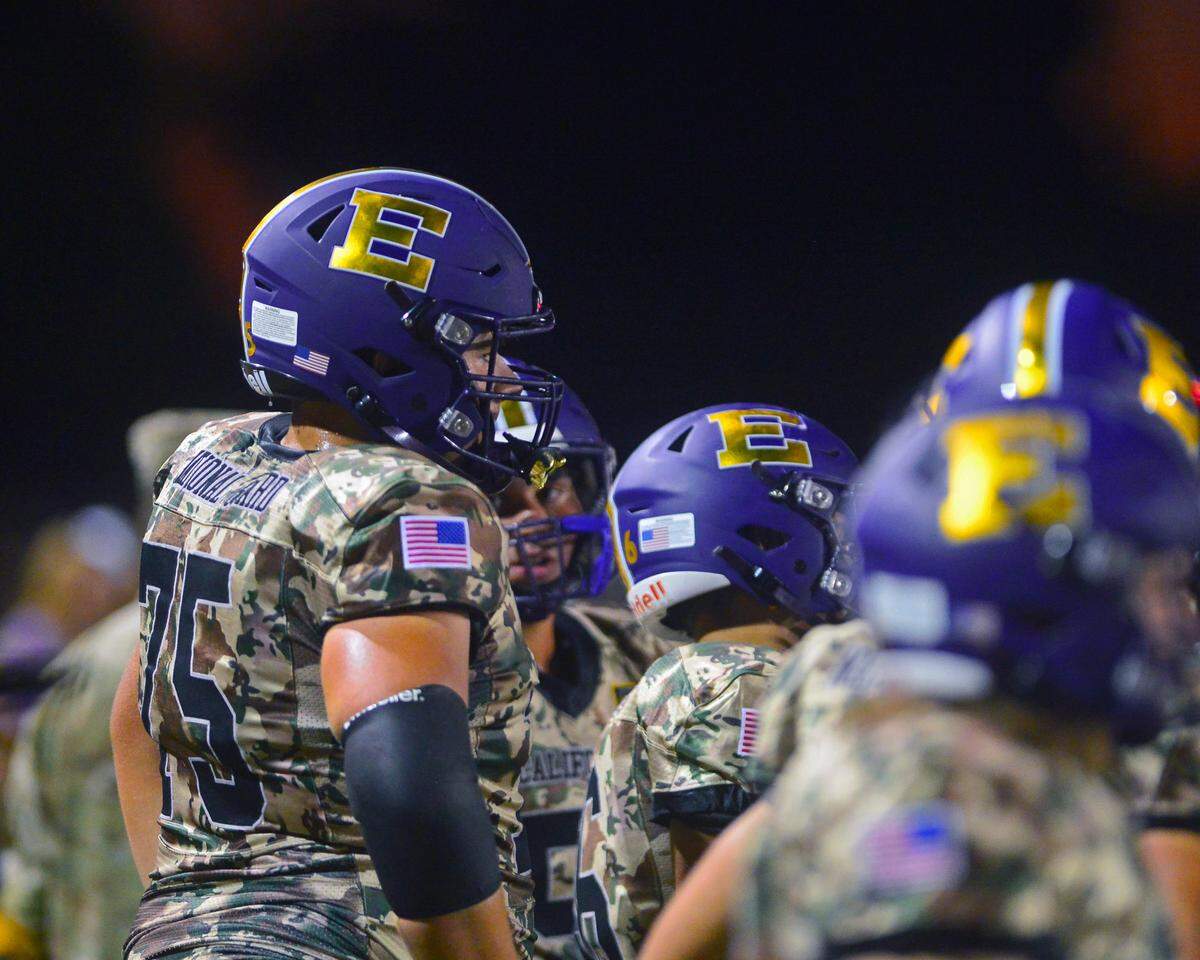
Schutt’s safest helmet, the F7, came out in 2017 and since has had many updated versions to keep up with advances in technology to maximize protection. Some of the most commonly used models include the F7 LTD and F7 UR1.
Patterson mostly uses Schutt.
While other companies exist, schools might have reservations about using them for various reasons.
“There’s not many other helmet companies out there because if you’re a school district, you need to make sure that when you buy a helmet, it is backed up with a solid company and a solid insurance plan.” Plaa said.
But desperate times call for desperate measures. Some schools checked with any company they could. No luck.
“We’ve always been Riddell, we know those helmets so it’s a little easier to work with them,” Beam said. “But we tried to call Xenith, we tried calling Schutt, we couldn’t get them from anywhere.”
Said King, whose Huskies also use the Riddell SpeedFlex: “You can’t buy one if you wanted to. There’s none in the country. My rep told me it’s NFL first, college second, high school last. Not to mention the youth program.
“It’s hard to have an open checkbook, wanting to purchase something, and they’ve been telling me, ‘I don’t know if I can get that to you before 2023.’”
It’s not just helmets
The problem expands past helmets. Local schools have had problems getting other game day equipment delivered in a timely manner.
“It’s a problem with uniforms also,” King said. “For the longest time I couldn’t find a black or black hat for the players. This year, I had to get a black and yellow hat because there was no black hat for me. It’s a supply chain problem throughout the whole country. Not just helmets, but with everything.”
Escalon was supposed to have three jerseys this year. After three weeks of games, the Cougars are still waiting on white away uniforms. They’ve already played a road game this season and two of their next three are at Kimball and Hilmar.
“We still don’t have our white jerseys,” Beam said. “We have zero away jerseys. We ordered those back in March and still don’t have them from Under Armour.”
One set of jerseys is getting more use than was originally planned. They have to coordinate with schools they travel to, explaining the situation and hoping they have a dark enough home jersey, or are willing to wear their away jerseys at home.
“We have gray and we have purple and so we were able to wear gray (Week 1) on the road and we will wear purple for home games. But we’re in a little bit of trouble if teams don’t want to cooperate.”
The Cougars’ coaching staff was also on track to get new shirts for the upcoming season, but their polos were backordered. They arrived from Under Armour last Tuesday and were on the coaches’ backs Friday night.
Is there a solution?
Most coaches had to make do with what they had during the offseason or use their resources and ask around to borrow from other schools. Downey had to borrow helmets from Modesto and Enochs. Escalon and Hughson borrowed from Chavez and Stagg high schools, respectively.
On July 28, Riddell issued a statement in response to inquiries about football equipment.
“Since the onset of the COVID-19 pandemic, there has been a series of global issues – supply chain, transportation, and labor shortages, to name a few – disrupting access to protective equipment for the football community.” the statement began.
The company outlined that it encouraged early ordering and, heading into this season, it was prepared to ship 10% more helmet units including more than 20% of youth helmet units compared to 2019. To complete all preseason orders, they stopped taking new orders for the 2022 season during the summer.
“Looking ahead to 2023, Riddell is aggressively pursuing plans for expanded production capacity to supply even more of the marketplace.” Riddell said.
For a problem that could go on into next year, the only reasonable solution could be to plan ahead. Way ahead.
“Last year I think we purchased them early, technically, but because of the backorder problems we got them so late this year,” Plaa said. “I’m hoping our district will put in their new order sometime in the next month or two because it might take until next summer before we even get them.”
This story was originally published September 8, 2022 at 6:30 AM.