This program saves students money and time. Modesto’s is among the worst in the state
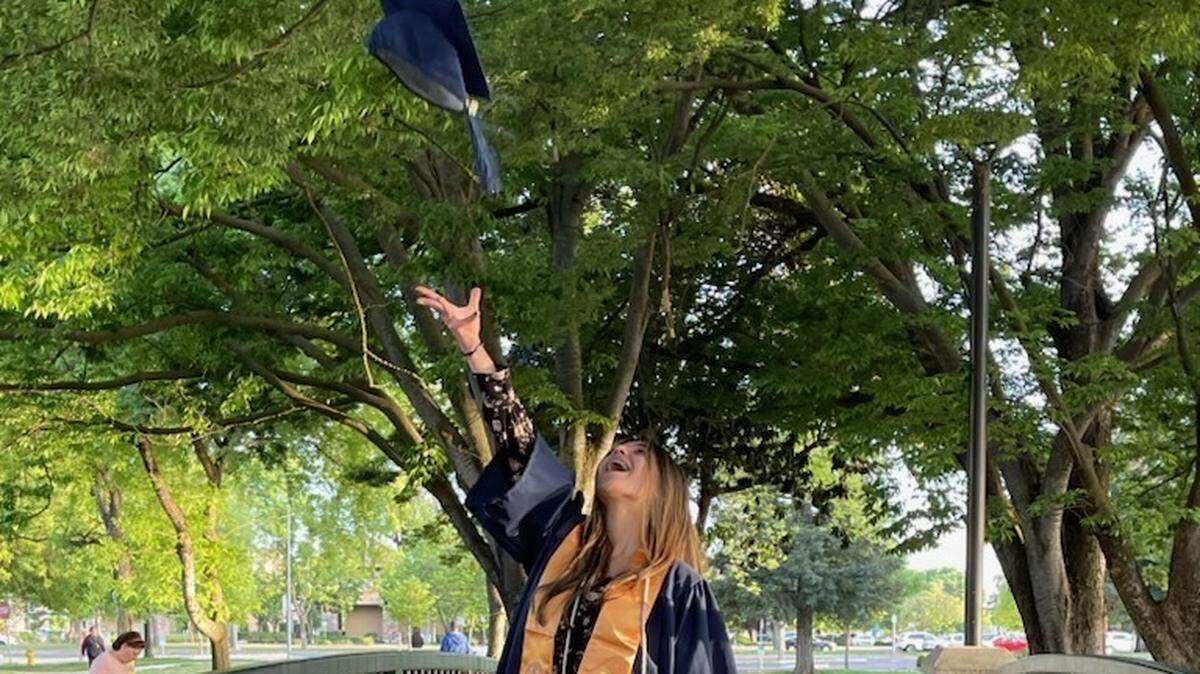
Nataly Frias is 19, but she’s already a senior at Fresno State. Because she enrolled in college classes while at Turlock High School, she has skipped two and a half years of school and saved more than $50,000.
She is on the fast track to success now – she expects to be a registered nurse with limited loans by the age of 22.
Most Stanislaus students don’t have that privilege. “Not enough people are aware that it’s an option,” she said and explained that she independently enrolled in classes with help from her parents, who work at Modesto Junior College and Merced College.
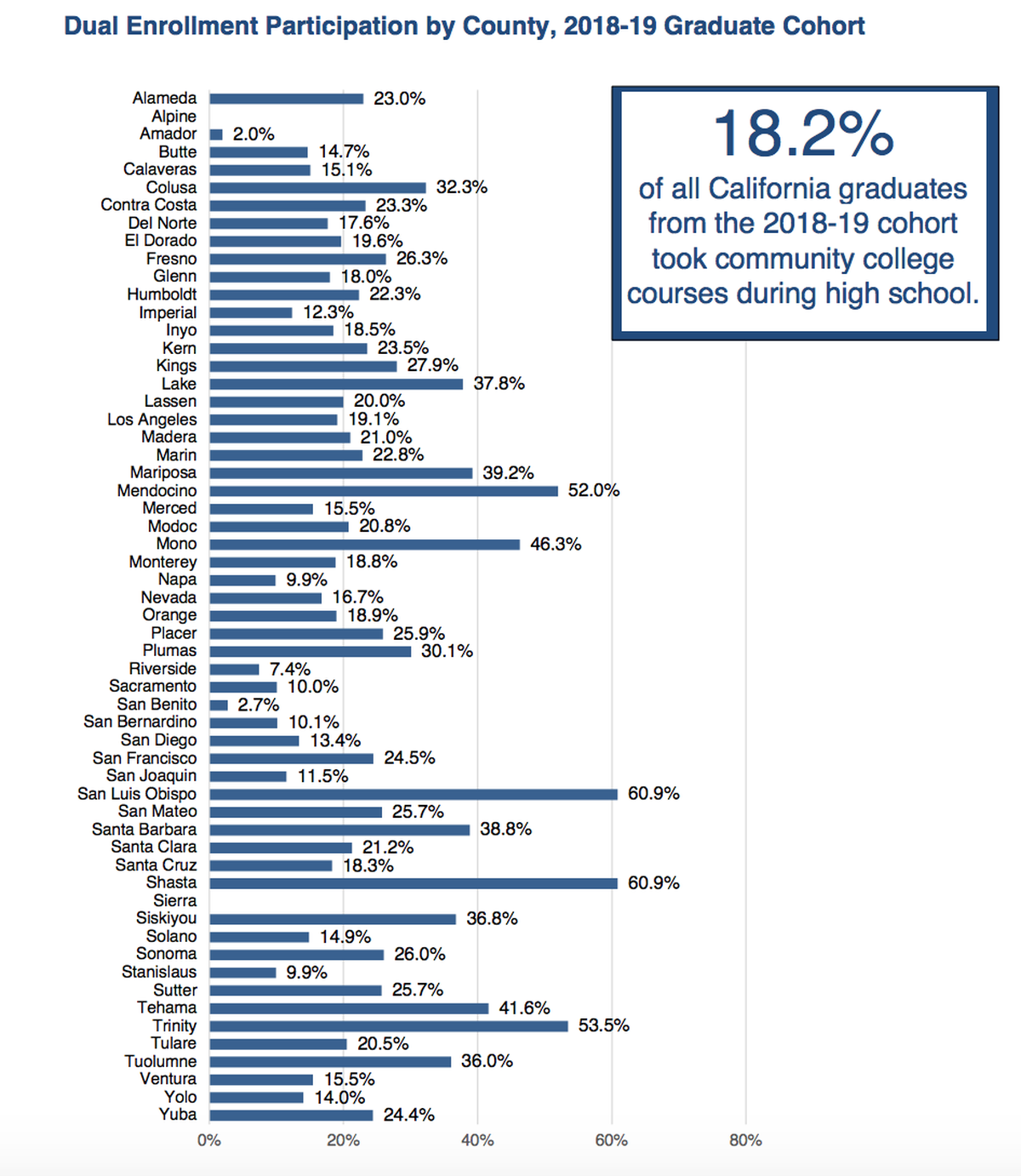
More than 120,000 high school students across the state are taking college classes, according to the California Community Colleges chancellor’s office, but Stanislaus County is far behind the trend. The most recent report, using data from the 2018-19 school year, shows that Stanislaus has the lowest rate of joint high school and college enrollment in the Central Valley and one of the lowest in California.
Recent years have seen little progress. “The pandemic just made all that stuff harder,” said Brian Sanders, MJC’s interim vice president of instruction.
For years, high school administrators and community leaders have called on Modesto Junior College for help and returned frustrated, they say, and point to leadership changes, poor communication and a lack of flexibility at the college.
At peer institutions like Merced College and Bakersfield College, administrators work together to assist interested high school students, offer college classes during the school day designed for high schoolers, and streamline the enrollment process. It’s all part of a new model known as dual enrollment that is lowering barriers to college access.
Stanislaus County, by contrast, has few dual enrollment classes. Local high school students have to navigate the college system alone, and relatively few choose to do it.
“These are fixable things,” said Amanda Hughes, chief strategy officer with the Stanislaus Community Foundation. Hughes sees the issue as a way to promote equity and college readiness and facilitated a meeting where high school principals aired their frustrations about dual enrollment. The conversation left her concerned, especially for local students.
How Merced came out ahead
Widespread research shows that the act of taking college classes in high school can boost the likelihood that students graduate high school and succeed in college.
Dual enrollment is particularly beneficial for low-income students and students of color, who are less likely to seek out college classes on their own, the way Frias did. Offering these college-level classes at the high school helps first-generation and low-income students see themselves as “college material,” said Naomi Castro, senior director of the Career Ladders Project, an Oakland-based nonprofit group. At the same time, it enables students to save time and money, by graduating earlier and facing fewer loans.
Unlike Advanced Placement or International Baccalaureate classes, which require students to pass difficult and costly exams to obtain college credit, dual enrollment classes work like regular college classes, where a passing grade is all you need.
In 2017, state lawmakers saw the benefits of dual enrollment and set up a new system to expand it. That system relies on a special agreement between colleges and high schools, known as a California College and Career Access Pathways (CCAP) contract, which allows high schools to offer college classes on site that are exclusive only to their students and take place during the school day. These agreements also set parameters that allow high schools and colleges to work more easily together.
Central Valley colleges jumped at the opportunity. In 2018, Merced College struck a CCAP agreement with Merced Union High School District and quickly executed contracts with seven other districts. Almost any high school student in Merced County now has the opportunity to take college-level English or math during the school day and get credit for it, said Merced College enrollment dean Greg Soto.
Merced College created Soto’s position and hired more than 10 other staff who have “a significant percentage of their job working with the K-12 population,” he said.
Today, Merced Union High School District wants to have every student receive some college experience before graduating. It’s a bold goal, but Soto supports it. For him, and many others, dual enrollment is part of “closing the equity gap.”
A lack of ‘college knowledge’
MJC pales in comparison. A report from the Career Ladders Project found that Merced College enrolled 1,299 high school students in the fall of 2020 while MJC enrolled 938. Stanislaus high schools have roughly twice as many students as those in Merced County.
MJC also has fewer staff dedicated to dual enrollment than Merced College.
MJC has only one CCAP agreement in operation, with the Aspire public charter schools. Agreements with other area school districts including Turlock Unified, Ceres Unified and Patterson Unified are still in progress. MJC has a CCAP contract on file with Modesto City Schools from 2017 that grants the high schools the opportunity to teach college-level English and math, among other subjects. Modesto City Schools never implemented the provisions set forth in the agreement. Both Sanders and district spokeswoman Linda Mumma Solorio acknowledged that the 2017 contract was too restrictive. Now, MJC is working on a new contract with Modesto.
Sanders did not know how long the CCAP negotiations had been taking place with each school district but noted that his team at MJC has prioritized the issue.
While MJC can offer dual enrollment without a CCAP agreement, the logistics are complicated and create barriers for some students.
For example, such an agreement requires that college fees and textbook costs are waived for high school students, said Sanders. But because most local school districts lack CCAP agreements, students end up paying for their own textbooks.
More than half of the college classes available at Turlock high schools for spring 2023 have an associated textbook cost. The average textbook for those classes costs about $100.
“It is still extremely stressful when we find out students need a textbook at the last minute (which is common), but we have developed a team to work on that, as well as a way to help with the cost for students who are earning credit during our school day,” wrote Paul Rutishauser, director of secondary education with Ceres Unified School District, in an email to the Bee.
Communication is another common challenge. Without a CCAP agreement in place, high schools lack access to MJC data about which students have enrolled in college classes and how many credits they apply for. If students take too many credits, they face fees. The lack of communication can leave high school administrators unable to advise and support their students.
“We have had students charged hundreds of dollars for enrolling in courses over the limit and students who have F’s on their college transcripts who did not remember they had enrolled in a course,” said Turlock Unified School District spokeswoman Marie Russell in an email to the Bee.
Modesto City Schools offers a limited version of dual enrollment at Beyer and Davis high schools through a separate agreement, unrelated to the 2017 CCAP contract they signed. Enrollment for that program has stagnated or declined since 2019, even though overall demand for college classes has grown.
The difference is that most Modesto students who take college courses from MJC do so independently, like Frias. Castro said that requires a level of “college knowledge,” i.e., prior exposure to college or well-informed parents, which many first-generation students lack.
“We’re definitely not where we want to be,” said Brad Goudeau, Modesto City Schools’ associate superintendent of educational services. He pointed to the new CCAP agreement discussions with MJC as a promising development, which the district plans to finalize by the 2023-2024 school year.
Solving systemic problems
Castro, who works across California, said many of the challenges facing MJC are shared by other community colleges in the state. For example, high school teachers must have a master’s degree to teach at the college level or else college professors must travel to the high school. Enrollment poses bureaucratic problems, too, because high school students are not full-time college students.
“These are systemic problems that have been elevated across the state, and lots of regions have solved them,” said the Stanislaus Community Foundation’s Hughes.
The Central Valley Higher Education Consortium, for example, has piloted a program to provide high school teachers with low-cost master’s degrees that will enable them to teach college-level classes. The program has trained over 100 teachers in Fresno and Merced counties and will begin training a cohort of Kern County teachers in January.
Hughes pointed to MJC’s leadership turnover — one of the highest of any community college in California — as one cause of the county’s inability to surmount dual enrollment challenges.
“Leadership matters,” she said. “You need to have that cultural consistency at the top of the organization so that folks that are midlevel management get the signal that this work matters.”
Hughes pointed to Kern Community College District Chancellor and former Bakersfield College President Dr. Sonya Christian as a stable leader and a “champion of dual enrollment.” Bakersfield College has become a statewide model for dual enrollment.
This summer, MJC appointed two experienced staff members, Sanders and a new dean of enrollment, Angelica Guzman, to improve the dual enrollment program. Both Sanders and Guzman acknowledged leadership changes in the past but said MJC has since prioritized dual enrollment and reorganized its staff accordingly.
“The college has identified that this is a major area of concern for us, and we’re putting intensive energy into meeting with all of the schools in our area, developing true CCAP agreements, and developing models to offer dual enrollment to our high school students,” said Sanders. These efforts will make a “significant improvement” to the county’s low numbers, he added.
The Yosemite Community College District, which includes MJC, also hired former Ceres Unified School District Superintendent Scott Siegel to facilitate conversations about dual enrollment between local high schools and MJC staff.
Siegel pointed to a pilot program starting in the spring at both Ceres Unified high schools in which students take an online college class but receive in-person support from their high school teachers. He said it could be a model for other schools to follow.
The pilot will involve roughly 75 high school students, less than 2% of the Ceres high schools’ student body. By comparison, a survey of the 2018-19 school year found that 15.5% of Merced area high school students had enrolled in a community college course.
This story was originally published December 1, 2022 at 11:17 AM.