Some Stanislaus victims and families feel betrayed by changes to California murder law. Here’s why
In the summer of 2003, residents of rural Stanislaus and Merced counties lived in fear. Gun and security system sales spiked. People locked their windows on warm nights. Some resorted to pushing furniture in front of doors before they went to sleep. Others couldn’t sleep at all.
In a spree that began that May, robbers broke into nearly a dozen homes in the cover of night. They cut phone lines, tied up their victims and terrorized them with guns for an hour or more while ransacking their homes. The robberies grew increasingly violent, with some victims severely beaten, shot and raped.
It all ended with a September robbery that led to a car chase, an exchange of gunfire with police and the arrest of three men and a woman. The men were convicted of 38 felony counts related to 12 robberies and the attempted murder of two deputies. They received multiple life sentences.
The woman – the getaway driver – was convicted of one of the robberies and attempted murder of two peace officers and sentenced to two consecutive sentences of 15 years to life with the possibility of parole. This despite her attorneys telling jurors she wasn’t armed, did not take part in the shooting and had no intention of harming anyone.
During her 2006 sentencing, the woman’s attorney acknowledged that she should be punished for her part in the crimes. “But,” he asked, “should she be held to the same level of punishment as the actual shooter?”
Sixteen years later, the answer became no. The woman, Darlene Fouse, was released from prison in October because of recent retroactive changes in California laws on murder, attempted murder and manslaughter.
Those changes have given thousands of prisoners statewide the opportunity to petition for resentencing.
Proponents of the changes said they were necessary because the people actually carrying out the crimes were getting the same punishment as accomplices who had more minor roles. In some cases, that punishment was life in prison without the possibility of parole. The previous sentencing laws disproportionately affected youth, women and minorities, they say.
In 2018, the year before the law changed, the average age of a person convicted and sentenced under the law was 20, according to a survey by the Anti-Recidivism Coalition and Restore Justice. Seventy-two percent of women incarcerated in California with a life sentence at the time did not commit the homicide.
Fouse was one of those women, and she said she served time with many others.
“Once they realized and took full responsibility for their actions, they became the most down-to-earth, humble people you will meet,” she said of her peers. “(I hope society) will stop losing hope in all of us.”
But to many victims and surviving family members, no role is minor. While the vast majority of petitioners have been unsuccessful in their resentencing bids, cases that victims thought were closed are still being reopened, along with the trauma of terrifying events from their past.
“We were told they would never see daylight again,” one of the 2003 home invasion victims told The Bee recently. “Essentially, the system lied to me. They outright lied to me.”
‘Disproportionately long sentences’
Based on the law at the time, prosecutors didn’t need to prove Fouse aided in the shooting or even knew it was going to happen. All that mattered was that she participated in the underlying felony crime — robbery — that led to one of her co-defendants shooting at deputies.
In cases where people were killed, prosecutors didn’t need to prove a defendant was the killer or acted with malice. Under the felony murder rule and natural and probable consequences doctrine, accomplices could be considered just as culpable because they were taking part in an inherently dangerous criminal action that led to a killing. They faced the same sentence as the actual killer.
State Sen. Nancy Skinner (D-Berkeley) set about to change that.
“This application of the statute has caused disproportionately long sentences for people who did not commit murder, and who in some cases had, at best, very peripheral involvement in the crime that resulted in a death,” Skinner wrote in a 2017 analysis of a bill she successfully sponsored to change the law.
Senate Bill 1437 was designed to limit accomplice liability and “restore proportional responsibility ... reserving the harshest punishments for those who intentionally planned or actually committed the killing.”
The bill passed in 2018, becoming law the next year.
Now the prosecution must prove that a murder defendant was the actual killer, a major participant who acted with reckless indifference to human life or someone who aided and abetted with intent to kill.
The law made thousands of people convicted of murder throughout the state eligible to have their cases reviewed and possibly have their convictions vacated. This year, Senate Bill 775 extended the change in the law to people convicted of manslaughter and attempted murder, opening the door for more defendants, including Fouse, to petition for case review.
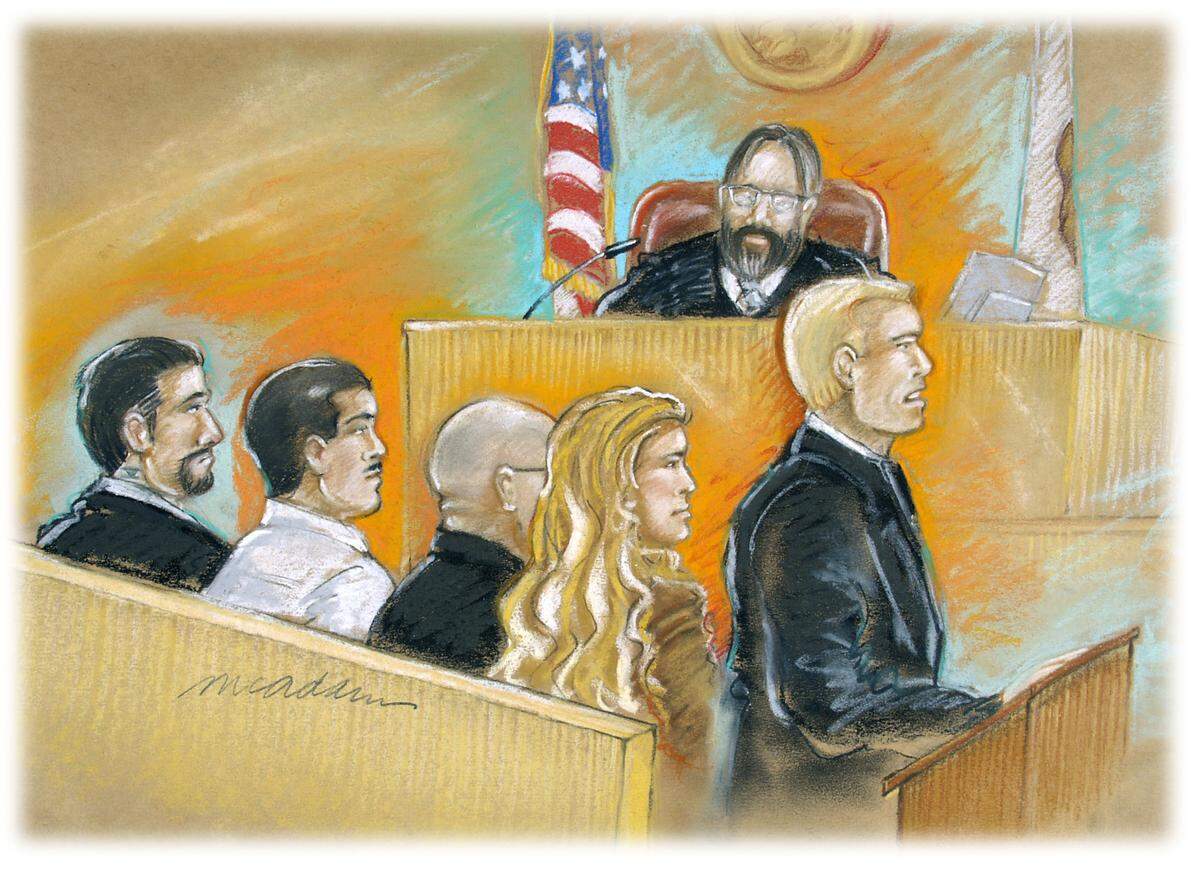
Fouse’s case went before Judge Ricardo Córdova in Stanislaus Superior Court, where prosecutors tried to prove she aided and abetted the shooter. Following a two-day evidentiary hearing, Córdova determined that Fouse did not have the specific intent to kill, striking her two attempted murder convictions.
Upon hearing Córdova’s ruling, “My whole body turned red and I just started crying,” Fouse said during a phone interview from her mother’s home in Indio.
Having spent 19 years in prison, Fouse was released a week later.
In the two months since her release, she said, she has applied for jobs at DoorDash, Home Depot and a warehouse. She said she is going to continue a program she started in prison that helps newly released prisoners gain employment and work toward owning their own businesses.
“Ms. Fouse is really the person that this law was intended to address. ... You cannot be convicted of (attempted) murder based on someone else’s intentions,” said Fouse’s public defender, Karen Kelly.
“This is a great law because it gets everyone an attorney and it gets them into court and says to the DA, ‘Prove it. Prove it again without relying on these invalid theories,’” she said.
Police, sheriff and district attorneys associations opposed the changes to the law.
Stanislaus County Chief Deputy District Attorney Mark Zahner called the previous law “a very common sense approach” to holding people accountable and achieving justice for victims.
He said lawmakers often don’t understand the “collateral consequences” of changing the law and making it retroactive.
“The original doctrine of (the felony murder rule) was logical, straightforward and echoed what society felt was a realistic way to deal with the situation,” Zahner said. “The change in law has introduced new concepts of reduced culpability in situations involving inherently hazardous criminal activity.”
‘She knew what they were doing’
Unlike her co-defendants, Fouse was convicted for only the final robbery in Denair on the night the robbery crew was caught. She maintains that was the only one in which she participated.
Victims of home invasions reached by The Bee either don’t believe that was the extent of her involvement or don’t care. That she participated at all was enough for them.
“She knew what they were doing,” said one victim, who asked not to be identified because she still lives in fear nearly 20 years later.
“She should have to do the time for the crime according to the law that was in effect at the time she was convicted,” said the woman’s husband.
“I still wake up at 1:12 every morning, the time they kicked in my door,” said the husband, who now sleeps with a loaded gun by his bed.
The robbers bound and beat them and walked through their home taking items “like they were in some kind of shopping center,” he said.
For years, his wife said, she couldn’t be alone in their home and still won’t go anywhere alone.
August 2003 robbery victim Marco Renteria was shot in his left leg and both arms when he tried to disarm one of the intruders at his Ceres home.
He nearly lost one of his arms, but surgeons saved it. He has a metal plate in his left arm and a rod in his right. Determined to protect his home and family, Renteria wanted to arm himself. But with his injuries, he couldn’t shampoo his own hair, much less load a gun. So his wife learned to shoot and now sleeps with a gun at her bedside.
For seven years, he took heavy narcotic medication to manage his pain. A farm labor contractor, Renteria had to hire his cousin to drive to job sites. “I thank God I was able to get off it,” Renteria said.
Today, he lives with chronic pain and nerve damage. His left leg goes numb when he sits for too long. His fingers on both hands lose feeling and swell on a daily basis.
“My whole life changed that night,” said another victim, Renae Frye. “I was a country girl. I felt like I was OK to leave my doors unlocked. My door was open; it was a hot August night and I felt comfortable enough in my own home to even jump in the shower and leave that all open.”
Frye was playing a game on the computer and her husband was on the couch watching “Star Trek” reruns when the masked intruders burst through their door and tied them up.
Frye no longer opens doors and windows on warm summer nights. Instead, she sets her security system, locks the metal security doors and bolts the inner doors, all installed after the home invasion.
During the trial, Frye took copious notes and saved every newspaper story about the case. In a recent interview with The Bee, she thumbed through the yellowed edges of 20-year-old papers and wondered why she’d kept them all these years.

While the focus was on the men, one thing stands out to Frye about Fouse. “They (investigators) had her on recording saying, ‘I would like to go do it again; I need some excitement in my life,’” she said.
Frye said she doesn’t have sympathy for Fouse but “I didn’t really feel like she was involved as everyone else.”
She said she hopes Fouse can make something of her life now that she’s been given the opportunity.
More convictions overturned
Fouse’s case is one of only three so far in Stanislaus County that have resulted in convictions being stricken under SB 1437 and SB 775 but many more inmates have tried.
Zahner said it’s far too easy for anyone in prison to have a case reviewed under the new law, creating substantial work for the District Attorney’s Office and putting undue stress on victims and surviving family members.
From January 2019 to mid-November, the Stanislaus County District Attorney’s Office received 133 petitions for case reviews, some dating as far back as the 1970s. Ninety-four have been denied or otherwise dismissed and 36 are pending a decision or are in the appeal process.
Like Fouse, the other two defendants to earn resentencing and release from prison were people who took part in a robbery in which a co-defendant fired a gun. But in those two cases, the victims were killed.
As the legislation applies to new cases, there will be fewer co-defendants who can be charged with murder, but Zahner said it also makes an already very complex legal proceeding even more confusing for jurors.
The revised felony murder law requires a fact-bound analysis with a five-factor test to prove a defendant was a major participant and a six-factor test to prove reckless indifference.
“The process is not simple and requires careful analysis by the jury, clear case presentation by the prosecution, and understandable instructions from the judge,” Zahner said.
Prosecutors already have been put to the test trying cases under the new law.
Modesto resident David Wilmore was acquitted of murder in January, and the man his attorney alleged was the actual killer took a plea deal to get a nine-year prison sentence for a robbery conviction. A third man never was charged, in exchange for his testimony.
Wilmore was arrested before SB 1437, but went to trial after it became law. The prosecutor, Wendell Emerson, had to switch strategies.
“The rules of the game changed while we were playing it,” Emerson told The Bee after the trial.
He argued Wilmore was a major participant who acted with reckless indifference to human life by orchestrating the drug ripoff that led to the death of Cody Lea and bringing the gun to the scene.
Wilmore’s attorney made a case that his client and the co-defendants were not robbing Lea but rather tricking him into handing over the cocaine he was selling.
The jury in a matter of hours acquitted Wilmore of murder and robbery and found him guilty only of grand theft. He was released on time served for the five years he spent in jail awaiting trial.
‘Not something that goes away’
Fouse’s resentencing of 14 years for robbery and evading convictions meant she spent five extra years in prison.
Asked whether her time in prison was an appropriate punishment for what she did, Fouse said, “That is one of the questions I struggle with.”
“I can’t give back that day to my victims and, like, every day I wish I could,” Fouse said, her voice catching. “But do those 19 years equivalate to that one day of the trauma they went through? That is something that is really hard for me to answer.”
One night of trauma still brings Homero Garza to tears when he talks about it. It was his home that Fouse brought the invaders to the night they were caught.
By that time, word of the robberies had spread like wildfire, and the Garzas were among many families to get a security system. It was installed the day before the home invasion at his home but it did no good: one of the robbers threatened to kill Garza if he didn’t turn it off.
His wife had already left for work when the robbers burst through their door, but his 14-year-old daughter and 23-year-old son were there. Everyone was tied up and threatened with guns.
Garza said he believes staying calm and being cooperative with the robbers reduced the harm done in their home. There’s even a hint of humor when he recalls, “I’m asking the guy kicking me while I am tied up if he’s finding everything all right.”
But it is with a flood of emotions that he thinks about what happened to his children, about the gun pointed at his daughter’s forehead.
“It was so, so hard for me seeing my family like that and I was all tied up and I couldn’t do anything; that affected me a lot,” Garza said. “It’s engraved; it’s not something that goes away easily.”
‘I committed monstrous acts’
Garza is not ready for forgiveness, but Fouse hopes he and all the victims someday will be.
“Not for me but for them, so they can move on,” she said.
For the first 12 years of incarceration, Fouse said, “I was a horrible inmate. I minimized everything ... I didn’t take responsibility.”
A turning point came when she was arrested on charges for selling drugs in prison.
“I looked in the mirror one day and was like, ‘Damn, are you ever going to get it?’” she recalled.
She said she started participating in every rehabilitative program she could sign up for: courses on codependency, domestic violence, gangs, suicide prevention. All were worthwhile, she said, but none was as important as the victim impact program. There, she heard from victims whose cases have never been solved.

Last year, while still in prison, she wrote a 2 ½ page letter to the Garza family.
“I dehumanized you; you were just a job to me,” she wrote. “It never crossed my mind on how much pain I was responsible for causing.”
At that time, I was a monster, I committed monstrous acts ... I regret all the pain that I caused and inflicted on all of you. I was cruel and heartless. I wish I could go back in time and right my wrongs.”
She ended the letter pledging to pay it forward by volunteering with troubled youth and helping them realize the path they are on and the consequences of their actions.
She never sent the letter while in prison and isn’t allowed to now because, as a condition of her parole, she cannot contact them.
This story was originally published December 13, 2022 at 6:00 AM.