Modesto’s police reform committee begins work. Here are highlights of first meeting
The Modesto committee charged with looking at improving how the Police Department polices the city has started its work.
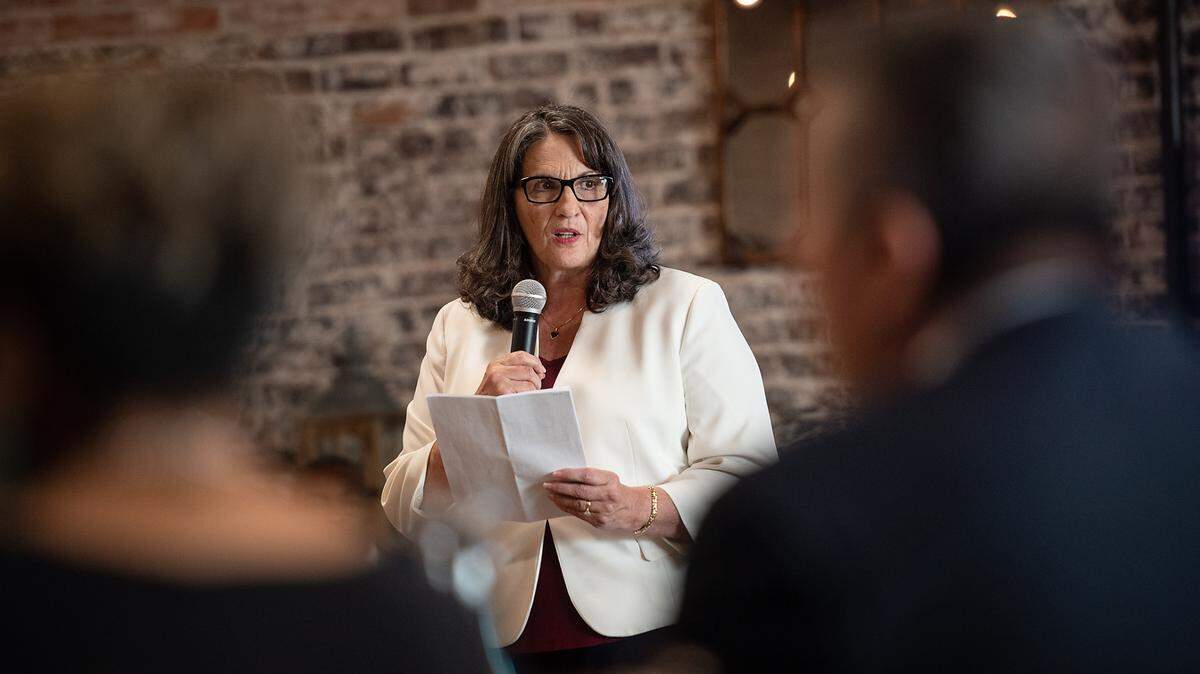
The Forward Together work group — whose nearly two dozen members include the Latino Community Roundtable, NAACP, Sheriff Jeff Dirkse and District Attorney Birgit Fladager — met for its first time Tuesday evening at Greens on Tenth in downtown.
Mayor Sue Zwahlen and interim Police Chief Brandon Gillespie addressed the group.
“... Positive relationships between the Modesto Police Department and our residents are essential to build the city where everyone can feel safe and respected,” Zwahlen said. “Creating and strengthening this trust requires that we all come together with an open mind to talk about what’s working and what’s not.
“Division does nothing to further our city’s interests. This important work must be done together. We know that creating positive community-police relations requires ongoing work. And tonight the Forward Together work group, that’s all of you, formally launches.”
Gillespie said: “Policing in any community is a heavy responsibility and an honor that takes public trust. ... And so I see this as a huge opportunity for our community to come together and look at policing and look at what as a community, as a whole, what we want our Police Department in this city to be like ... .”
But as work group members later introduced themselves a couple of members talked about the negative experiences they or the people their organizations represent have had with Modesto police officers. That included being singled out because they are Latino. One member spoke about being falsely arrested simply for asserting his rights with police.
But these members also expressed hope that the committee’s work will lead to better policing.
The City Council held a listening session with the public in May to learn more about residents’ opinions and concerns before forming the committee. The committee is expected to spend six months to a year on its work before reporting to the council with its recommendations.
While community advocates and others have called for Modesto to hire an independent auditor and form a civilian review panel to provide an extra set of eyes for the Police Department, city officials have said they want potential reforms to emerge as the work group conducts its business.
But three themes emerged from the public listening session:
▪ Accountability, which Tuesday’s meeting agenda said relates to “police conduct, decisions and how they impact the Modesto community”
▪ Policies and Practice that “support safety, fairness and equity throughout the department and community,” according to the agenda
▪ Alternate Response Models “that ensure the right type of response and resources are applied to a situation,” according to the agenda
The next steps for the work group include assigning members to committees that will work on the themes and report back to the full work group as well as the appointment of four community members to the work group.
Thirty six people have applied for the four positions. The applicants include Darlene Ruiz, the mother of Trevor Seever, the 29-year-old man fatally shot by a Modesto police officer in December. That officer, Joseph Lamantia, was terminated from his job and charged with voluntary manslaughter in March.
Lamantia has pleaded not guilty and his attorney has said: “We strongly believe this was a perfectly justifiable officer involved shooting.”
Three reforms are in motion
Tuesday’s meeting was open to the public. But the committee meetings are not required to be public, and it has not yet been decided whether they will be. However, the committees will report back to the work group at public meetings. The next work group meeting is Aug. 17.
This effort comes as cities across the nation grapple with the relationship between their residents and the police.
The Modesto Police Department already has embarked on reforms. That includes the recent hiring of four full-time homeless outreach specialists who respond to calls that had been handled by police officers.
Gillespie said in an interview that he continues to work with Stanislaus County Behavioral Health and Recovery Services on having mental health clinicians go with officers on calls involving the mentally ill and people in crisis. The goal is to start with four clinicians.
Gillespie said he expects to bring a proposal to the City Council in two to three months.
About 16 officers are participating in the “Race and Cultural Relations Coaching Series’‘ a 19-week program that promotes honest and sometimes painful conversations between the police and the communities they serve.
The conversations include racism, the impact of slavery on policing, the culture of policing, and implicit bias, said Michael Baldwin, a community advocate and paralegal who is leading the series. Baldwin is also one of the facilitators for the Forward Together work group.
“The core of policing is their relationship with the communities that they serve,” he said. “... It removes ‘us versus them’ and redefines what we stand for when we talk about communities.”
This story was originally published July 23, 2021 at 4:00 AM.