Stanislaus County faces big challenge in trying to stay in the coronavirus red tier
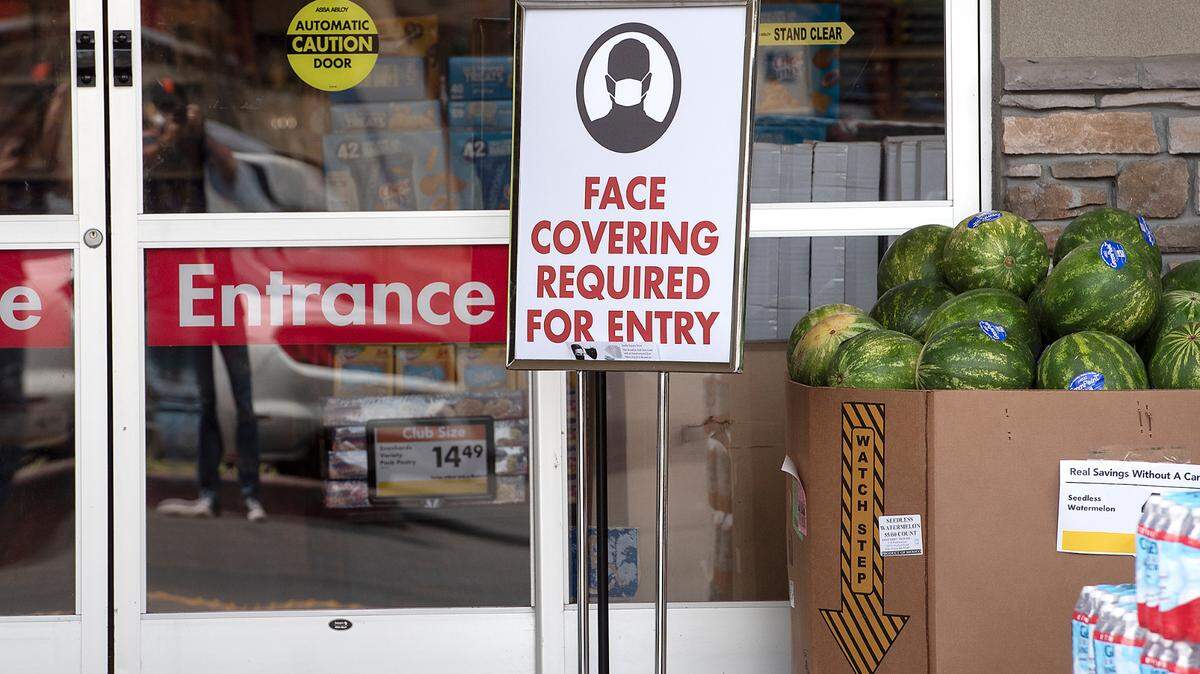
Now that Stanislaus County is back in the state’s coronavirus red tier, residents may be enjoying a visit to their favorite deli that hasn’t been open, or taking advantage of new shopping opportunities or working out at the gym.
But those pleasures could come to a screeching halt in two weeks if the county can’t qualify for staying in red status of the state’s color-coded coronavirus regulations.
It only takes two straight weeks of COVID-19 data in the purple tier to be booted out of red.
“We are sitting right on the edge of red and purple,” said Dr. Julie Vaishampayan, the county’s public health officer. “If we don’t remain vigilant, we will be in the purple in two weeks. We need to continue taking these actions.”
The reopening of indoor restaurants, gyms and movie theaters, lighter restrictions on retail shopping and students returning to large high schools, seem like a recipe for a quick return to California’s tightest restrictions.
To make matters more challenging, coronavirus variants have surfaced in the community, and those strains are more contagious and capable of causing more cases of serious illness and death, health experts believe.
While the chances of staying in the red may look slim, the county may have an ace in the hole in its coronavirus vaccination campaign. Gov. Gavin Newsom is lifting the age restrictions on vaccine eligibility in April with a promise of larger vaccine allocations for local entities that administer shots.
The county says its large vaccine clinics will follow the new guidelines when adults age 50 and older become eligible Thursday. Anyone 16 and older becomes eligible April 15.
Officials said the county vaccine clinics have capacity to administer more shots. In addition, pop-up clinics can be held to bring vaccine to people who are harder to reach.
While vaccines are now credited with preventing outbreaks in nursing homes and assisted living centers, the county hopes the ever increasing vaccination effort can start tamping down cases in the community. A state dashboard says almost 200,000 first or second doses of vaccine have been administered in the county with 557,700 residents.
Margin between red and purple tiers is slim
Stanislaus finally qualified for the red tier last Tuesday by .04 of a percentage point. Its test positivity rates — 4.96 percent for the entire county and 4.5 percent in disadvantaged neighborhoods — were below the 5 percent limit set by the state for moving to red status.
The county’s daily case rate rose from 11.8 per 100,000 population to 12.3 per 100,000 in Tuesday’s update, which failed to meet the 10 per 100,000 standard for red tier. But the county can stay in red if new cases are relatively stable and its positive test rates are less than 5 percent.
The rate of new cases recorded in the county was double the statewide rate of 5 cases per 100,000. The state’s test positivity was 2 percent last week.
Vaishampayan said a wave of infections driven by coronavirus variants in European nations makes her concerned about what could happen here.
She said recent sequencing tests found that four local cases were linked to the “U.K.” variant, or B.1.1.7, that spread rapidly in England. The strain has been identified in four cases, each in different parts of Stanislaus County.
The variant is considered 50 percent more contagious than the normal SARS-CoV-2 virus and likely causes more serious illness. The three California variants, believed to be 20 percent more contagious, have also been detected in this county, Vaishampayan said.
She said she doesn’t know what percentage of new coronavirus cases are related to variants. The genomic sequencing is done selectively by outside labs and the county has asked the state to run more of the tests, she said.
Vaishampayan said studies have shown the vaccine is effective against the variant strains. If the county is headed for another wave of infections this spring, she doesn’t think it will be as severe as the December-January surge that filled hospitals with patients.
Is there coordination between the county and cities?
The county health officer and other county officials gave no indication that cities are being engaged in stepped up efforts to enforce the safety rules on non-compliant businesses and help keep the county in red. The county has relied on cities to focus code enforcement on businesses that flout the safety rules.
County officials, who are criticized for lax enforcement of health orders, said large COVID-19 outbreaks have not been traced to people dining inside restaurants.
The potential problem with restaurants is customers remove their masks while eating and drinking. It’s important that dining rooms have good ventilation, so people in the restaurant don’t breathe the air someone else has exhaled, Vaishampayan said.
Jordi Camps, owner of Picasso’s Gourmet Deli in Modesto, said he was pleased to be serving customers inside the 10th Street business again after 18 weeks of purple restrictions.
Camps said Friday that safety measures are in place. One difference this time is the vaccine protection for employees. When they were eligible, his employees walked to nearby Modesto Centre Plaza to get the shots, Camps said.
The business owner realized the lighter restrictions might be short-lived. But he’s glad to see customers come through the door.
“I see people are happy, so it’s worth opening,” Camps said. “I think people need to return to some of the regular things.”
Will COVID-19 spread in schools?
The modified classrooms in elementary schools that reopened in the fall have seen little or no transmission of COVID-19. The change to red tier allows high schools and middle schools to welcome students back to classrooms, which have been remodeled with plexiglass and safety measures.
“We will see some transmission,” Vaishampayan said, noting that studies have shown any school transmission is usually from staff to staff.
Vaishampayan said she doesn’t expect to see the virus spread in classrooms. Transmission is more likely to happen with extracurricular activities and social mixing. “That is where we need to put our focus,” she said.
County Supervisor Buck Condit said the public needs to keep following guidelines such as wearing marks, distancing, washing hands and getting vaccinated.
He said schools have not been a hotbed of coronavirus infections, and he doubted that increased traffic in restaurants and supermarkets will generate many cases.
Condit, who represents a more rural supervisorial district, noted a recent vaccine clinic delivered 300-plus shots in Waterford and another clinic is scheduled for Empire. The county vaccinates thousand of residents every week at clinics in Modesto, Turlock, Oakdale and Patterson.
“We need to keep doing what we are doing that got us back into the red,” Condit said. “Those things are working and we need to continue on that path.”
County officials also emphasize the importance of testing in trying to stay in the red tier and possibly move to the less restrictive orange category. The state penalizes counties when their testing volume is less than the state median.
Residents are advised to get tested if they think they’ve been exposed to the virus or have symptoms.
“We have a lot of testing sites,” Condit said. “We need to improve our numbers in the testing area but we can’t force people to test.”
The county Health Services Agency posted some daily case numbers last week in the red tier range and can try to keep test positivity data from creeping into the purple.
If the county falls back to the purple tier in two weeks, the schools that opened can stay open and try to muddle through to the end of the school year.
Vaishampayan said agriculture operations and packing facilities are better prepared this year for keeping coronavirus cases from spreading among workers. The county doesn’t have a count on how many of the 69,000 workers in food and agricultural sectors have been vaccinated.
Vaishampayan said a large number have been vaccinated but there is additional demand in that workforce. The county plans to use mobile clinics to take vaccine out to seasonal workers.
“We are working with our ag contractors to try to find ways to vaccinate (seasonal workers) sooner than later,” Vaishampayan said.
The Stanislaus County Health Services Agency has advice for preventing the spread of coronavirus at www.schsa.org and the Stanemergency.com Facebook page.
This story was originally published March 27, 2021 at 4:00 AM.