How can Stanislaus County ensure Latinos, hard-hit by COVID-19, can access vaccines?
As Latinos continue to experience the highest COVID-19 case rates in Stanislaus County, officials in the last week announced measures designed to ensure the most vulnerable can get vaccinated.
Some community advocates welcomed the county’s mobile clinic pilot program and plans to consider health equity ratings, but identified additional strategies to clearly communicate vaccine information and make the shots accessible for Latinos.
Suggestions included increasing the number of Spanish-speaking staff at county vaccine clinics, providing transportation to clinics, giving shots at churches and building trust with more outreach and education. Latinos in Stanislaus County account for 64% of known COVID-19 cases despite making up 47% of the population, representing a disparity that has persisted since health officials began releasing ethnicity data in May.
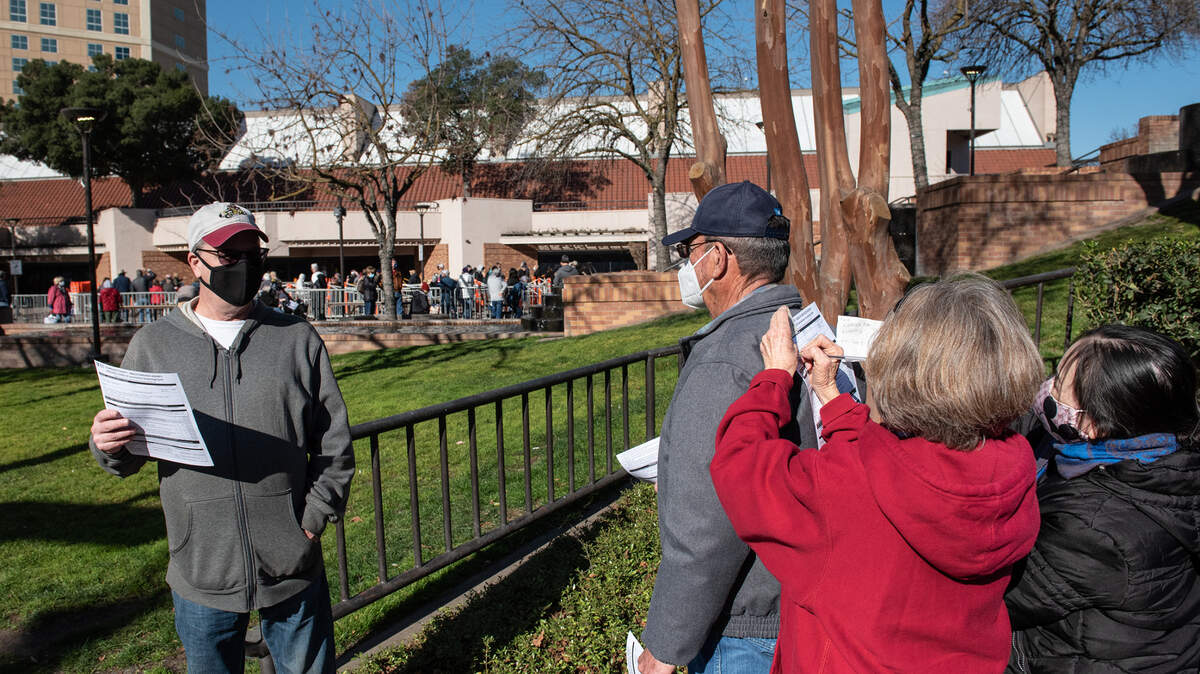
The county plans to hold its first mobile vaccination clinic in the predominately Latino neighborhood of west Modesto. Set for Monday morning at the King-Kennedy Memorial Center, home of the West Modesto Community Collaborative, the clinic will occur in the zip code with the most COVID-19 cases since tracking began. The clinic will focus on West Modesto residents age 65 and older, the county said in a Facebook post.
Mobile clinics are helpful, said Karina Franco of Sierra Vista Child and Family Services, because people are more likely to trust community members and places in their community.
“We need to be going into communities that have been the hardest hit and that are going to have some of those low indexes, meaning the health outcomes that they have are lower,” Franco said. “They really should be prioritized and we should be looking at that when we are making decisions on the distribution. “
For its vaccine rollout, spokesperson Kamlesh Kaur said the county is considering the Healthy Places Index to make sure doses are available for the most vulnerable. Census tracts with the lowest index scores have the least healthy situations and higher rates of underlying conditions which can cause COVID-19 complications, county epidemiologist Chelsey Donohoo said. The lowest-scoring areas also have higher testing positivity rates, Donohoo said in last Tuesday’s county Board of Supervisors meeting.
No data on the number of vaccinated Stanislaus County Latinos is yet available. State requirements forced the county to change how it collects demographic data midway through the vaccination clinics, Kaur said in an email, so staff are still analyzing ethnic data. In the meantime, community advocates identified barriers and potential solutions to ensure Latinos get vaccinated.
Translators and building trust needed, advocates say
Franco said her Spanish-speaking parents in their 80s would not have been able to get the vaccine on their own in Stanislaus County. Franco and her siblings called their doctor’s office for them, she said, asking if the vaccine was available, when it would be available and when they could schedule an appointment. Her parents got vaccinated through their doctor’s office, so they did not have to stand in line at the first-come, first-serve county clinics.
“Because of the language barrier, it is very challenging for individuals in the community to feel comfortable reaching out to their doctors,” Franco said. “That’s something that’s typical in our community: we often go to the doctor when it’s absolutely the last resort. We’re not usually there for preventative care. Having someone to be that liaison is really helpful, but not everyone has that.”
Her mother-in-law waited four hours at a county clinic, but Franco said she was the one who gave her information about it. Her mother-in-law did not hear of the opportunity through any public service announcement, said Franco, who directs Sierra Vista’s family resource center.
The county can make those vaccine clinics more accessible for Latinos by increasing the number of Spanish-speaking staff working them, said Aaron Anguiano, president of the Latino Community Roundtable. Anguiano said he knows someone who went to get a shot at a clinic and ended up translating Spanish for staff. More bilingual staff can help Latinos fill out forms or answer any questions, he said.
“The more diverse the staff, the more confidence people have,” Anguiano said. “Can you imagine if you’re Latina and you see all white people speaking English? They don’t feel too confident.”
After all, Franco said some Latinos might not understand the vaccine forms at the clinics, even if it is available in Spanish. To streamline the process, her workplace helps people fill out and print the forms before they go to clinics. The county offers screening forms and vaccine fact sheets in Spanish, Kaur said, and always has Spanish-speaking nurses and staff available at the clinics.
But Spanish-language vaccine information also needs to be easy to read, Anguiano said. Latinos over age 65, who are possibly immigrants, may benefit from printed materials at a third-grade reading level. Members of that age group often do not use social media either, Anguiano said, and might not see vaccine questions and answers online.
Covering the cost of transportation to clinics may also ease the process of getting vaccinated, especially for those with tight budgets. Some elderly West and South Modesto residents cannot get to the Centre Plaza vaccination clinic on their own, said Perfecto Munoz, executive director of the West Modesto Community Collaborative. Providing a bus service to and from vaccination clinics might help, he said.
Leveraging existing community relationships, Munoz said, can also build trust in the vaccine for Latinos and other people of color. Church leaders can tell their congregations about the importance of the vaccine, for example. The county could even hold vaccine clinics at churches where people already gather and feel comfortable, Munoz said.
Holding clinics at Catholic churches in particular, Anguiano added, can help reach Latino community members.
Committees share COVID-19 outreach resources, ideas
Among the groups trying to improve outreach to Latinos is the Vaccination Outreach and Information Committee for Equity, or VOICE. The committee advises the county and helps staff understand community concerns about the vaccine, Kaur said. Community and cultural organization leaders began meeting weekly Jan. 12, sharing feedback from Latino, Assyrian, Punjabi, Black and other diverse residents.
Yamilet Valladolid, manager of government affairs for Golden Valley Health Centers, works on the committee. The work group allows organizations to share data and expertise on how to connect with harder to reach communities, Valladolid said in an email. Part of its goal is to ensure transparency in vaccination access and use, Valladolid said, adding how she knows the county has done Spanish radio outreach about the vaccine.
The VOICE meetings are not open to the public, however. The county also runs COVID-19 community task force meetings that more people can attend and give feedback during, Kaur said.
Separate from VOICE, Rep. Josh Harder’s office organized a Latino COVID-19 task force in July. The group likewise serves as a network to share resources and slow coronavirus spread in Latino communities in Stanislaus and San Joaquin counties, Harder’s office said in an email. Valladolid also participates in the group and stressed the importance of elected officials advocating for their districts.
“It is critical to provide equitable health access to all communities,” Valladolid said in an email. “Especially those who have been hit the hardest.”
The county’s first mobile vaccine clinic will run Monday from 8 a.m. to noon at the King-Kennedy Memorial Center at 601 Martin Luther King Drive in Modesto. Proof of residence will be required, and staff will distribute 200 first doses for West Modesto residents 65 and older.
This story was originally published February 8, 2021 at 5:00 AM.