What does the state’s new plan for COVID vaccinations mean for Stanislaus County?
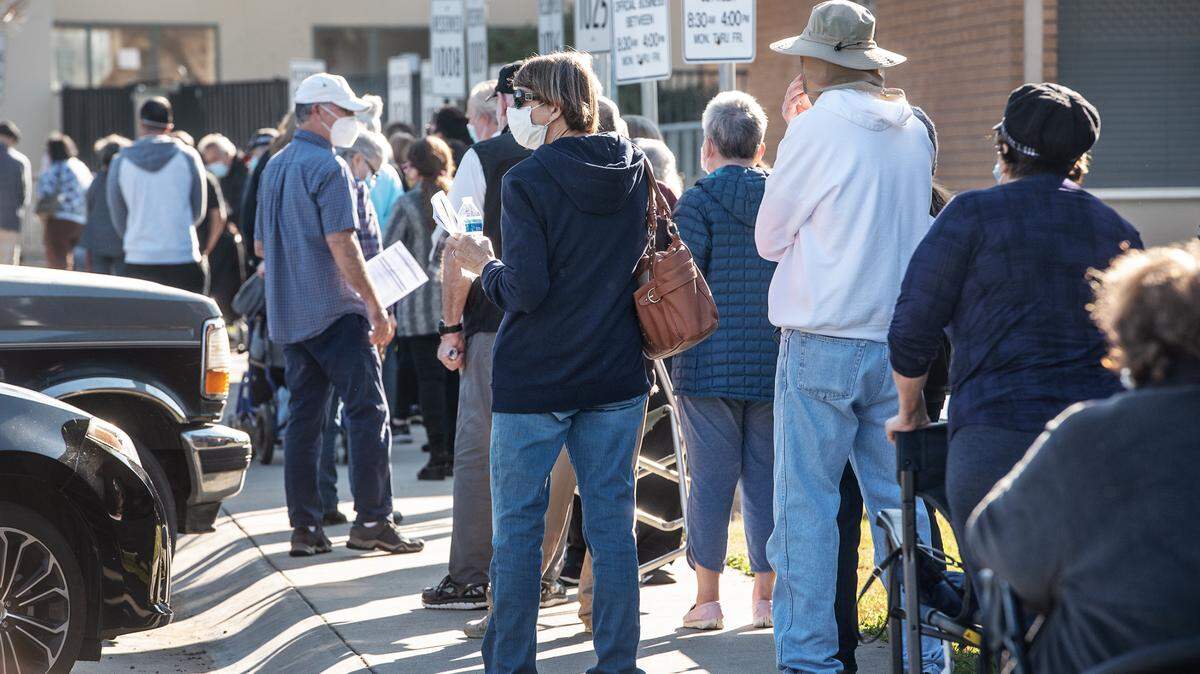
Stanislaus County officials are wary of a new state strategy for COVID-19 vaccine distribution in California and how it could change deployment of vaccines needed to battle the pandemic.
State officials have an agreement with Blue Shield of California to manage the vaccine distribution network, which will focus more on an age-based priority for vaccinations and distribute more vaccine to health care providers and pharmacies. It will also supply more vaccine to counties trying to get people vaccinated in hard-to-reach underserved communities.
In Stanislaus County, that could possibly mean more people getting shots from their physician’s office or drugstore rather than standing in line at county vaccination clinics.
County officials, citing a lack of information on the revised system, are not sure yet what it will mean.
“We are still hearing chatter and discussion about the state making changes to the (priority) tiering system,” said Richard Murdock, assistant director of emergency services for the county, speaking at the Board of Supervisors meeting Tuesday.
He said the county will make adjustments to its vaccine program when it receives new direction from the state.
County staff said they do expect more vaccine to be delivered to counties that are addressing vaccination needs in low-income areas that have suffered disproportionately from the COVID-19 pandemic.
Dr. Mark Ghaly, the state’s Health and Human Services director, said Tuesday he could not discuss details of contract negotiations with Blue Shield but more information is expected at a briefing next week.
State officials are still working out the guidelines and priorities of the new system that aims to administer the available amount of vaccine more quickly through an outsourcing arrangement. The state and local health agencies have mostly handled a slow rollout of COVID-19 vaccine in California.
For the time being, Stanislaus County residents are advised to ask their doctors if they have vaccine available. If not, the options are to line up at a county clinic or wait for the new state system to gear up.
In another development, President Joe Biden announced that 1 million doses of coronavirus vaccine will be sent on a weekly basis to retail pharmacies across the country to create more outlets for vaccine. About 6,500 pharmacies will start to receive vaccines starting Feb. 11. Drugstores typically offer vaccinations by appointment.
Stanislaus County has used four clinics in Modesto, Turlock, Oakdale and Patterson to vaccinate seniors 65 and older and healthcare workers in Phase IA.
Just over 5,100 vaccine doses were administered by the county last week and it expects a similar allocation this week. A total of 16,000 doses have been administered at the county’s clinics thus far.
County board chairman Vito Chiesa said counties are concerned how the state’s new approach might change the deployment of vaccine and how it would impact current vaccination efforts.
More emphasis on age as priority
State officials say prioritizing age makes sense given older people have a much higher rate of hospitalization or death from COVID-19.
“We’re really thinking very seriously about focusing primarily on age and not as much on the sectors we’ve been collectively spending a lot of time on,” State Epidemiologist Dr. Erica Pan said.
Regardless of what the new system looks like, it will be fettered by the limited supply of vaccine from the federal government. Biden’s administration recently announced an increase of 1.4 million doses to spread among the states. California is expecting to get a 16 percent increase in supply this week; the state has been receiving 400,000 to 500,000 doses per week.
Sutter Health, with medical offices in the Northern San Joaquin Valley, has opened three large COVID-19 vaccination hubs – in Roseville, Sacramento and Modesto – that will have the capacity over time to vaccinate thousands of patients a day, a spokesperson said. The group has been administering vaccine to health workers and its most vulnerable senior patients, those 75 or older, by appointment.
These large-scale vaccination clinics are in addition to existing vaccination clinics at various care centers, Sutter said. Other large-scale vaccination clinics are open in the Bay Area.
Sutter said it welcomed the state’s efforts to bring “even more” consistency, transparency and equity to vaccine allocation.
Kaiser Permanente is expected to play a role in getting vaccine to its large membership base in Northern California and Southern California.
Although there’s an urgency to deliver more vaccine for older adults, some worry that teachers, essential workers and the agricultural workforce will be left behind in counties like Stanislaus.
In a Jan. 18 letter to Gov. Gavin Newsom, the California School Boards Association and three other education groups urged the state to give priority to teachers and other school employees in the next phase of vaccinations.
“In short, we ask that you work with local education agencies to ensure inoculations for education and childcare workers remains a top priority,” the letter stated.
The association has expressed concern that healthcare providers, getting a large supply of vaccine, will notify their patients and trigger a rush for vaccinations. Teachers won’t have access to the two-dose vaccinations, further delaying opening of additional schools, the association said.
Vaccine for food and agricultural workers
Stanislaus County health officials have said the June-to-August coronavirus surge last year was driven by infections spreading in warehouses, food production facilities and agricultural fields.
Noe Paramo, legislative advocate for the California Rural Legal Assistance Foundation, said in comments to a county vaccine workgroup last week the county’s plan should continue to vaccinate people age 65 and older, including those working in agriculture. But it also needs to focus on occupations and communities with higher risks of infection, including farmworkers and their families.
Paramo submitted the comments after the workgroup, called the Vaccination Outreach and Information Committee for Equity, asked for ideas on reaching Latino seniors, age 65 and older, and farmworkers.
“While the easiest distribution method may be to simply serve the age-based groups at centralized locations such as the Modesto Centre Plaza and Stanislaus State in Turlock, (that) will not overcome the challenge of reaching farmworkers in the fields and packing facilities, particularly when the work picks up in the spring and there is limited supply of vaccine,” Paramo wrote.
CRLA, which is urging the state to give farmworkers a vaccine priority, is asking Stanislaus County to allocate a certain amount of vaccine doses for farmworkers and their families. In addition, collaboration with health centers, migrant education programs and resource centers will ensure farmworkers understand vaccinations and receive them, Paramo’s letter said.
County officials said Tuesday they are rolling out a pilot program of mobile vaccination clinics for people who can’t get to regular clinics. The mobile clinic will start next week at the King-Kennedy Memorial Center in west Modesto and could make stops in other underserved communities and small towns like Hughson and Grayson.
Ghaly said the state hopes to achieve high vaccination rates in communities of color and other neighborhoods that suffered large rates of infection. An equity framework in the new system may include performance payments and incentives for health providers and community organizations for vaccinating people in the hardest hit communities.
The state is also considering payments for outreach and special efforts like evening hours and translation services.
Will community health clinics get more vaccine?
Leslie Abasta-Cummings, chief executive officer of Livingston Community Health, was asked if the state’s emerging new system, managed by a third-party administrator, will increase vaccine allocations for community health clinics serving low-income patients.
“I would say maybe,” Abasta-Cummings said. “There is very little information flowing to us at health centers and not much clarity on how the system will work.”
Livingston Community Health has health centers in Merced County and three clinics in Stanislaus County. In communities served by the clinics, the testing positivity rate among Livingston’s patients has been as high as 30 percent, the CEO said.
“As a community, we have one of the lowest dose allocations in the state, despite constant advocacy,” said Abasta-Cummings, who is board chairperson for the Central Valley Health Network, an advocacy group comprised of 15 community health center corporations.
Livingston began vaccinating its healthcare staff in early January and has started giving shots to patients who are 65 or older. The numbers are small. The clinics will likely finish an allocation of second doses for staff this week, which was received two weeks ago, bringing the total to just over 400 doses administered.
Livingston is confident its clinics can vaccinate 150 to 200 patients per week, or 600 to 800 per month each in Stanislaus and Merced counties, if enough doses are made available.
Abasta-Cummings said a low physician-to-patient ratio that’s common in the San Joaquin Valley has resulted in lower vaccination allocations from the state. Advocates have asked the state to minimize that factor in the allocation formula, she said.
Golden Valley Health Centers, with 26 clinic locations for the underserved in Merced and Stanislaus counties, is still waiting for details on the state’s new vaccine distribution plan, said Dr. Ellen Piernot, chief medical officer.
“We understand that vaccine supply is limited and are working diligently with our partners. In addition to securing more vaccines, GVHC is in support of any effort in addressing the supply that is currently available to be administered as quickly as possible,” Piernot said in a statement.
The Sacramento Bee contributed to this report.
This story was originally published February 2, 2021 at 2:26 PM.