USDA grants $130 million to encourage ‘climate-smart’ dairy and almonds in California
Two federal grants totaling $130 million will help California dairy and almond producers go easier on the planet.
Agriculture Secretary Tom Vilsack announced a total of $2.8 billion for measures aimed at climate change nationwide.
The California Dairy Research Foundation received $85 million to expand efforts to keep methane in manure from drifting to the atmosphere.
Blue Diamond Growers got $45 million to capture some of the carbon dioxide emitted from almond orchards.
The money comes from the Partnerships for Climate-Smart Commodities program at the U.S. Department of Agriculture. Grants also went to producers of grains, meat, produce, cotton, timber and other goods.
“There is strong and growing interest in the private sector and among consumers for food that is grown in a climate-friendly way,” Vilsack said in a Sept. 15 news release.
Amid the hedgerows
Blue Diamond is the largest player in the California almond industry, which grows about 80% of the global supply. The cooperative has processing plants at its Sacramento headquarters and in Salida and Turlock.
Almond growers can capture carbon by planting hedgerows and ground cover amid the nut trees. The vegetation also can nourish pollinating bees and attract other insects that help keep pests under control.
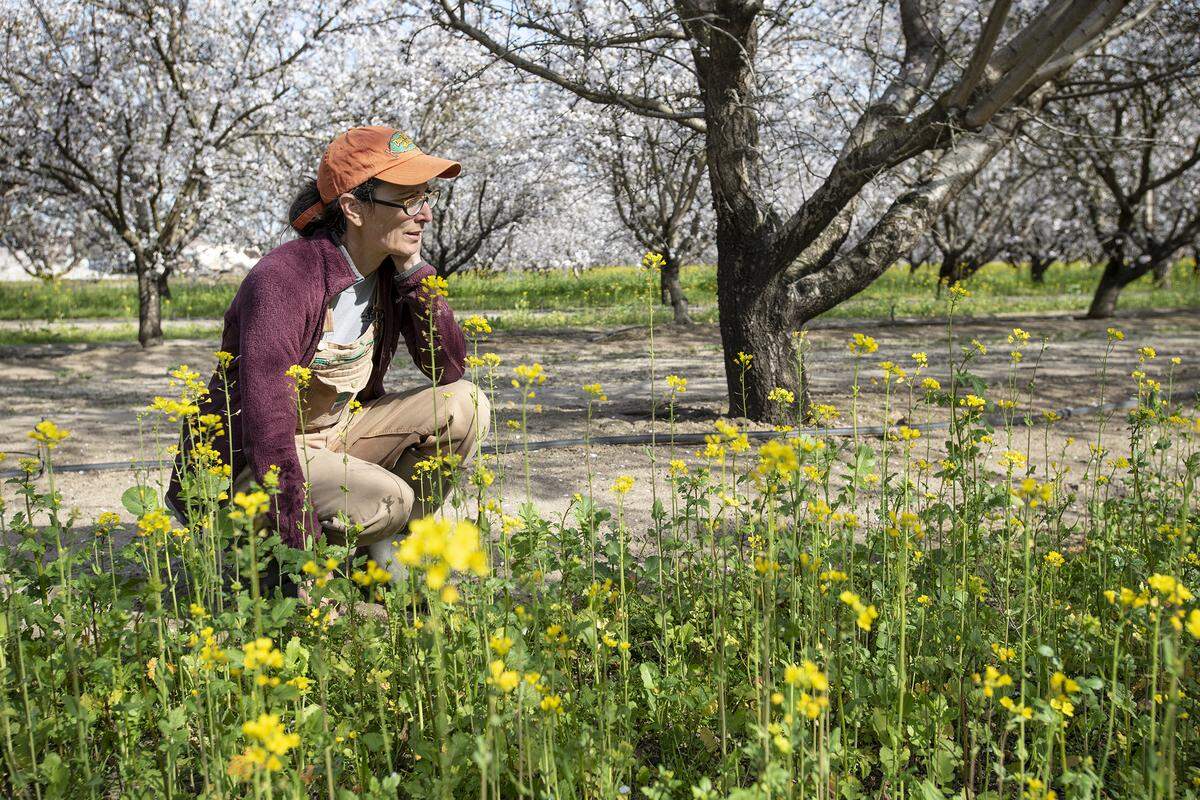
Blue Diamond also supports “whole orchard recycling,” an alternative to open burning of old trees when new ones are planted. The grant will encourage growers to chip up the scrap wood and mix it into the soil before planting a new orchard. Researchers have said this would enhance fertility and sequester carbon.
“These funds will help significantly accelerate and expand the stewardship impact that our multigenerational family farms are already making in orchards throughout the state,” said Mark Jansen, president and CEO at Blue Diamond, in a news release.
The company represents nearly half of the state’s growers. Its sustainability efforts dovetail with the Almond Board of California, based in Modesto.
Lots of bare ground now
Most of the 1.37 million orchard acres have little vegetation besides the trees, on the assumption that it would compete for water and nutrients. Researchers are finding that hedgerows and cover crops could actually boost the crop yield by adding organic matter to the soil.
About 205,000 orchard acres now have diverse plants thanks to two programs aimed at bee health, said an email from Rick Kushman, manager of media relations and global communications for the Almond Board.
The total acreage for orchard recycling is less clear, but it will grow thanks to the USDA grant. Almond trees are replaced about every 25 years because their productivity declines. California is phasing out open burning by 2025, at the behest of clean-air activists. State funding is already helping growers adapt.
Worms do their part at dairies
The dairy foundation, based in Davis, will use its $85 million over five years to help farmers handle methane from manure. The gas is an especially potent factor in climate change.
The foundation aims for adoption by farms totaling at least 76,000 cows, 4% of the statewide total, Executive Director Denise Mullinax said by phone. The idea is to bring experimental ideas to full scale.
One possible technique has been studied at a dairy farm near Hilmar: using worms to break down the manure in concrete boxes filled with wood shavings. The creatures yield a nice-smelling compost for gardens and farms.
Another option involves ponds that use algae to decompose manure. Still another adds a polymer to settle out the solid material.
The grant does not cover digesters, where bacteria extract methane from manure for use as fuel. This technology is becoming widespread, including a new Keyes plant that supplies gas to PG&E.
Mullinax said the USDA grant could be supplemented by dairy processors that would like to promote their sustainability to consumers.
“We could see some sort of label on a dairy product that has ‘climate-smart’ on it,” she said.
This story was originally published September 21, 2022 at 6:00 AM.