As bees fill Stanislaus County almond orchards, buzz continues around their health
Rented bees by the billions have been at work in Central Valley almond orchards, tasked with pollinating the 2020 crop.
It has happened amid renewed scrutiny over whether this process – crucial to growing 80 percent of the world’s almonds – is sustainable.
Critics say the colonies suffer from being trucked in their wooden boxes, often across several states, to the orchards. They say the bees find a monoculture of almond blossoms, rather than the diverse sources of pollen and nectar they need for nourishment. And pesticides might poison the hired hives.
The Guardian, an international newspaper based in London, summed it up with this headline: “Like sending bees to war. The deadly truth behind your almond milk obsession.”
The story noted that about a third of the nation’s commercial colonies did not survive the winter of 2018-19, about double the natural loss rate. This is in line with a trend that emerged about 15 years ago and has come to be known as colony collapse disorder.
“A recent survey of commercial beekeepers showed that 50 billion bees – more than seven times the world’s human population – were wiped out in a few months ...,” the Guardian wrote.
The story was shared on various other media websites and drew a swift rebuttal from the Almond Board of California. The grower-funded group, based in Modesto, noted its efforts in recent years to enhance conditions for bees.
“The Almond Board of California is actively engaged with the beekeeping industry and shared many examples of these efforts directly with The Guardian,” a news release said. “It’s unfortunate these details were left out.”
Bee basics
At issue is the European honey bee. It was imported to the United States in the early 1600s and now pollinates an estimated one-third of the nation’s food, according to the American Beekeeping Federation.
The largest single use of the commercial colonies, about 1.8 million of them, is in California almond orchards from mid-February to early March, according to the Colorado-based group. No nut can mature in late summer unless a bee deposits pollen in a blossom in winter.
Beekeepers move on to other crops as the year goes on – cherries, apples, peaches, melons, squash, onions and many more in California and beyond.
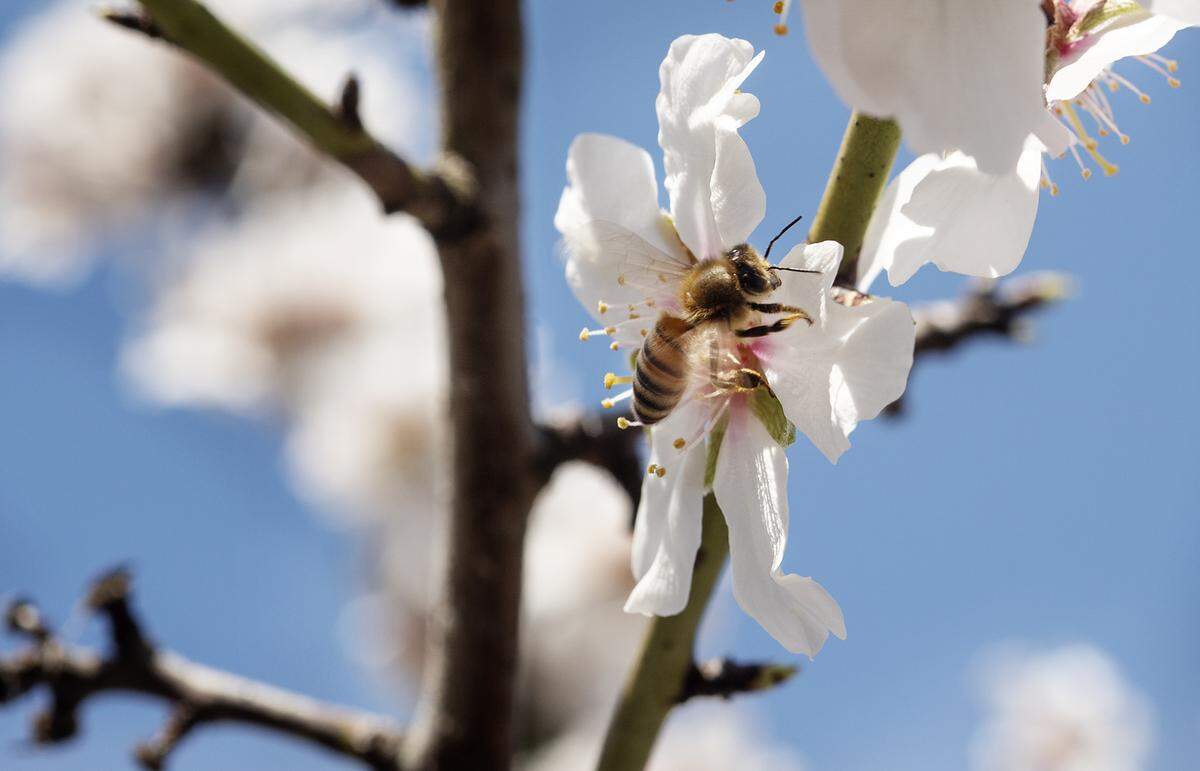
Beekeepers have long expected to lose up to about 15 percent of their colonies to natural causes as each winter arrives. But the losses started to mount in 2006 with colony collapse disorder, roughly doubling for many operations and even worse for others.
No cause has been determined. Experts say it could involve mites and parasites invading the hives, or the stress of interstate trucking. Pesticides are possible, too, along with shortages of pollen and nectar in various places.
Beekeepers can rebuild their colonies thanks to the egg-laying prowess of queen bees, but that can be expensive in a business with often tight margins.
A healthy hive can have as many as 80,000 bees, kept on frames where honey accumulates. Almond growers typically use two colonies per acre. They are paying about $200 to rent each box this winter.
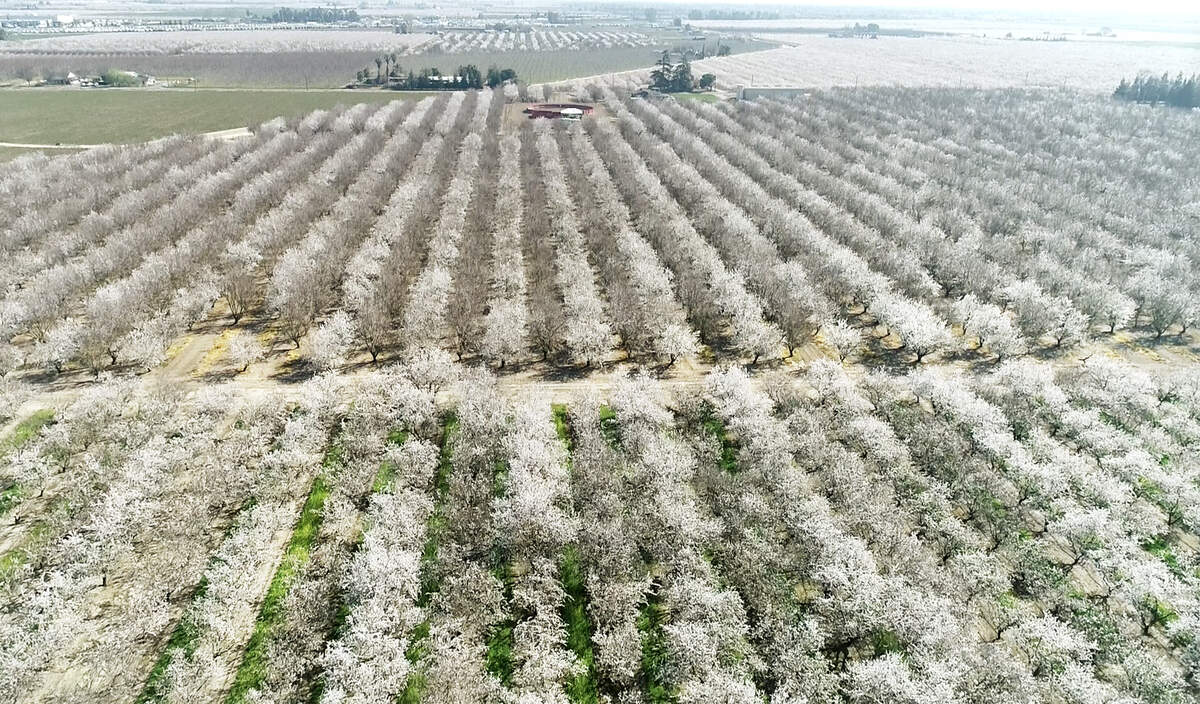
Stanislaus County alone had 272,507 bee colonies shipped in for pollination in 2018, according to its agricultural commissioner’s office. Two-thirds of that was from beekeepers based in Washington, Oregon or Idaho. The upper Great Plains and upper Midwest were also notable sources.
Bee-friendly farming
The Almond Board has been educating growers about farming practices that help out the bees. They should not spray pesticides when the colonies are on site, but if they are necessary, it should happen after the bees are back in their boxes in late afternoon.
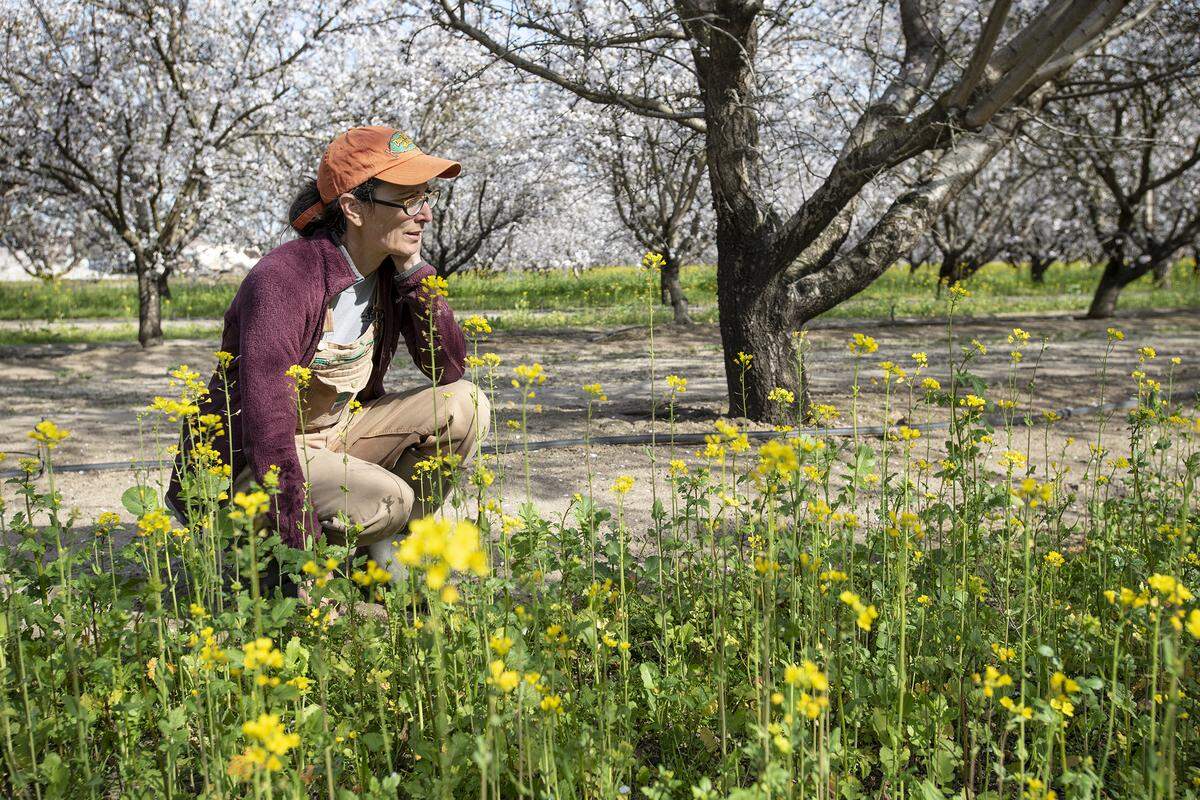
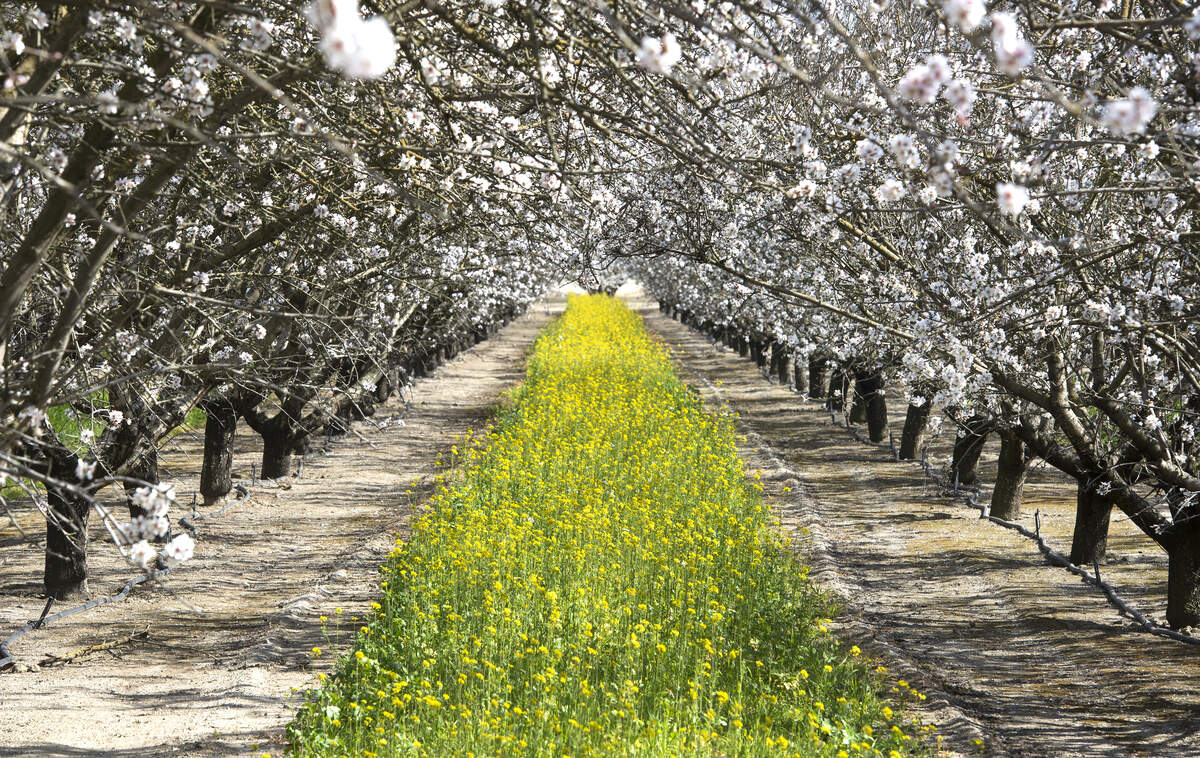
Growers also can sow flowers that supplement the pollen and nectar from almond blooms. Christine Gemperle has done this for eight years at her farm along Faith Home Road, southwest of Keyes. Mustard and clover grow in alternating strips between the rows of trees.
Gemperle said the extra flowers do not distract the bees from what she pays them to do – pollinating the cash crop on this 20 acres.
“Their first priority when they come out of the box is to go up into the almond blossoms,” she said.
She talked about this in mid-February, amid mustard plants up to two feet tall, loaded with yellow flowers amid the whitish-pink almonds. The clover would burst out later in a few other colors.
The Modesto Bee had also visited the orchard in January, when the Almond Board hosted a pre-bloom demonstration of bee-friendly farming. The speakers included Billy Synk, manager of a program called Seeds for Bees, which promotes the sowing of diverse flowers.
“Bees raised in a pollen-abundant environment are always a lot healthier,” he said.
Seeds for Bees has resulted in about 34,000 acres of supplemental flowers, said Josette Lewis, chief scientific officer at the Almond Board. The prospects are limited in areas that do not get much winter rainfall, she said.
Livingston-area almond grower Jean Okuye has planted cover crops and hedgerows to help the bees and to provide other benefits.
The flowers attract beneficial bugs that prey on pests in the orchards, she said by phone Friday. The roots of these plants enhance the soil by creating pores for water and air penetration. And soil microbes decompose the plant matter into nutrients for yet more growth.
A beekeeper’s view
Gene Brandi of Los Banos is a past president of the American Beekeepers Federation and has been in the business since the 1970s. He said by phone Wednesday that he lost about 30 percent of his colonies over the current winter.
Brandi discounts the idea that travel stresses the bees. His own operation is within California, but he knows of colonies that come from as far as Maine with no ill effects.
Brandi does see pesticides as a threat and has worked with the almond industry to minimize spraying during pollination. He also likes the effort at increasing the diversity of pollen sources.
Like many beekeepers, Brandi gets some of his income from honey sales, in his case through Barkman Honey in Kansas. But he said poor honey prices have made income from pollination services more important, especially during the almond bloom.
Honey sales provided about $10.4 million to Stanislaus County beekeepers in 2018, the ag commissioner reported. Renting the hives to almond growers brought in about $75.8 million.
“If we didn’t have almond pollination as a source of income, the beekeeper industry would shrink,” Brandi said.
‘Toxic chemical soup’
The Guardian story made the rounds throughout the industry and on social media. A food website called The Takeout shared it out with a declaration that “the California almond industry has bee blood on its hands.”
The Guardian said the bees “spend February in the toxic chemical soup of California’s Central Valley.” That did not sit well with the Almond Board, which has issued guidelines to growers about minimizing spraying.
The board also warns growers that county ag commissioners will investigate spraying that harms bees.
Another online tool, BeeWhere, allows pesticide applicators to check on the locations of the commercial beehives registered by ag commissioners.
The media attention reflects that many people around the world care about how their food is produced. And they worry especially about the pollinating bees, a decade and a half into colony collapse disorder.
The almond blossoms will fall in the coming days and the colonies will move on to other crops and other places. They likely will be stronger, Lewis said, for having visited well-managed orchards.
“By growing almonds, you’re doing right by bees,” she said.