California was ready when Supreme Court overturned a half-century of abortion precedent
READ MORE
Supreme Court Abortion Ruling
Click the arrow below for more coverage of the Supreme Court’s decision on abortion rights.
Expand All
California has been preparing for years to establish itself as a safe haven for those coming from out-of-state seeking abortions.
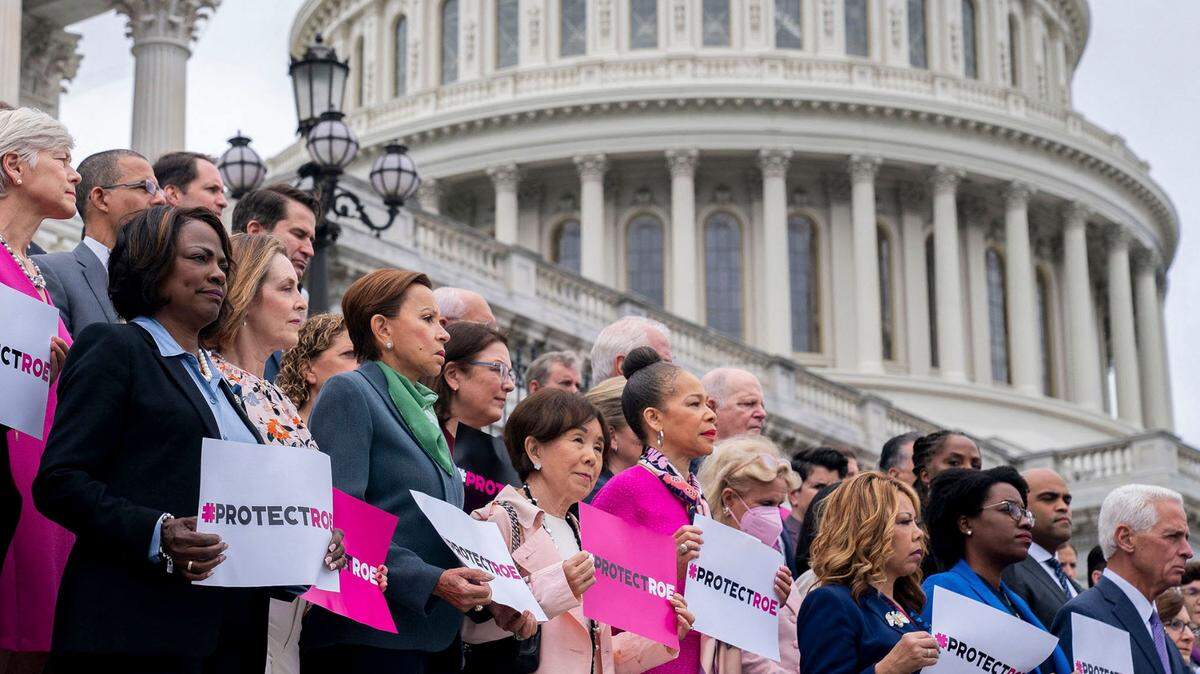
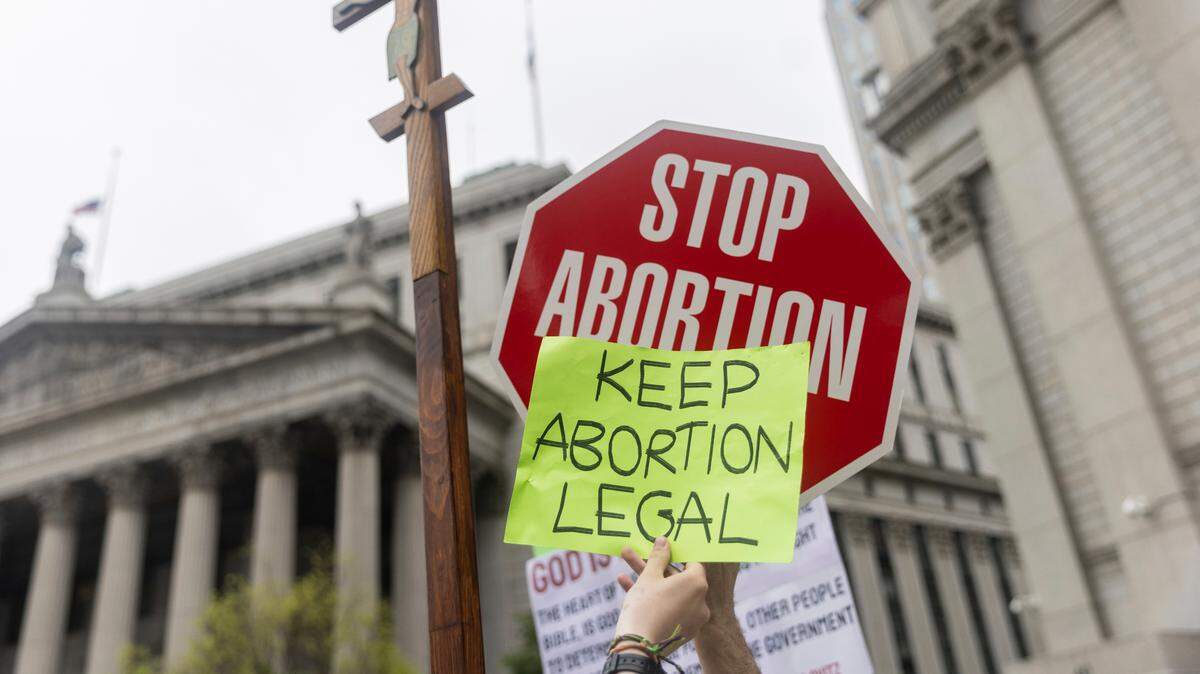
The United States Supreme Court overruled the nearly half-a-century old constitutional right to an abortion on Friday, opening the door for states to ban the pregnancy-ending procedure.
Gov. Gavin Newsom signed a proclamation on reproductive freedom more than three years ago that welcomed people seeking the procedure to California and reaffirmed the right to terminate a pregnancy.
California first legalized abortions in 1967. Since then, state leaders have continued to push policies that bolster protections related to the procedure.
After the Supreme Court released its decision on Friday, Newsom joined the governors of Oregon and Washington to issue a “multi-state commitment” to protect people coming from out-of-state for abortions, to promote access and curb “false and misleading reproductive healthcare information.”
“We’ll fight like hell to protect your rights and your safety,” Newsom concluded in a video announcing the commitment.
Newsom later signed into law a measure that shields people seeking abortion care in California from civil actions brought by other states.
Supreme Court on Dobbs
Through its decision in Dobbs v. Jackson Women’s Health Organization, the Supreme Court overturned Roe v. Wade. The 1973 ruling allowed people to have abortions before fetal viability — the point when a doctor determines a fetus could feasibly survive outside of the uterus — broadly viewed as around the 24th week of pregnancy. States could regulate, but not bar, the procedure before viability.
Justice Samuel A. Alito, Jr., for the majority opinion, wrote that Roe v. Wade and Planned Parenthood v. Casey — the 1992 case which said states could regulate abortion so long as they imposed no “undue burden” — must be overruled.
“The Constitution makes no reference to abortion, and no such right is implicitly protected by any constitutional provision,” he wrote.
The court was effectively split 6-3. Alito was joined by Justice Clarence Thomas along with Justices Neil Gorsuch, Brett Kavanaugh and Amy Coney Barrett — the three conservatives nominated and confirmed under Republican President Donald J. Trump. Chief Justice John Roberts wrote that he would have stopped short of reversal, opting for what Mississippi had sought through Dobbs v. Jackson — to shorten the threshold for fetal viability to around 15 weeks.
The case originated with a 2018 Mississippi law that bans all abortions after 15 weeks of pregnancy except in medical emergencies or in rare cases of severe fetal abnormality. It does not provide exceptions for instances of rape or incest.
Jackson’s Women’s Health Organization, the state’s sole abortion provider, sued the Mississippi Department of Health and its leader, State Health Officer Thomas E. Dobbs, in federal court. The U.S. District Court for the Southern District of Mississippi, and, later, the 5th Circuit Court of Appeals, found that the law was unconstitutional. The state health department appealed to the Supreme Court.
In their dissent, Justices Stephen Breyer, Sonia Sotomayor and Elena Kagan — all nominated by Democratic presidents — recognized that more and more states would bar the procedure, forcing people to travel, assuming that they can afford to.
“Whatever the exact scope of the coming laws, one result of today’s decision is certain: the curtailment of women’s rights, and of their status as free and equal citizens,” they wrote.
California is an abortion hub
Under California law, people can have the procedure before fetal viability, viewed as around 24 weeks, without restriction. An individual can have an abortion after that if they and their doctor feel their health or life is in danger.
“I want to be crystal clear: abortion remains legal here in California and we are working to ensure that people—regardless of where they come from—can access abortion services with as much support and as few barriers as possible,” Jodi Hicks, the president and chief executive officer of Planned Parenthood Affiliates of California, said in a statement after the ruling was announced.
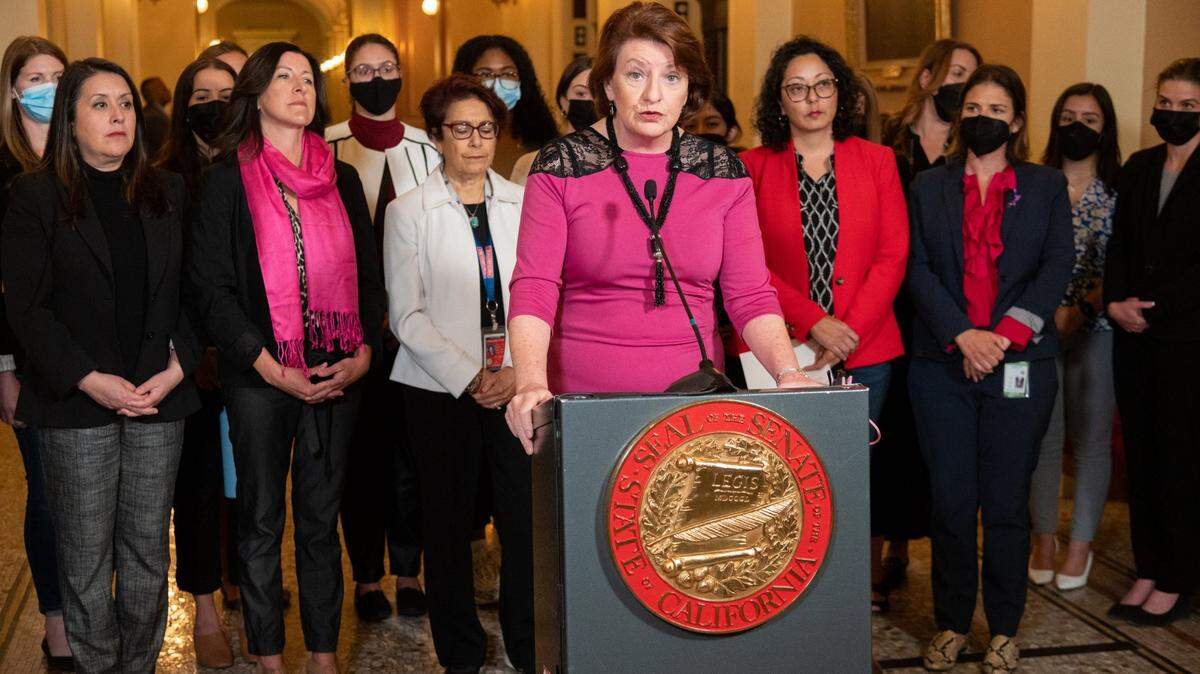
In anticipation of the Supreme Court’s decision, California lawmakers were, and are, rushing to pass a measure for a constitutional amendment that would enshrine the right to an abortion in the state’s constitution. They must do so by by June 30 to ensure voters can consider it on the ballot in November.
The change for California will come with those forced to travel to the state for abortions. California is already a destination for reproductive health care, but the state could see up to a 3,000% increase in those crossing the state line seeking abortion services, according to an analysis earlier this year by the Guttmacher Institute, a pro-abortion nonprofit that studies the impact of reproductive health policies.
The analysis is based on a scenario in which everyone who could get pregnant in states banning abortions does and decides to drive to the nearest state for an abortion. Most of the people driving to California would be from Arizona, according to the analysis.
More than half of the states are certain or likely to ban the procedure now, according to the Institute. More than a dozen states have so-called trigger laws — prohibitions on abortion that go into effect nearly immediately now that there are no federal protections.
States such as Texas have already passed laws that effectively ban the procedure at six weeks of pregnancy by deputizing citizens to sue providers rather than putting regulation in the hands of state officials.
Following the enactment of Texas’ law in September 2021, Newsom signed two new measures to heighten privacy around abortions and declared California was a “reproductive freedom state.” California’s constitution already protects the right to privacy, which applies to abortion, through a 1972 voter-approved amendment.
California’s Future of Abortion Council coalesced this fall to make recommendations for policy that would bolster abortion access in the state.
In March 2022, Newsom signed a law that prohibits health insurers from imposing co-pays, deductibles or other cost-sharing requirements for abortions and abortion-related services. California was already one of six states that required health insurance plans to cover abortion services.
Still, access in California — and across the U.S. — is far more difficult for those in rural areas, with low-incomes or looking for late-term abortions.
Access to medication abortion through telemedicine has aided the ability of people living in areas of California where health care centers are sparse to terminate an early-stage pregnancy. The U.S. Food and Drug Administration lifted a restriction that required people to go in-person to obtain those medications during the pandemic and has allowed pills to be sent via mail going forward.
A slew of bills aimed at bolstering abortion rights are working their way through the legislature.
“To people across the country living in a state hostile to abortion: California is here for you,” Planned Parenthood’s Hicks said Friday. “We will not turn people away, and we will find a way to support you so that you can get the care you need.”
This story was originally published June 24, 2022 at 11:27 AM with the headline "California was ready when Supreme Court overturned a half-century of abortion precedent."