How will California be affected by the end of Roe v. Wade? 7 abortion myths, debunked
READ MORE
Supreme Court Abortion Ruling
Click the arrow below for more coverage of the Supreme Court’s decision on abortion rights.
Expand All
Roe v. Wade, the landmark Supreme Court case that grants abortion rights, was overturned Friday, and the decision will affect millions — including those in California, known for its progressive abortion policies.
When it comes to the medical procedure, a family planning specialist told The Bee, politics should not interfere with the doctor-patient relationship.
“Abortion is a core component of comprehensive medical care that people should have access to … without barrier,” said Dr. Juliana Melo, a gynecologist at UC Davis Health in an interview before the decision was announced. “While people have differing views about abortion, those shouldn’t interfere with the relationship between people and their doctors.”
In an effort to preserve reproductive rights for people in California, Gov. Gavin Newsom and other state lawmakers have advocated for a state constitutional amendment guaranteeing abortion rights.
But there are many myths surrounding abortion — and misconceptions on whether California will be affected.
Here are seven myths and misconceptions, debunked:
1. Myth: Abortions are unsafe
Abortion is a safe medical procedure for pregnant people, Melo said. It is considered a part of “essential healthcare.”
“The vast majorities of abortions are safely performed in outpatient non-hospital settings,” she said.
Melo said that the risk of complications from an abortion is low, especially during the first trimester and that the risks associated with giving birth are much higher.
“Maternal death is a lot higher with continuing a pregnancy and having childbirth,” she said.
Medication abortion is also a trusted approach and “has expanded access to safe abortion care for millions,” according to Doctors Without Borders.
Planned Parenthood, a nonprofit health care provider writes: “Serious problems are rare, but like all medical procedures, there can be some risks.”
Complications from medical abortions occur in less than 1% of patients, Melo said. Some of these include hemorrhage, infection, persistent pain and prolonged heavy bleeding.
2. Myth: Abortions can cause infertility
Abortions do not present a risk to people’s ability to have children in the future, Melo said.
Additionally:
“Having an abortion doesn’t increase your risk for breast cancer, and it doesn’t cause depression or mental health issues,” Planned Parenthood’s website states.
3. Myth: Plan B is a form of abortion
Plan B is not a type of abortion.
While some abortions can be accomplished through medication, the Plan B pill is a type of emergency contraception that prevents pregnancies before they happen.
“It is a birth control method that can be taken after someone has had unprotected sex,” Melo said.
Another emergency contraception medicine is the Ella pill, which can prevent pregnancies for up to five days after unprotected sex, according to WebMD.
Melo said these “morning after” pills work to delay ovulation by suspending the release of an egg from the ovary.
By contrast, the abortion pill serves to terminate pregnancies and “feels like having an early miscarriage.”
4. Myth: Anyone can use the abortion pill
An abortion pill is a type of medication that can be used to end an early pregnancy; it actually consists of two medicines taken separately.
While the abortion pill is a common way to terminate a pregnancy, it may not be the best method for people with certain medical conditions, Melo said.
Those include certain bleeding disorders, allergies to the medications, adrenal failure and severe heart disease.
“It’s very individualized, depending on people’s risks,” Melo said.
Another limiting factor is how far along a pregnancy is.
“In general, it’s approved by the FDA for up to 10 weeks gestational age in pregnancy,” Melo said.
5. Myth: California has no abortion restrictions
Only six states and D.C. do not enforce any restrictions on the timing of abortions, meaning they can be performed throughout pregnancy. California is not one of them, according to the Kaiser Family Foundation.
California law allows a person to obtain an abortion before “fetal viability.” The exception: if a physician determines that the pregnancy threatens the life or health of the pregnant person.
Most doctors consider a fetus viable around 24 weeks, but that is not set in statute, Melo said.
“The majority of abortions happen pretty early in pregnancy and [are] not anywhere near viability,” Melo said.
In 2019, more than 92% of abortions took place during the first 13 weeks of the gestation period, according to the CDC.
6. Myth: Abortions are completely free
Generally, abortions can cost up to $750, according to Planned Parenthood. They may be less expensive or have no out-of-pocket cost depending on the patient’s health insurance, location and type of abortion.
In California, insurers are required to cover the procedure.
On March 22, Newsom signed a bill that prohibits health plans and insurers from imposing a co-pay, a deductible or other cost-sharing requirements for abortions and abortion-related services. This effectively eliminates out-of-pocket expenses. This bill will take effect on Jan. 1, 2023.
California is one of six states that require health insurance plans to cover abortion services.
Separately, there are programs that help cover the cost of travel for abortion, according to the ACLU of Northern California.
7. Myth: Roe v. Wade’s overturning won’t affect California
“The state shall not deny or interfere with an individual’s reproductive freedom in their most intimate decisions, which includes their fundamental right to choose to have an abortion and their fundamental right to choose or refuse contraceptives.”
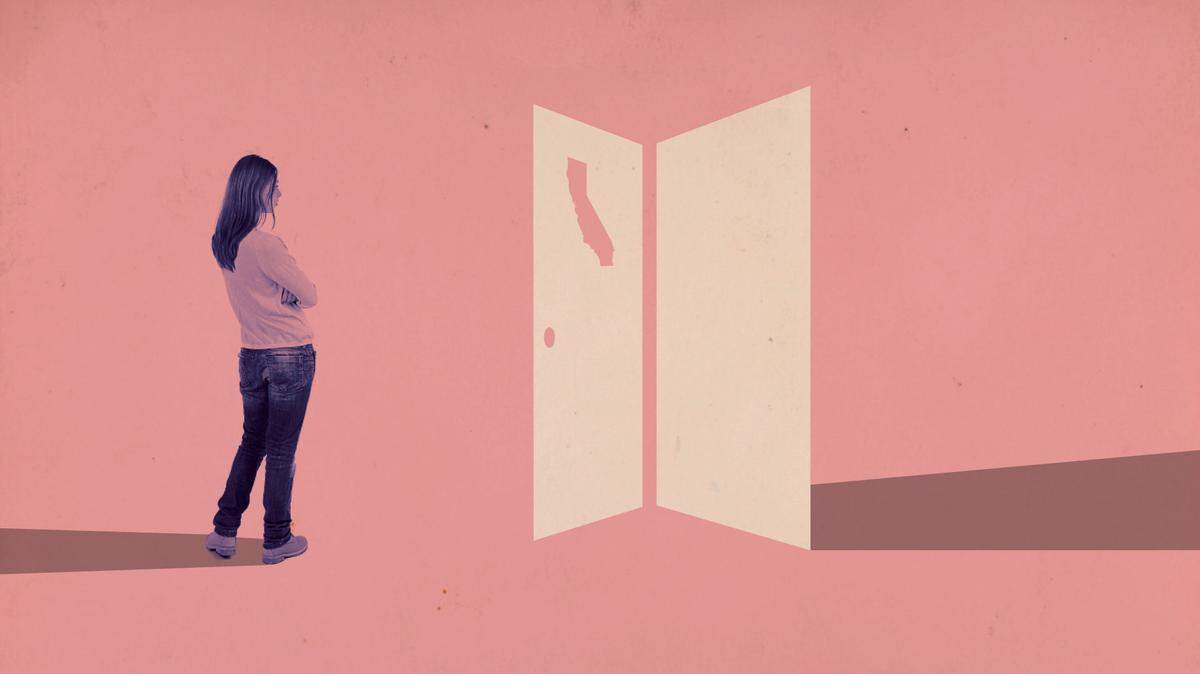
According to Guttmacher, the end of Roe v. Wade on Friday will likely lead to a total ban or severe abortion restrictions drawn in 26 states. California would become the closest no-ban state within driving distance for roughly 1.4 million patients.
“We are really prepared to be, as our governor said, to be the sanctuary state for reproductive health care for the country,” said Stacy Cross, president and CEO of Planned Parenthood Mar Monte.
Planned Parenthood Mar Monte operates more than 30 health centers in mid-California and northern Nevada — including some in Sacramento. Before the fall of Roe v. Wade, these centers already saw people coming from states like Texas and South Dakota to seek reproductive health services.
“When a person is pregnant and they don’t want to be, they’re going to do whatever it takes not to be,” Cross said.
In order to prepare for the impending federal decision, Cross said the region’s largest PP affiliate hired new abortion providers and made plans to build more health center locations.
“We are prepared to be able to take on additional 250 to 500 patients a week,” she said.
This story was originally published June 24, 2022 at 5:00 AM with the headline "How will California be affected by the end of Roe v. Wade? 7 abortion myths, debunked."