Turlock sets homeless goal. What do encampment residents think of city plans?
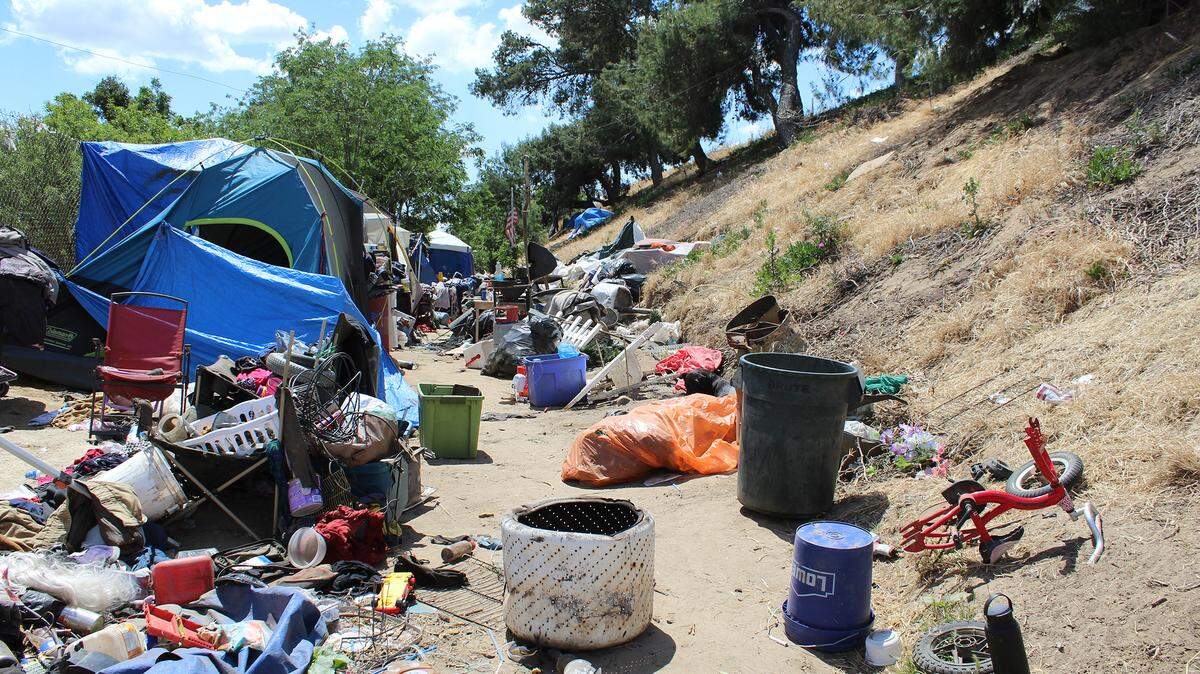
For the first time in Turlock’s declared homeless emergency, a city official on Tuesday announced a specific goal to reduce the city’s unhoused population by 50 people each year.
Some residents experiencing homelessness reacted to the goal with hope, while others expressed skepticism and questioned how proposed programs will help people get off the streets.
At an encampment along Highway 99 starting near West Main Street, Brandi Kane said proposals such as mental health and primary care services do not provide housing. Kane and her three dogs have lived in the encampment for about six months, and she estimated 55 people call the tent-lined area home.
But police officers have warned the community of plans to clear the encampment, Kane said, leaving residents to again question where they will go next. The area falls under state jurisdiction, Turlock Police Chief Jason Hedden said. He confirmed his staff notified people of Caltrans’ and the California Highway Patrol’s sweep in the near future and offered them shelter services, DMV vouchers and snacks.
“The services that they’re offering have nothing to do with housing,” Kane said. “So, if we’ve got to move out of here, what good are any of the other services? They’re not gonna put us up anywhere (and) we’re still gonna be on the street, so it’s pointless.”
Kane previously lived in an encampment down West Main Street located between Planet Fitness and Evergreen Packaging. The city cleared the camp in March 2021 and built a fence around it to prevent people from returning.
Specific Turlock goal a first
With a current estimated unhoused population of 250, Turlock would reduce the number of people experiencing homelessness by a fifth if it achieves the tentative goal City Manager Reagan Wilson announced.
Tuesday marked the first time the city has specified a target number in either the current homeless emergency or the previous 120-day crisis that ended last July. Previous declared goals have included reducing health dangers of encampments and connecting people with services.
Wilson announced the goal right before the City Council unanimously authorized him to negotiate service agreements recommended by the homeless ad hoc committee. Councilwomen Pam Franco and Rebecka Monez, who made up the committee with City Attorney George Petrulakis, presented their recommendations to reduce and prevent homelessness two months ago.
Recommendations include contracts for behavioral health workers assigned to west Turlock, mobile health services and prescription drug coverage for families who need it, and long-term care at home for older residents who do not qualify for Medi-Cal. The report also suggests looking into properties the city could buy to provide housing to people experiencing homelessness, Wilson said.
“The reality is the housing market is so expensive that we have limited resources of being able to actually have real impact in that,” Wilson said during the meeting. “But we’re in fact looking for those opportunities.”
Resident questions Turlock’s approach
Terry Sump, who lives in the same encampment as Kane, also questioned how the city will achieve its goal of reducing the number of people experiencing homelessness by 50 people this year. He suggested the city get to know the individuals, learn why they lost housing and find out what issues are preventing them from accessing housing.
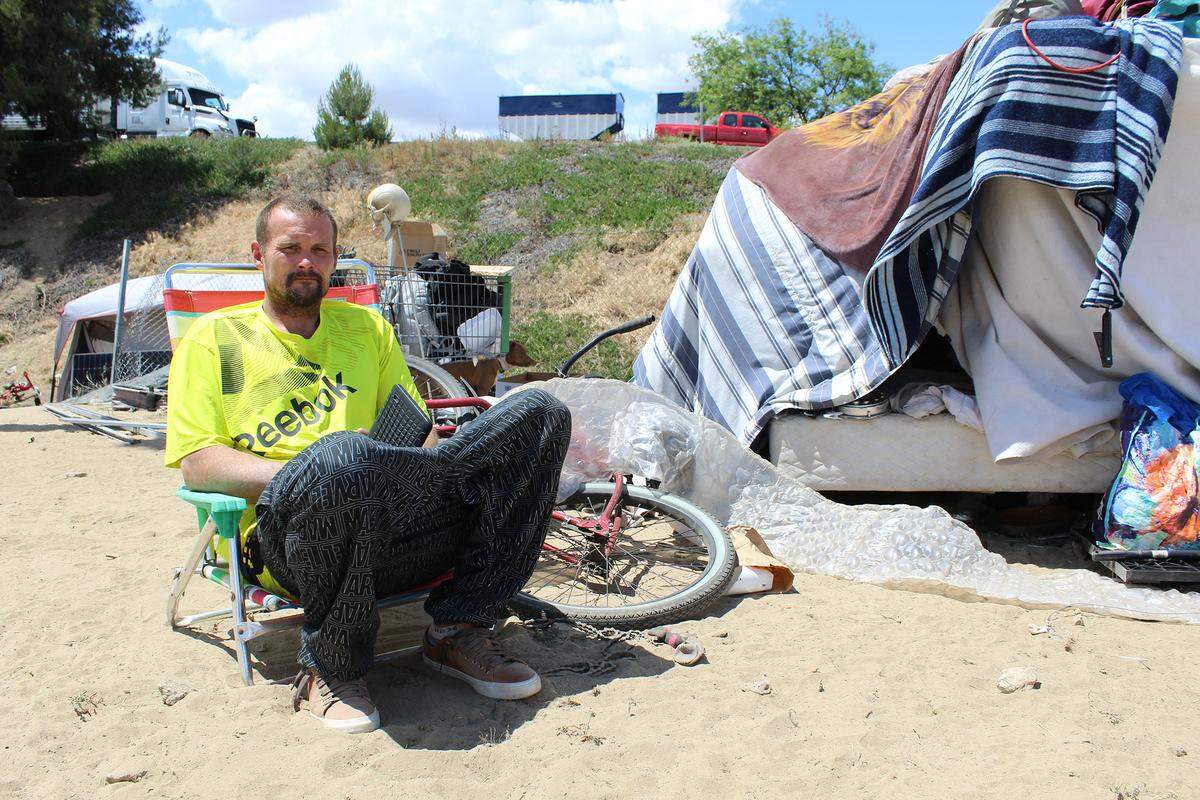
Some people assume that people fall into homelessness because of substance abuse, but Sump said he started using drugs to cope with the stresses of living on the streets. He started experiencing chronic homelessness 20 years ago at age 23 when his mother died, Sump said. If he had a stable place to live, Sump said he would not be under the influence.
Not every unhoused person deals with mental health issues and can qualify for behavioral health services, either, Kane said. For those who struggle with mental health, Kane said she believes a housing-first approach and prioritizing getting people into housing is more effective.
“It’s pointless to get somebody started on mental health and expect them to be consistent with it when the bottom line is they got no foundation,” Kane said. “You can’t begin to get stable mentally if you’re not stable physically.”
A designated safe camping ground can provide stability, Sump said, noting that agencies several times have cleared out encampments he has lived in. He camped under the Golden State Boulevard overpass near G Street and Stanislaus County evicted him when it cleared tents in November 2018.
Sump also lived in an encampment along train tracks near the intersection of South First and D streets. Union Pacific Railroad cleared the area in March 2021 and Sump said crews towed his truck because he could not find his keys.
He and his dogs moved to their current spot about three months ago but they will have to find a new place when the state clears the encampment. Sump said he will not stay at a shelter because he sleeps alongside his dogs.
“We just go around from place to place where we know we’re not going to be a nuisance to the community or have neighbors calling the police saying, ‘There’s a man screaming out in my backyard’ or whatever,” Sump said. “So, these locations that we find are discreet. But they end up running us off and having us move.”
Family hopes for housing
Meanwhile, a mother and daughter living at Broadway Park said they believe the city can achieve its goal of reducing homelessness by a fifth this year. Cathy Heap, 68, said she hopes the city can get even more people into housing.
“I hope the city people do something about it because I can’t be living like this for the rest of my life,” said Cathy Young, Heap’s 34-year-old daughter.
The pair were expecting a phone call regarding a housing application on Tuesday. But some paperwork did not go through to the agency, so they have another appointment scheduled for Thursday.
This story was originally published May 12, 2022 at 9:57 AM.