Turlock police chief sits down for Q&A. What did he say on community concerns, homeless?
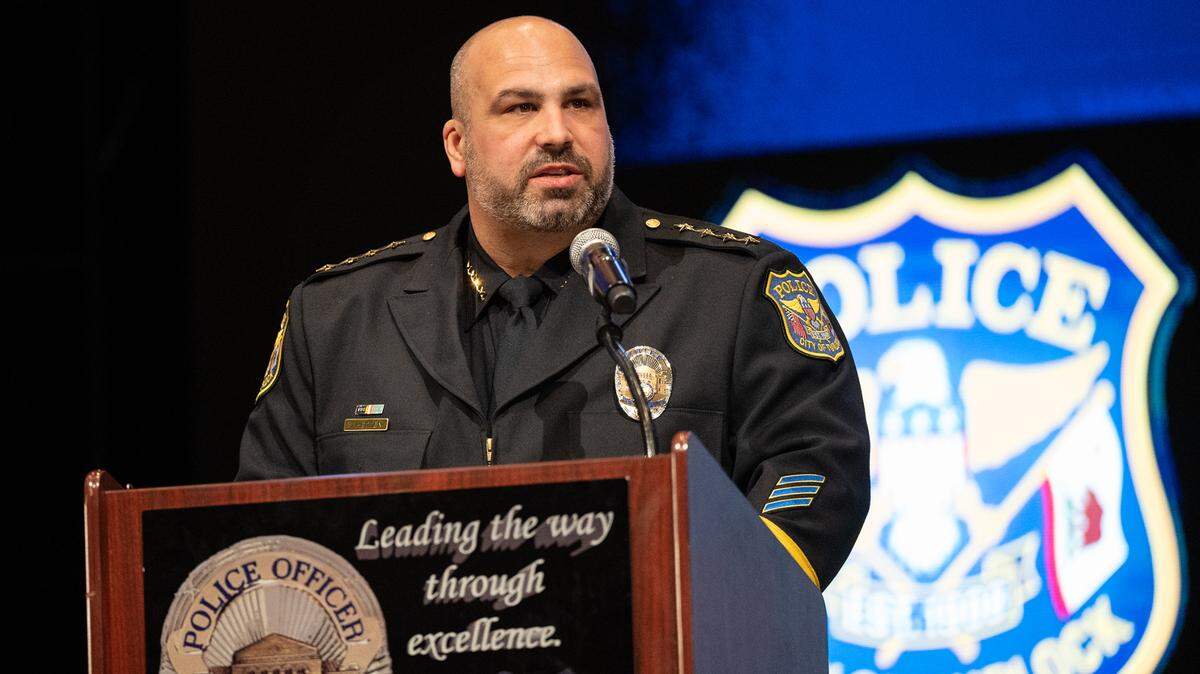
Since swearing in this February, Turlock Police Chief Jason Hedden’s main priority has been learning about the city’s needs.
The 16-year Turlock resident said he’s talked to a wide variety of people — making rounds including businesses, skate parks and homeless encampments — in an effort to hear from as many as possible.
For Hedden, the biggest goal right now is to build relationships, both outside of and within the Police Department. He also said he hopes to be a model for how he wants officers to interact with Turlock.
“If they see that I expect they treat people with respect, that they treat each other with respect, then they go out and they emulate that behavior to our community,” Hedden said.
The Modesto Bee sat down with Hedden on Tuesday to talk about his approach to the job and his views on topics including the homelessness crisis and policing strategies.
This interview has been edited for length and clarity.
You’ve been very busy with meetings. What groups have you been meeting with in the community?
I met with the Turlock Chaplaincy Board this morning, the chamber of commerce board, the downtown association board, the fairgrounds director, our school officials. I toured my first marijuana dispensary. Our skate parks, talking to people who are interested in lighting the parks up at night.
My days have been 14-, 16-hour days just trying to catch up and really get to know everybody in the community. My philosophy is when you build those relationships, it just makes things a lot easier.
Some people say that you’re pretty young for a chief (he’s 39). How do you respond to those kinds of comments?
I’ve crammed a lot into a full-time career of 18 years. I’ve attended the FBI National Academy, earned a master’s degree.
I’ve worked in pretty much every special assignment the Police Department has to offer, from school resource officer (to) the traffic unit. I’ve been an interim police chief for nine months total time. I’ve worked a gang unit. I was a detective for a number of years. There’s nothing that I haven’t seen or done within police work.
I think that typically what you see is police chiefs coming in, they’re at the end of their career. I’ve done everything to prepare myself to be a police chief and I just have a little bit longer. Instead of three to five years, I have about 10 years, and I’m in this with Turlock for as long as they’ll have me.
How does being a resident of Turlock, on top of being on its police force, affect your views on policing or this job?
I completely see what they’re seeing when they’re seeing blight or homeless issues or people with mental health issues. With my family being out there where they may encounter a situation where they’re uncomfortable, that just makes me work a little bit harder on addressing those issues.
How have your experiences from outside the community and leadership opportunities influenced your style of policing or your beliefs on how policing should be done?
I would say that one of my biggest attributes is that I’m an active listener. Everybody has a different dynamic in a different culture in a different background that they’re speaking from. One of the biggest takeaways I’ve got from (working with the California League of Cities Policy Committee on Public Safety) is that I’m hearing these ideas and they really are shaping the way that I make decisions here, because I’m hearing perspectives from a lot of different people.
That’s why the (Community Advisory Board to the Chief of Police) is something that was so important to me. It’s important for me to hear from our community and hear from people from different backgrounds and experiences. Maybe you have a schoolteacher, maybe you have an educator, maybe you have a homeless advocate. They provide a different dynamic.
Can you describe your general approach to homelessness?
Homelessness is not a police problem; it’s an everyone problem. It’s very important that the Police Department takes an active role in homelessness, but it’s not one that the Police Department should be fronting alone.
It takes a collaborative approach. It takes the Police Department, parks department, city manager’s office, county resources, and public health working together. It’s even going to involve the court system.
Homelessness is not a one-dimensional problem. You have to treat the individual for whatever their underlying symptom is that brought them to homelessness. It could be that they have a mental health problem and they don’t have access to medication.
It could be they don’t have any problem at all other than they don’t have any financial support or job skills to get out of homelessness. It could be they have a substance abuse problem.
So, I think that you have to get out there and communicate with people. And identify the symptom of the problem and work with that person individually on a plan to get them out of homelessness.
Modesto has recently approved a program to pair police officers with mental health workers for mental health crisis calls. What are your thoughts on that?
I have a meeting scheduled with the Modesto police chief and we’re going to actually talk about just that. So, I think for us, that’s a really good idea.
But it’s also very important that our police officers are able to have those skills as well because they’re out there in the community making these interactions. I don’t want them to become so reliant upon a social worker or somebody to do these interactions.
These are also members of our community and they should be able to interact with them. We have to be able to dial it up from dealing with somebody with compassion to dealing with somebody that is maybe noncompliant.
Are there any changes to the department that you want to implement over the next few years?
Right now, I’m watching and learning what processes are working well and what processes we need to work on. I’m building my administrative team. I have a new captain. I’ll have three new lieutenants here shortly.
So, we’re building that team dynamic, training together and learning each other’s styles. And we’re always looking at ways that we can serve the community better.