Stan State kicked out a straight-A student. She says it was because of racial bias
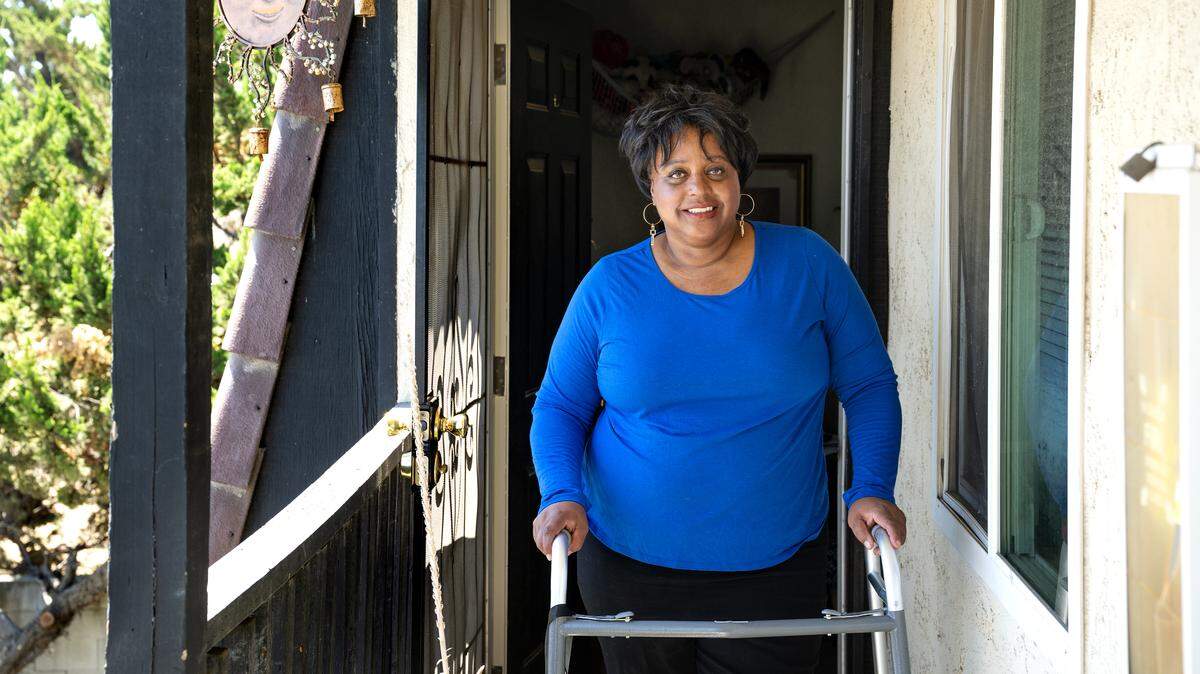
A straight-A student at Stanislaus State was dismissed from the university’s Master of Social Work program for what faculty described as a disrespectful communication style and unprofessional behavior.
Shantel Johnson, 57, believes her dismissal was rooted in implicit bias — specifically “tone policing” and the “angry Black woman” stereotype. She said that she also believes the program discriminates against older students and that others in the program have had similar experiences.
“I sacrificed a lot to get here,” Johnson said. “I’m in college to learn to be a better speaker, to be a better writer, and that’s why I’m in school.”
In a student performance review, a lecturer described Johnson’s communication as “abrupt, demanding, and at times disrespectful” and wrote that this was addressed with Johnson early in the program.
Johnson said her communication sometimes may come across as abrupt, but that is not her intention and she is working on it.
“In my household or in my neighborhood, that is not how we talk,” Johnson said about communicating in a professional manner. “So I have to learn that.”
While Johnson was working to secure a practicum placement, a hands-on training experience that is a required piece of the MSW program, faculty documented concerns about her responsiveness to emails, failure to attend a scheduled Zoom meeting and apparent difficulty navigating an online placement system in the program.
Johnson’s fall 2024 end-of-semester evaluation indicates that her performance was “below expectations” in the areas of interpersonal skills, professional behavior and communication, use of technology and cultural humility, which is consistent with the practicum organization’s reason for terminating her placement. However, she received A’s in all her classes that semester.
In December, Johnson was terminated from her practicum placement after the site reported “disregard for instructions and coaching provided by the task supervisor; complaints to staff about other staff (including labeling/name-calling); demanding behavior; rude and disrespectful attitude; failure to document instructions or retain information provided; statements of already knowing information she is being trained on and learning tasks being beneath her/unrelated to social work; [and] repeated statements of goals for pursuing MSW to publish a book on the flaws of the social work profession.”
The MSW faculty ultimately determined that Johnson’s behavior conflicted with the values and ethics of the social work profession. She was not given a formal plan of support before the dismissal.
According to the review, Johnson denied engaging in unprofessional behavior and stated she believed those who found fault in her interactions were “exhibiting internalized bias against her.” She said most of the claims made against her were taken out of context and that she wasn’t given an opportunity to address the details brought up.
Dismissal appealed on basis of implicit bias
Johnson appealed her dismissal, stating that implicit bias caused a misinterpretation of her communication style. The university’s Administrative Disqualification Appeal Committee denied her appeal, finding no evidence of discrimination, though it acknowledged it lacked contextual details about the incidents cited.
The ADAC recommended the MSW Student Review Process for a number of things, including the “need to develop a more culturally and equitable response to BIPOC [Black, Indigenous and people of color] students” and to “include more emphasis on helping students to mitigate their performance issues.”
For Johnson, the committee recommended that she reflect on the reasons for her disqualification, seek guidance and consider alternative academic paths.
A staff member at the university who sat in on a hearing regarding Johnson’s dismissal from the MSW program wrote a letter to the Student Performance Review and Termination Committee in support of Johnson, reaffirming her concerns and calling for her full reinstatement. She declined to be named in the story, citing university policy.
The staff member said in the letter that throughout the proceedings, no specific reasons were provided for Johnson’s dismissal — only vague insinuations and subjective language. That made it difficult for both Johnson and committee members to understand the basis for her removal.
The staff member wrote that the program’s characterizations of Johnson’s communication and behavior relied on “highly subjective descriptors that invoke harmful racialized images, particularly the ‘angry Black woman’ stereotype,” and argued that definitions of professionalism are often racially coded and colorblind in enforcement. She also noted that none of Johnson’s instructors in other courses reported any behavioral concerns.
“The dismissal of a first-generation Black woman from a social work program, especially in the absence of documented support strategies, mirrors the very systemic failures we train our students to confront,” she wrote in the letter. “Removing Shantel from the program without fulfilling the very commitments outlined in the handbook risks sending a broader message to current and future Black students that they will not be met with compassion when challenges arise.”
Representatives of the university declined to comment on individual student matters in accordance with FERPA and federal privacy regulations.
Wendy Byrd, president of the local chapter of the National Association for the Advancement of Colored People, wrote a character reference letter for Johnson. Johnson is a member of the NAACP’s housing committee.
“We are deeply concerned about whether students are receiving adequate due process. We urge staff to prioritize targeted student support services and conflict resolution strategies to ensure fair opportunities for all students to address their alleged challenges,” Byrd said in a statement to The Bee.
Can students be dismissed over professionalism?
According to the MSW student handbook, students may be dismissed for “failing to meet standards of professional conduct, personal integrity, or emotional stability requisite for professional practice,” and for “consistent failure to demonstrate effective interpersonal skills necessary for forming professional helping relationships.”
These were the standards cited in Johnson’s dismissal. In social work, such standards include the importance of human relationships, integrity and dignity.
Rachel Moran, professor and director of the Education Law Program at Texas A&M University, said most student dismissals stem from academic performance, but some involve more subjective factors, such as communication style. She said programs are not required to retain students who fail to meet both academic and professional standards.
Different professions have their own forms of gatekeeping, and completing coursework or passing exams may not be enough. Moran said academic programs must balance a student’s right to due process with their responsibility to protect the safety and well-being of clients and colleagues in the field.
“If you have a subjective judgment about someone’s demeanor, there is a concern that that could have some sort of bias that infects the process,” Moran said.
Because students invest significant time and tuition in these programs, she said due process is essential. It allows both sides to address concerns and, in many cases, gives students an opportunity to correct behavior. It’s also important, she noted, to examine whether due process was properly followed.
Professional standards in many fields were created during a time when the workforce was overwhelmingly white and male. As a result, the modern definition of “professionalism” often reflects historically exclusionary norms. While students are still expected to meet those standards to succeed in their chosen fields, institutions cannot exaggerate or misinterpret concerns about professionalism based on a student’s race, gender, age or cultural background.
She added, “there’s an interesting distinction between the structural biases that might be built into the profession and the personal biases that people might have with evaluating someone’s fitness for the profession.”
Johnson said she was caught off guard by the dismissal, noting that she had only limited interactions with faculty — mostly through emails and phone calls. She had been working with the university’s Black student success coordinator, who she said was supportive in helping Johnson strengthen her communication skills.
What’s been most confusing, Johnson said, is the difference in expectations between the classroom and the field. When working with unhoused individuals or people with mental health challenges, she said she tries to speak in a way they can relate to — but in the academic setting, she’s expected to use more formal, professional language.
Experiences of people of color at Stanislaus State
Another student currently enrolled in Stanislaus State’s MSW program, who asked to remain anonymous, said she has faced similar challenges navigating the program as an older Black woman.
She said one of the first things she noticed was the lack of students of color in the program.
As one of the oldest in her cohort, she often felt her communication style was misread simply because she was direct. Recently, she said, she was told not to print out emails from community partners praising her work because it made others “uncomfortable.”
“I feel like more when you talk about my personality, you’re talking about me as a Black woman,” she said.
She believes the situation with Johnson got blown out of proportion and that the program could have done more to support her. As older students with lived experience, she said, their perspectives should be valued, not penalized, especially in the field of social work.
Recently, the dean of the College of Business Administration at Stanislaus State University, Terence Pitre, announced his resignation. He cited racial discrimination, retaliation and harassment from some faculty and staff as the reason for his departure.
“From the time I accepted this role, I experienced persistent racial discrimination, retaliation, and targeted harassment from some (not all) faculty and staff,” Pitre wrote in an email to his students. “Despite reporting this condition, the system failed to act meaningfully. I was left without protection or support, even as the environment deteriorated and impacted my physical and emotional health.”
Moving forward
Johnson said she does not plan to return to Stanislaus State. Instead, she’s considering taking classes at Modesto Junior College — where she studied before transferring — and pursuing a certificate in drug and alcohol education or counseling. She still hopes to continue in the field of social work.
“This is my passion. This is my dream,” she said.
She said she was deeply disappointed when the program recommended she pursue a different academic path, especially after spending more than a decade doing related work.
Returning to school after 20 years wasn’t easy, she said. She had to relearn basic skills — from using a computer to completing writing assignments. After she graduated high school, she said she was left to support herself while watching her friends move on to college. For years, she said, she felt alone and unhappy.
Despite that, she not only returned to school but was accepted into a master’s program — becoming the first in her family to attend college.
Johnson said her own struggles are what led her to social work. She wanted to give others the hope she once lacked.
This story was originally published June 23, 2025 at 2:19 PM.