‘Run, hide, fight’ and more: How Stanislaus schools, cops are preparing for shootings
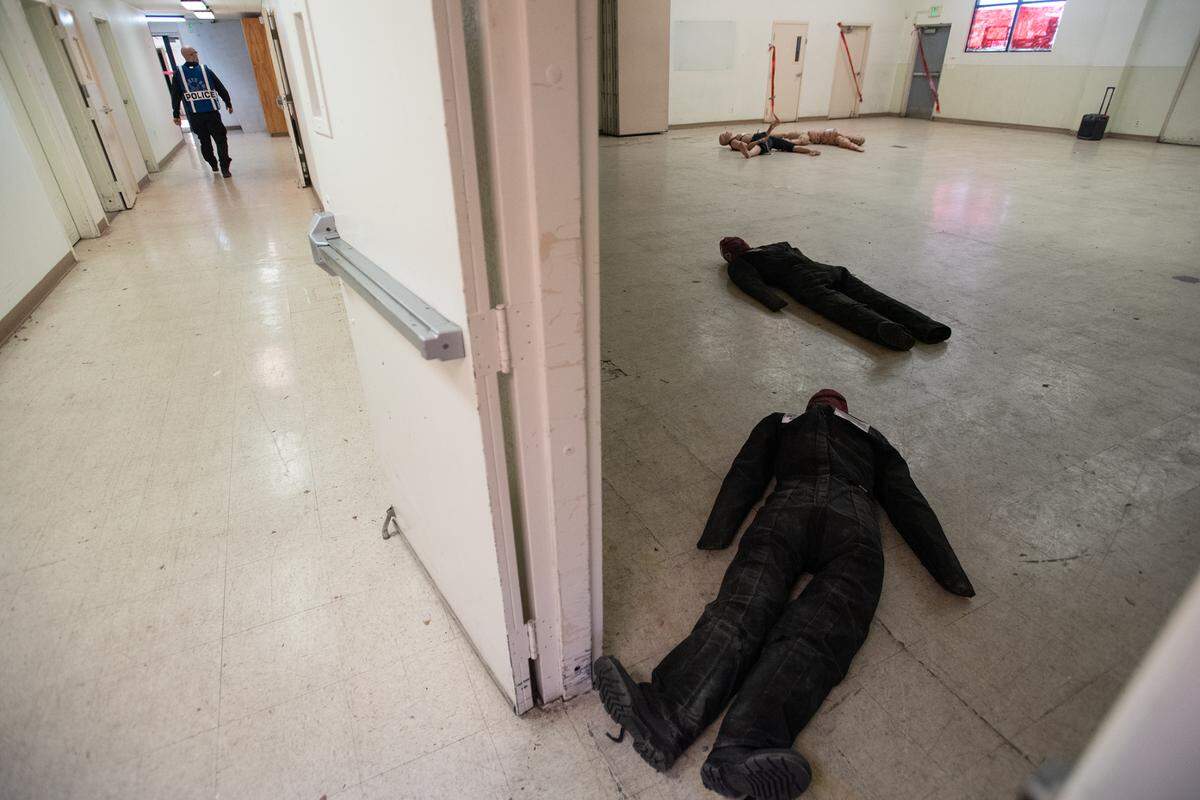
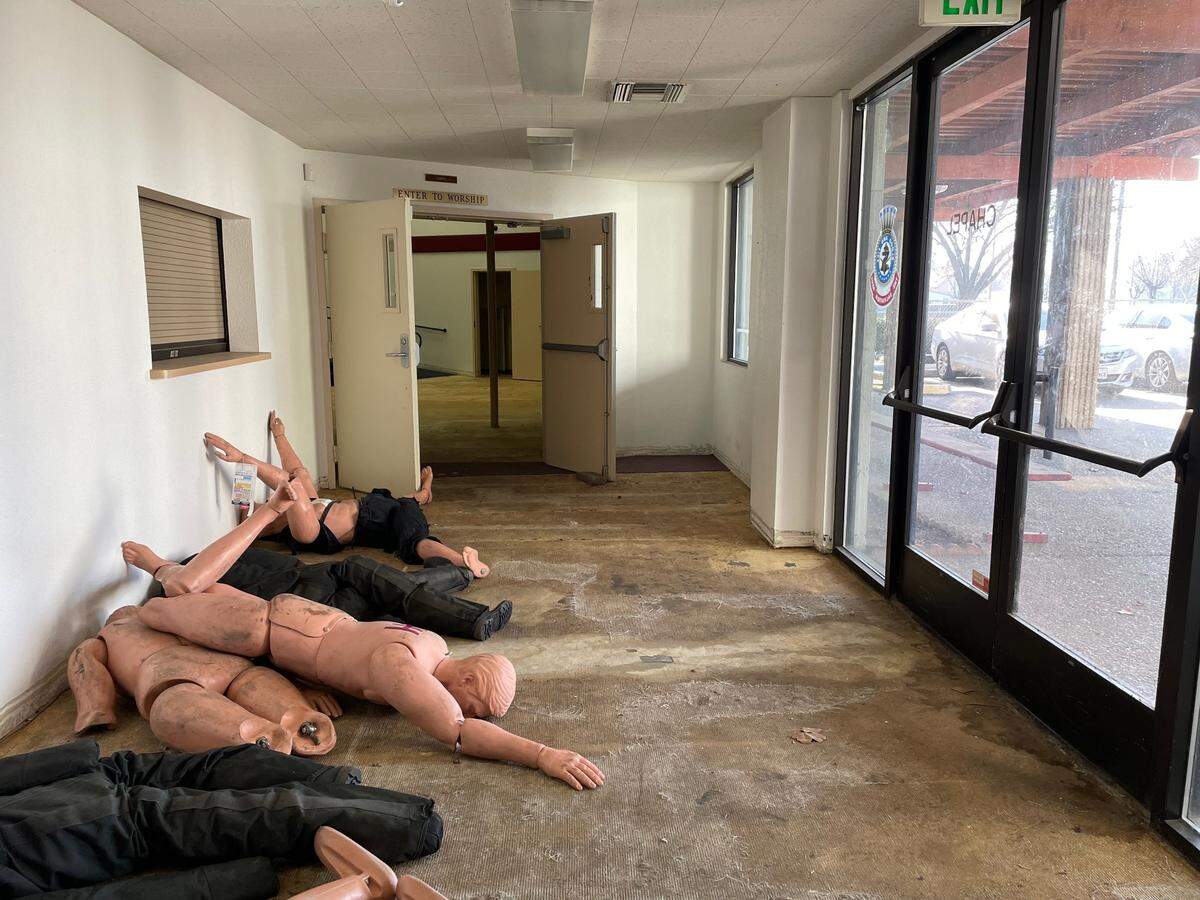
A red light shines through abandoned windows where faded letters once advertised social services in downtown Modesto. In a hallway, mannequins in tattered clothes with missing limbs lie strewn under a small placard with the words, “Enter to Worship.”
Formerly a Salvation Army site, the building now seems more like the scene of an apocalyptic video game.
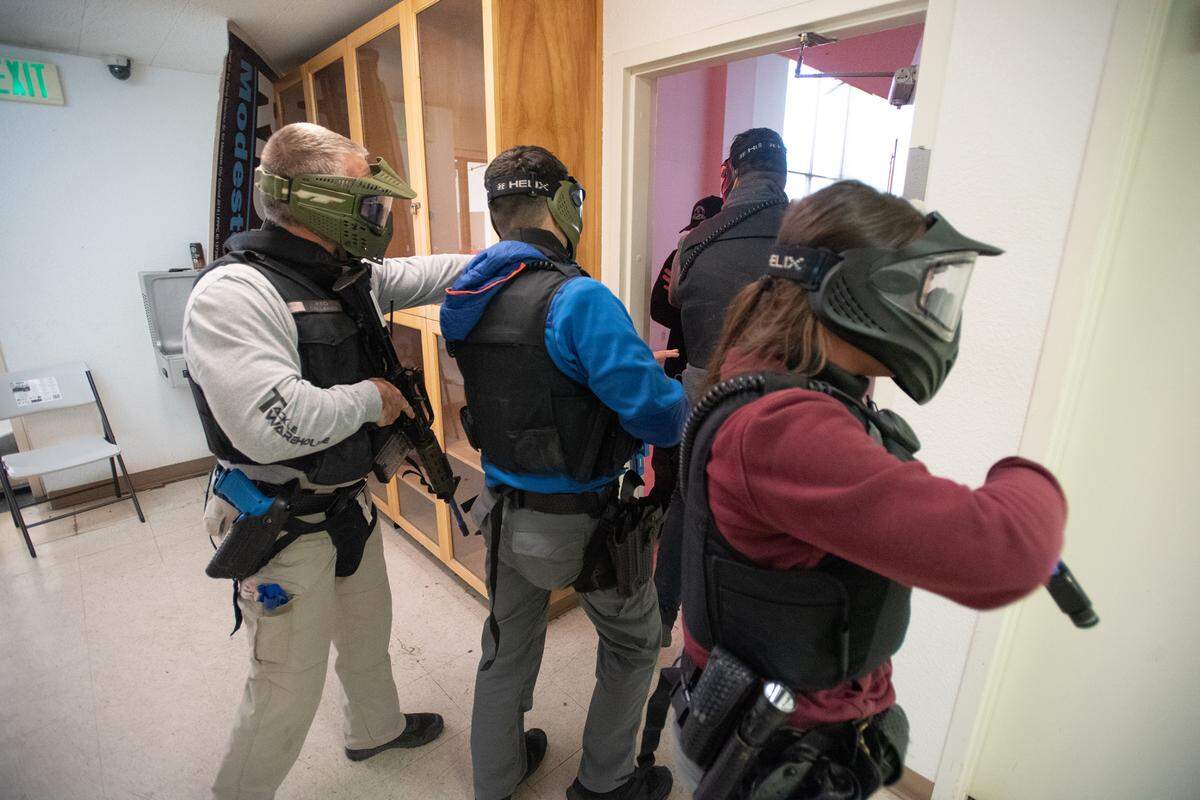
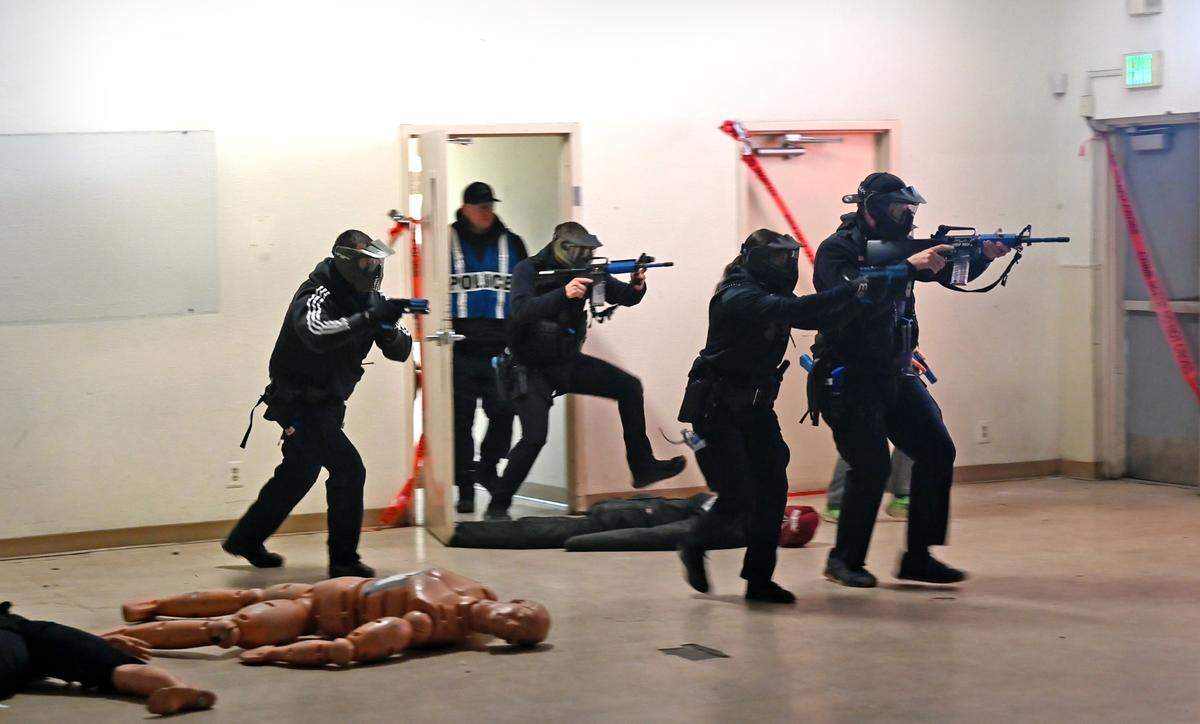
Three armed men clad in black and camouflage bound into the foyer. “Open door left,” says the man in front. Two younger officers flank him from behind, handguns poised to shoot.
“That first guy,” a SWAT instructor explained later, “is basically the bait.” The officers behind him are in charge of taking on the threat.
Modesto Police Department Lt. Joe Bottoms chimed in: “If we make them shoot at us, it means those bullets aren’t hitting somebody else.”
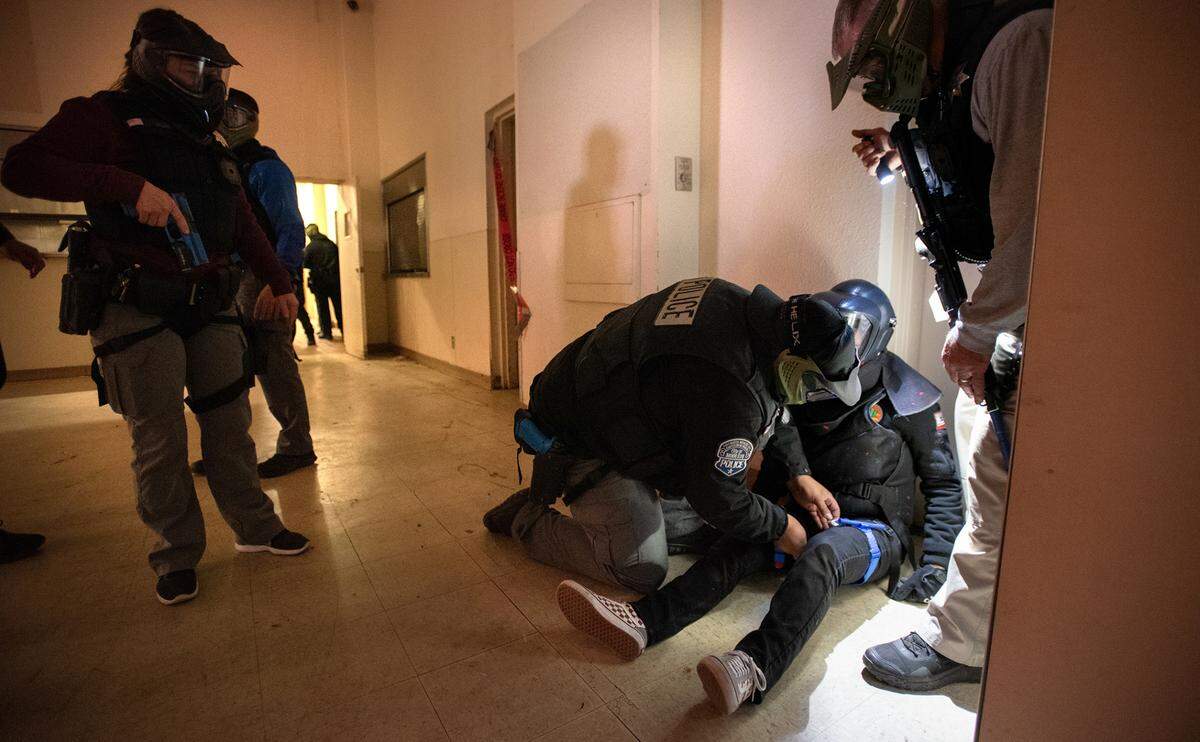
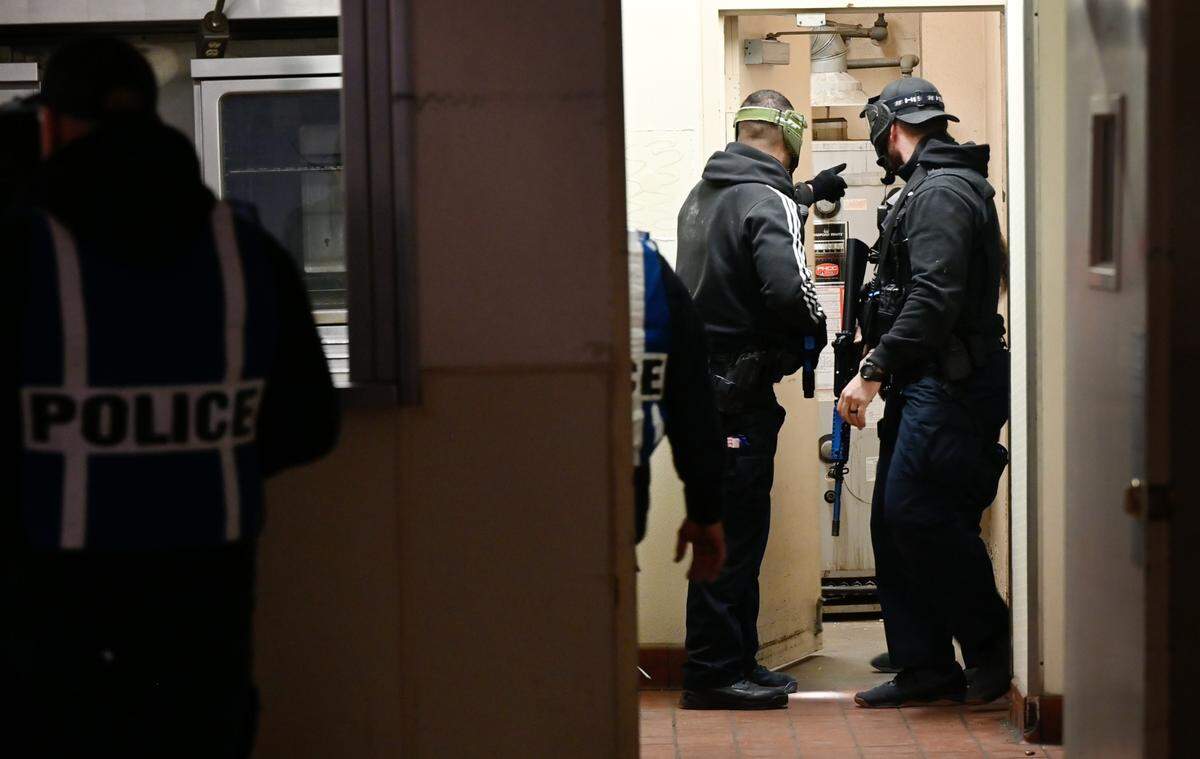
Over the course of the month, every Modesto police officer will come to this abandoned building to learn or refresh their training around active shooters.
Since the start of 2023, California has seen nine mass shootings. Thirty-two people have died across the state, from a 10-month-old baby in the small town of Goshen to a 76-year-old man in L.A. County’s Monterey Park.
There have been more than 70 mass shootings across the country nationwide in 2023, according to the Gun Violence Archive. Just this week, a gunman killed three students and critically injured five others at Michigan State University before taking his own life.
In October 2021, a 14-year old boy threatened to bring an AK-47 assault rifle to a Modesto city school to shoot his classmates. It took a month before school administrators learned of the threat and seven months before police were alerted.
“He’s a ticking time bomb,” his mother said at a school board meeting in June, where she begged the district to place her son in a residential treatment facility.
‘Run, Hide, Fight’
There is no law requiring school districts to prepare for a shooting, but in interviews with the largest school districts in Stanislaus County, administrators all described training events for staff and lockdown drills for students, though with varying frequency.
In many cases, years of lockdown drills — where students practice hiding under desks or in a corner while the teacher lowers the blinds and locks the door — have given way to ideas on how to handle an active shooter roaming the hallway.
Instead of “the old school lockdown drill,” students and staff are encouraged to use “situational awareness” to figure out the best way to respond to a threat, said Kenneth Fitzgerald, director of student support programs at Patterson Joint Unified School District. In some cases, he explained, the best response is to flee, but other times, students and faculty may need to defend themselves.
Fitzgerald doesn’t love the usual mantra for facing shooters: “Run, hide, fight.” He prefers the acronym OODA or “observe, orient, decide and act,” which is drawn from a training company called Knowledge Saves Lives that has presented to Patterson teachers in the past. Turlock Unified School District hired the company to conduct a similar training with its staff.
In the presentation, Fitzgerald said, the company walked through possible weapons that teachers or students could use to defend themselves, should they need to “act.” The company recommended using a fire extinguisher, if possible.
“We are not training our staff to be warriors or combatants,” he said, “but we want them to have that mindset that they can take action to help save a life.”
Riverbank, Ceres and Modesto rely on police or the Sheriff’s Office to present to staff about possible risks and best practices for defense. They also run “tabletop exercises” where representatives from different city or county departments run through the ways their agencies might respond to an active shooter.
Riverbank Unified School District Director of Student Services Barbara Brown said that in one presentation by the Sheriff’s Office, teachers were instructed to throw items like books and staplers at shooters. The goal, she clarified, is not to defeat the shooter with a book but to distract him and create time for escape.
Other training from the Sheriff’s Office or Modesto Police Department can be intense and realistic, where students and teachers have volunteered to get shot with paint balls and stage their own deaths.
Those simulations all have taken place outside of regular school hours. None of the school districts interviewed required that students participate in simulations or attend presentations. When students do participate, like in a regular lockdown drill, the teacher leads.
Part of the reason, administrators said, was that some simulations can scare and traumatize students. Indeed, the American Association of Pediatrics has called into question the efficacy of such simulations and says they may result in “unintended negative psychological and emotional harm” for both students and staff.
Fitzgerald pointed out that a student may become a shooter, in which case allowing students to participate in certain trainings could inadvertently teach them how and where to kill.
Flagging the problem
School officials across Stanislaus County stressed that active shooter drills, simulations and lockdowns are only some of the many tools that keep students safe. They also look to proactive measures that can seek to support students who may harm themselves or others and policies that can promote gun safety.
In Patterson and Ceres, administrators emphasized a model known as multi-tiered systems of support, which brings teachers and behavioral specialists like counselors together to support students in general.
Ceres also uses a software called Beacon, which flags potentially violent language from a student’s Google Workspace and alerts administrators.
“In the vast, vast majority of cases, it’s flagging words that, once it’s looked at, there’s no real intent to harm themselves or others … like using the word ‘suicide’ in an essay,” said Dan Pangrazio, assistant superintendent of student support services for Ceres Unified.
Turlock has developed mental health awareness programs in partnership with Sandy Hook Promise, a national nonprofit organization founded by the parents of the victims of the shooting at Sandy Hook Elementary School in Newtown, Connecticut.
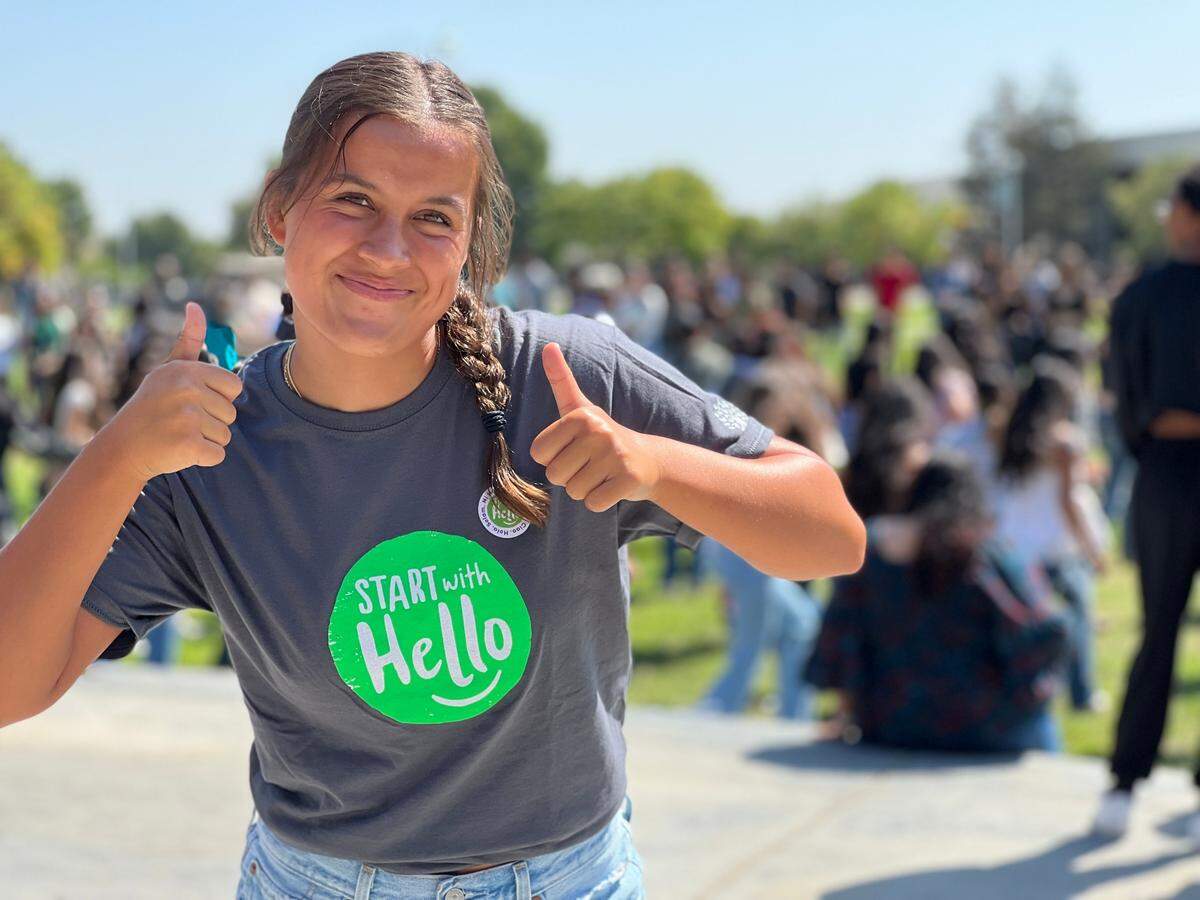
“Coming back to school after the outbreak of COVID-19 was very nerve racking,” said Pitman High School freshman Stefany Perez in an email to The Bee. As part of one activity from the Sandy Hook curriculum called “Starts With Hello,” students waved at one another at the start of the day. Though small, the gesture made Perez feel more welcome at school and less alone.
At the state level, legislators passed a bill last summer that aims to promote gun safety in schools. Starting in July 2023, schools will be required to send information to parents regarding safe storage of firearms. A meta-analysis of over 150 studies on gun violence showed that safe storage of firearms reduces suicide and homicide among young people.
The Modesto Police Department responds about once a week to reports that a student has brought a gun on campus. “Usually, it’s false reports and rumors,” said Bottoms.
And the police response typically is discreet. Sharon Bear, Modesto Police Department spokesperson, said, “If you put out every week that you have a threat that somebody has a gun in school ... it’s going to be like regular everyday news, so you can’t report it every single time.”
Often, she said, schools don’t go into lockdown over rumors about guns on campus, or the lockdowns only last minutes. Out of every school in Modesto, added Bottoms, there are about two or three lockdown drills a month.
This story was originally published February 16, 2023 at 12:57 PM.