How Stanislaus schools are preparing to support influx of Afghan refugee students
A Modesto professor has received hundreds of emails from Afghan students asking for help over the past couple of months.
Since Afghanistan’s government collapsed and the Taliban seized power, Modesto Junior College professor Ruth Luman has created an informational advocacy website, organized community events and multiplied communications with local resettlement agencies.
“As language instructors, you can’t just teach your class, close the door and be done,” said Luman, who teaches English as a second language. “It’s just not possible.”
Luman is among several education leaders working to support Afghan students in K-12 schools, colleges and tutoring networks as more than 1,000 refugees are expected to arrive in Stanislaus County over the next year.
“We are so lucky to get this group of refugees,” Luman said.
Many schools have welcomed refugee students for the past several years, so they’ve already established the infrastructure to greet incoming families. Still, rising needs have led some to expand supports.
Welcoming refugee families
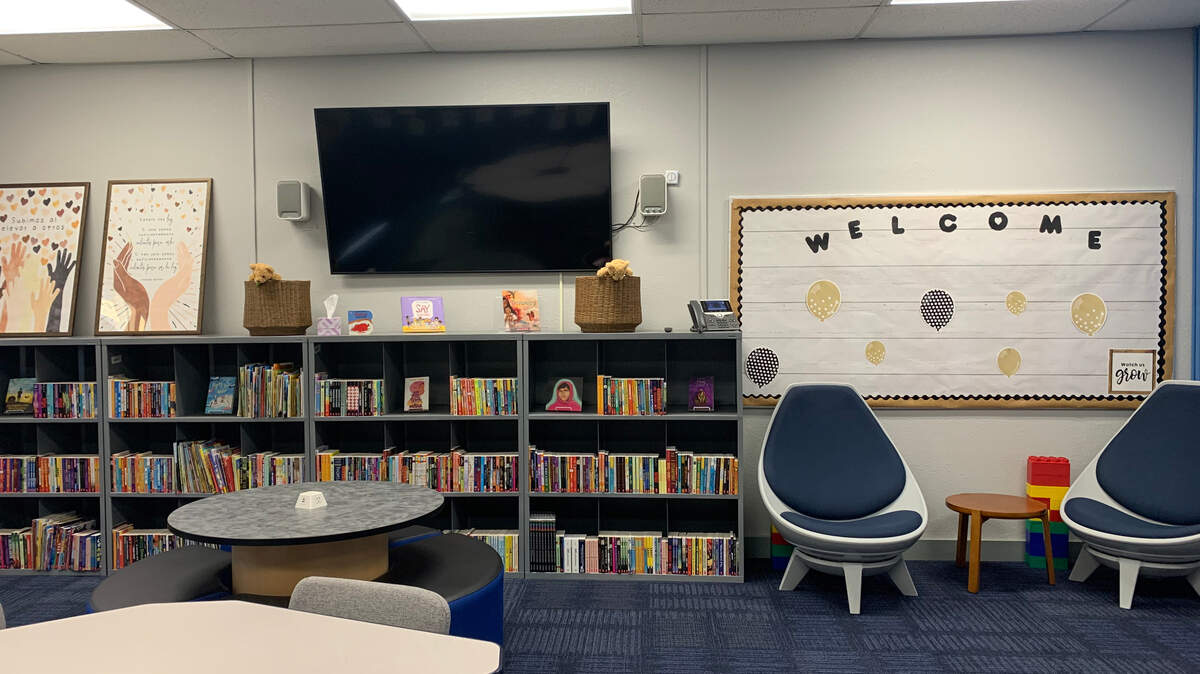
Modesto City Schools debuted a welcome center for refugee and immigrant families this school year after staff heard parents found the enrollment process challenging, said Maricela Mota, director of English learner services.
The decorated room at a district office includes space for children to color and play with toys while school officials walk parents through paperwork. The process could take one to three hours, depending on how many children the family has, Mota said. Staff stocked a fridge with snacks in case parents or children get hungry.
“It’s our job to make them feel welcome and make them feel safe,” Mota said.
Staff picked out photos displaying people of different ethnicities in hopes that families see themselves reflected on the walls. Families can borrow books from shelves housing cultural reading, dictionaries and stories sorted by age level and language, Mota said. School officials also offer parents Rosetta Stone language instruction software.
“It’s a great way for us to build relationships with families,” Mota said of the center.
The school district’s English Learner Services Department has supported 26 students and families through the humanitarian group World Relief Modesto this year, according to Mota. That number can’t be compared to previous years because the department’s process is new, she said.
Turlock Unified placed 132 refugee students in 2016, so school officials are equipped to replicate that process again, Director of Student Services Gil Ogden said.
“We have the infrastructure in place,” Ogden said. “We’re ready.”
The district enrolled eight students who arrived just weeks before Kabul fell, but Ogden expects numbers to rise.
When they meet with families, school officials recommend grade levels for students based on their age and recent education experience. If students haven’t been in school for a year or two, for example, staff might recommend they go back a grade level, Ogden said.
School officials also provide supplies including backpacks, binders and water bottles, he said. They connect families with local nonprofits to acquire resources the district can’t alone provide, such as clothing and bicycles.
Some elementary schools have “comfort corners,” which consist of a beanbag chair and stuffed animal at the back of the classroom, available to children feeling overwhelmed. These can be particularly helpful for children who have experienced trauma.
“They’ve been through so much,” Ogden said.
MJC expands services
MJC President Santanu Bandyopadhyay is an immigrant himself. He views the college’s role as not only to provide educational services, but also to generate that “warm and fuzzy feeling” necessary to fully embrace refugees.
At the college, Luman and other staff connect to students as people with multidimensional needs that extend beyond passing a class.
“It’s a very difficult assimilation process,” Bandyopadhyay said, “and we can definitely help.”
This month, instructors will go through a training on trauma-informed teaching, Luman said.
The college offers English classes for credit or not, depending on students’ educational goals. In the spring, school officials plan to host community courses that provide childcare, too, spokeswoman Jeanette Fontana said in an email. People also can enroll in citizenship courses, she said.
Not everyone who flees Afghanistan will need English language instruction. In addition, many people are highly educated professionals who simply need to connect to their profession in the U.S.
Luman said MJC has served Afghan refugees for the past eight years. A recent poll of student data indicated Afghans account for about one third of the college’s English language learners.
In 2015, school officials created a welcome center to assist English learners with matriculation, Luman said. The college plans to add student workers who speak Dari — the most widely spoken language in Afghanistan — and hired more Afghan women as tutors in the library’s writing center. Students should see themselves mirrored in those spaces, Luman said.
Luman and colleagues also plan to accelerate the development of a campus support group for Afghan women. “We know that’s a student demographic that often suffers,” she said.
MJC typically is not the first stop for people at the early stages of learning English, Luman said. The college partners with resettlement agencies to provide level-one textbooks for in-home, one-on-one tutoring services.
World Relief Modesto needs female volunteers the most for such programs because women are less likely to speak English, Community Engagement Manager Sarah Williams said in an email. People interested in tutoring can apply on World Relief’s website.
This story was originally published October 6, 2021 at 5:00 AM.