Patterson parents raise concerns about student safety after school herbicide spraying
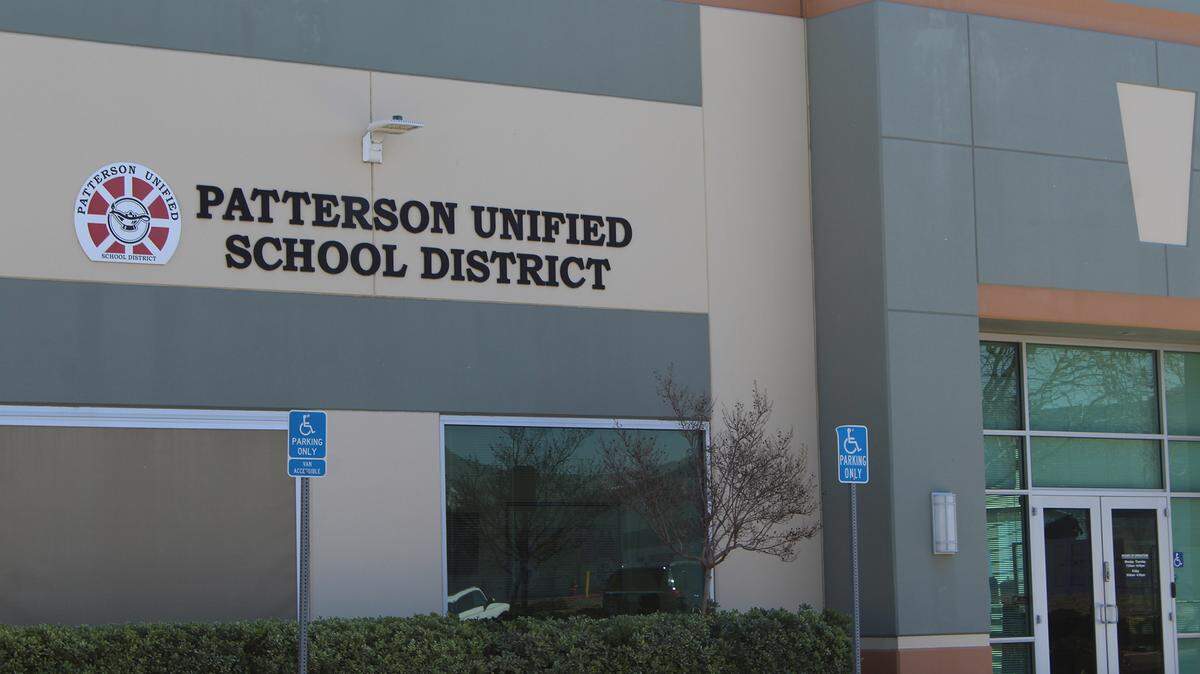
AI-generated summary reviewed by our newsroom.
- Parents raise concerns after herbicide drift exposed about 30 people.
- District paused herbicide applications, updated pesticide list, and is reviewing incident.
- Community urges better notifications, testing access, and limits on synthetic pesticides.
After an employee sprayed weed control at Apricot Valley Elementary School earlier this month, Tomasa Estrella’s grandchild started experiencing panic attacks. He worried that his classmates who experienced rashes and skin irritation were going to die that day, she said.
Estrella and about 20 other concerned residents gathered at Stonegate Community Center in Patterson on Thursday evening with questions about the apparent case of pesticide drift that occurred at the Patterson school on March 13 and impacted about 30 students and staff members. Pesticide drift is the unintentional movement of pesticide particles or vapors through the air during or after application.
According to Patterson Joint Unified School District, the spraying appeared to have violated its protocols. Herbicide applications usually are scheduled when students and staff are not on campus.
That morning, the herbicides were applied in areas between buildings where cracks and weeds were present and around a portion of the school perimeter.
The two herbicides used were Cornerstone Plus and Cheetah Pro. The active ingredient in Cornerstone Plus is glyphosate, while Cheetah Pro contains glufosinate-ammonium.
Glufosinate-ammonium is generally considered minimally toxic to humans, though ingestion can be harmful. Research has shown that exposure to glyphosate may be linked to a range of health effects in humans, including inflammatory conditions, neurological disorders and reproductive disruptions.
Cheetah Pro was not initially included in PJUSD’s Integrated Pest Management Plan, a document districts that use pesticides are required to maintain, listing all products they intend to use in a given year. A district planning to apply a pesticide not on this list required to provide a written notice at least 72 hours in advance.
On March 22, nine days after the incident, the list was updated to include Cheetah Pro.
The district confirmed that the herbicide was inadvertently removed from the list during an administrative update due to it sharing the same active ingredient as Total TNV Herbicide.
“This was an oversight, and the list has since been reviewed and updated accordingly,” the district wrote in a statement to The Bee.
Following the March 13 incident, all herbicide applications across the district’s campuses have been paused as PJUSD conducts a full review of the spraying. When applications resume, they will be limited to weekends .
PJUSD and Apricot Valley are working with the Stanislaus County Agricultural Commissioner’s Office on the investigation. The district also said it plans to host a community presentation to share updates, provide information and outline next steps.
“In the meantime, we will continue to work closely with the Agricultural Commissioner’s Office as we jointly review and investigate this matter,” the district stated.
Patterson community raises concerns
The community meeting March 26 was organized by Valley Improvement Projects and led by co-founder Bianca Lopez. Lopez is part of the coalition Californians for Pesticide Reform as well as the Environmental Justice Advisory Committee chairperson for the state Department of Pesticide Regulation.
Kelly Leon shared that she received three calls while she was at work that day, informing her that her fourth-grade daughter had been exposed to pesticides. Leon brought her daughter a change of clothes and took her to the emergency room.
She said she appreciated that her child’s teacher took the students’ reactions seriously and immediately acted on it.
About two weeks later, Leon took her daughter to a doctor for a follow-up appointment and requested a blood panel, concerned with any long-term health impacts the exposure may have caused.
“My daughter, to this day, is very panic-stricken,” she said.
When Leon submitted a request for reimbursement for the emergency room visit to the district, she was asked to sign a release of indemnity to complete the refund. The district stated this is standard protocol used by it and insurance providers for over 20 years, as part of the claims process. It applies only to those who request medical reimbursement.
“There’s no price for my daughter’s life,” Leon said.
Since moving to Patterson from Turlock, Rachel Shaw said her daughter has been dealing with bumps on the back of her arms and legs. Two days after the incident, her face started flaring up.
Shaw said she’s concerned that children are displaying the physical effects of pesticides but parents are “being told by doctors, ‘Oh, it’s eczema.’ They’re not being told to be tested for pesticides because we didn’t even know that they were being exposed to them.”
She andother parents also expressed concern with the district’s lack of preparedness in handling emergencies.
“We need to know that if our kids are in trouble or there’s a panic or there’s hysteria, that they know what they’re doing. Because nobody should feel like they can’t send their kid to school and feel reassured that there’s going to be structure and a plan in place,” Shaw said.
At the beginning of the school year, Valley Improvement Projects and the Agriculture Commissioner’s Office gave a presentation to PJUSD management and the superintendent on how to protect students from pesticide exposure.
“This was my attempt to educate the school district about resources and how to respond when pesticides drift, mostly from agricultural use,” Lopez said.
When she brought up the guide that was provided to them during a meeting with Superintendent Reyes Gauna last week, Lopez said he told her he didn’t read it but passed it along to his assistant.
Over the past three years, Stanislaus County has recorded two incidents of pesticide drift at schools. One incident occurred at Modesto Christian School and the other at Great Valley Academy, also in Modesto, impacting 25 individuals in total.
What must Stanislaus County schools do?
Under the Healthy Schools Act, schools in California that use pesticides must adopt an integrated plan that focuses on effective, low-risk pest management practices.
Annual notices must go out to parents, guardians and staff about the pesticides a school may use in a given year. Schools must post warning signs before and after pesticide use, keep records for four years and ensure staff are properly trained.
Lopez said PJUSD and other districts should have parents “opt out” instead of having to “opt in” for notifications.
Since 2018, certain pesticide applications for agricultural use are prohibited within a quarter mile of schools and daycare centers. This applies only to weekdays, from 6 a.m. to 6 p.m.
Starting Dec. 31, these restrictions will apply to private schools, too.
What else can schools do?
Schools can register their principals on School Notify. Farmers are required to submit, by July 1, a list of pesticides they may use near schools in the following year. The website shares this list with schools though it does not provide specific spray dates or times.
Additionally, schools can use the site to notify the agricultural commissioner about extracurricular activities, especially those scheduled outside protected hours
Residents can also sign up for Spray Day alerts, a community based alert system that provides notice of scheduled restricted pesticide applications.
Or, schools can choose to ban synthetic pesticides on campus altogether and use sustainable pest management.
PJUSD currently has 35 pesticides listed on its integrated pest management plan. Lopez said the district should shorten the list and confer with DPR to see what natural-based solution alternatives there are.
“We can live with a little bit of weeds, right?” Lopez said.