Stanislaus law enforcement leaders, NAACP sit with Black community to discuss use of force
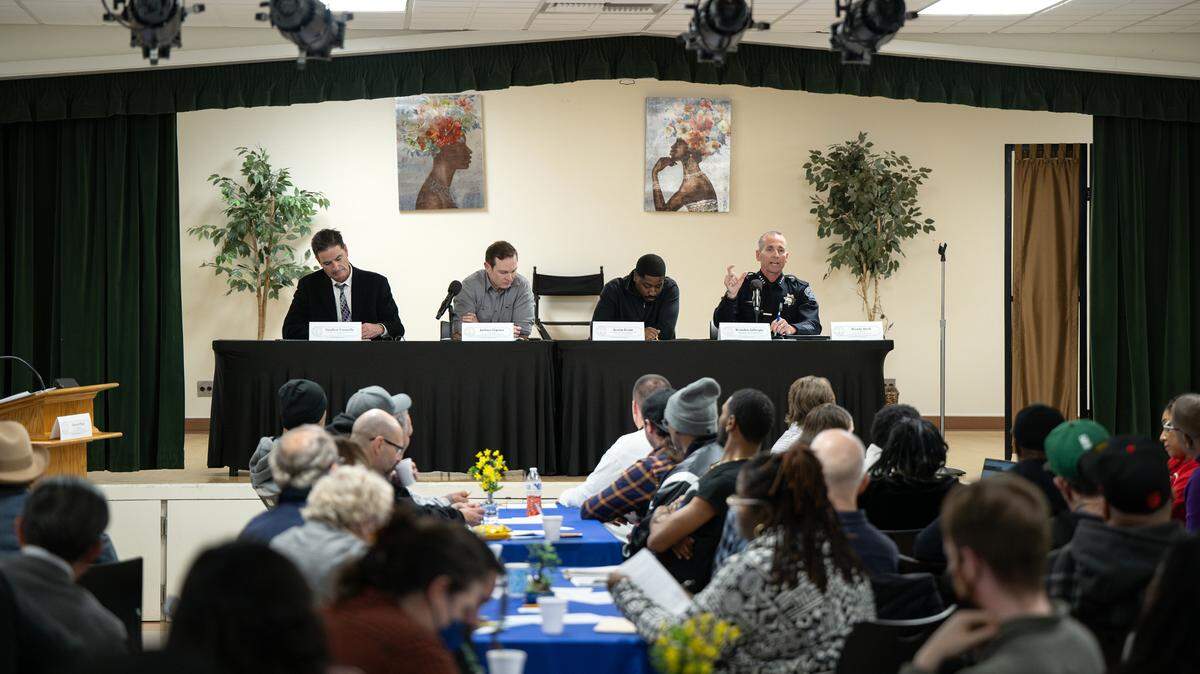
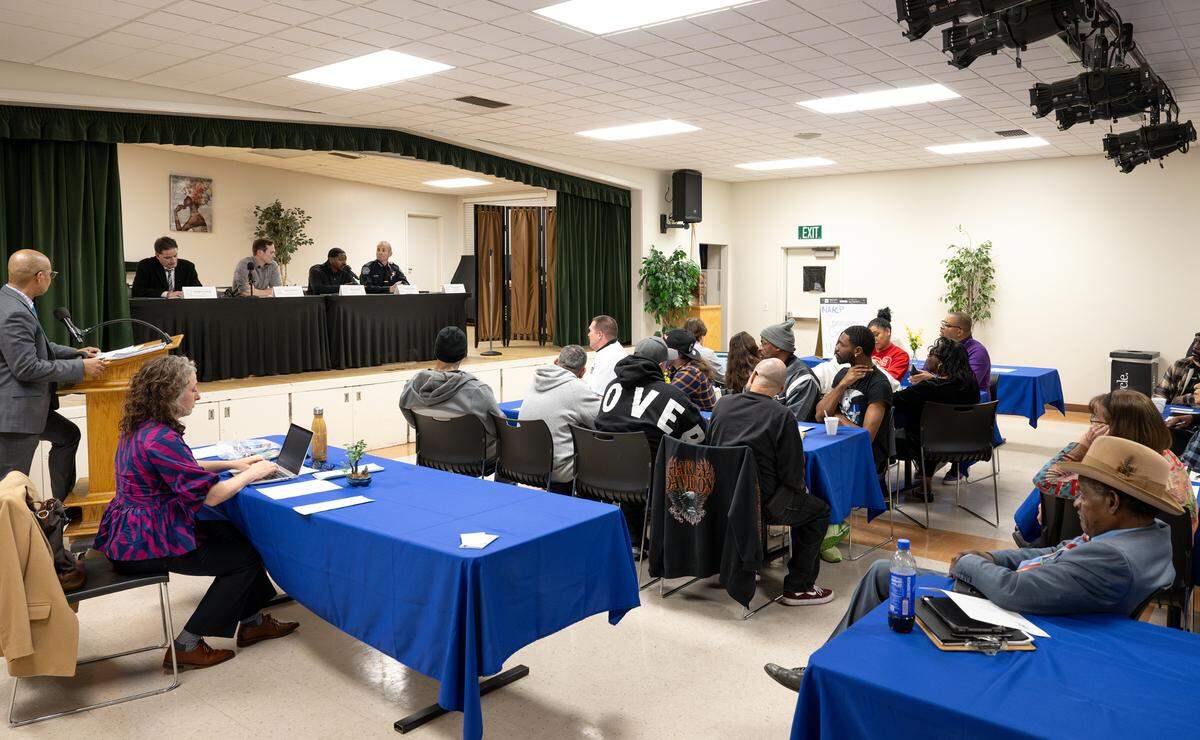
A recent panel discussion in west Modesto examined law enforcement’s use of force against Black residents.
The two-hour event Feb. 18, organized by the NAACP, invited community members, dignitaries and law enforcement leaders to talk openly about solutions regarding use of force against Black people.
Last year, The Bee reported that while Black residents averaged 4% of the city’s population, they made up nearly 17% of use-of-force cases committed by the Modesto Police Department since 2013. Since 2016, Stanislaus County Sheriff’s Office deputies have used force against Black individuals at a rate of more than six times their population.
Though the event was conceived from these numbers and more data published since they were first reported, the discussion did not focus on them. Instead, MPD Chief Brandon Gillespie and Sheriff’s Office Lt. Joshua Clayton confronted questions about ways to rebuild relationships with the Black community, with a focus on solutions.
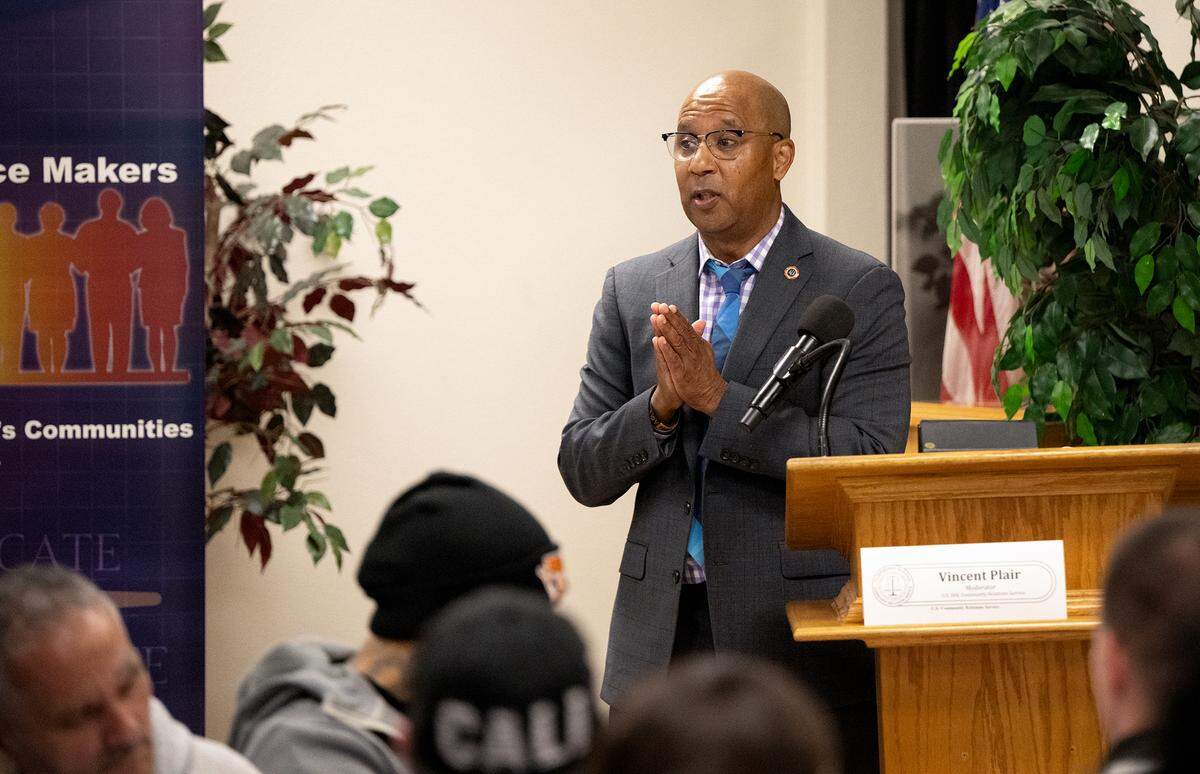
“I want to reinforce that tonight’s intent is to have a conversation, right? We’re not here to point fingers. We’re just here to have some constructive dialog,” said event moderator Vincent Plair.
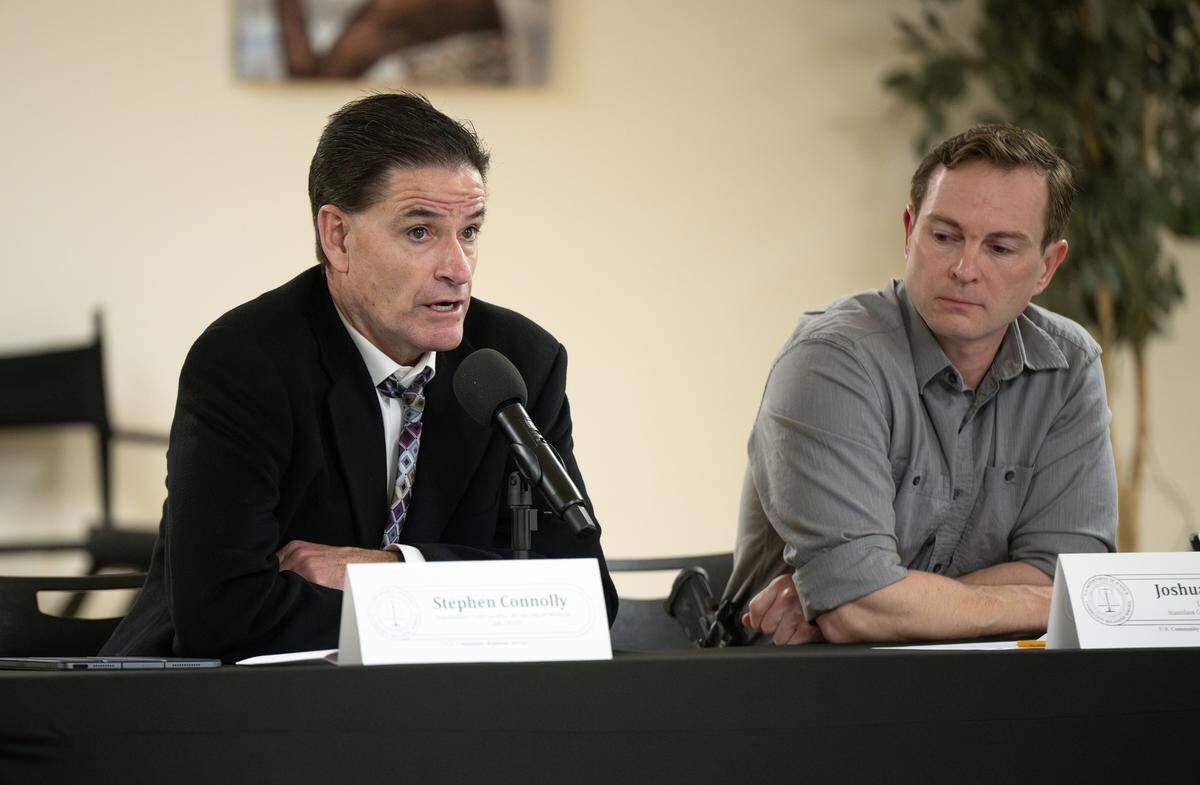
On the panel were Gillespie, Clayton, Community Police Review Board member Austin Grant and Modesto Police Auditor Stephen Connolly.
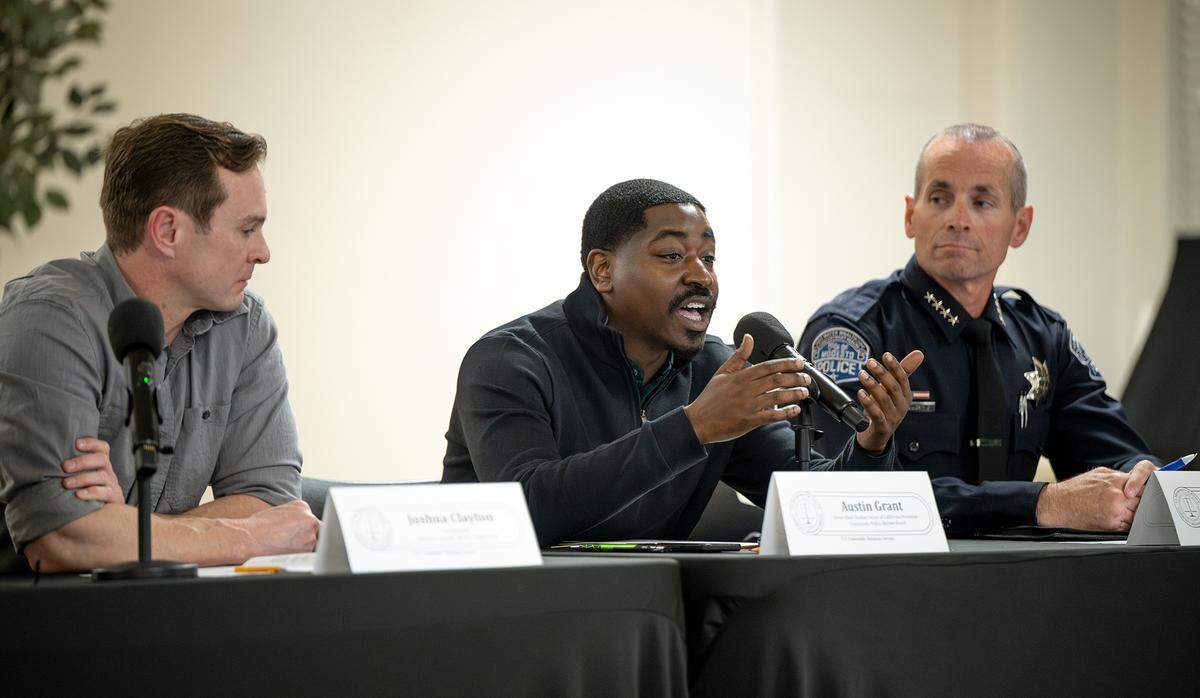
Plair moderated the discussion as a representative of the U.S. Department of Justice’s Community Relations Service — created in the wake of the 1964 Civil Rights Act to “respond to communities experiencing conflict and violence to help restore peaceful relations,” according to its website.
“You probably haven’t heard about us, and that’s by design,” Plair said. “The work that we do with communities, we don’t really advertise … we do it in confidentiality.”
The first of the discussion topics was local law enforcement’s community engagement efforts. Gillespie said repairing the relationship between the community and MPD is crucial.
He said going to events, engaging with community members and participating in conversations will help repair this. His comments largely focused on people’s perception of law enforcement.
“There’s a lot of fear, there’s a lot of distrust, and if you look at the history of our country, and we look at a lot of systemic issues that have left minority community groups kind of in the lurch, I think there’s a lot of repair and a lot of relationship building [that] needs to happen,” said Gillespie.
Gillespie also noted MPD’s Race and Cultural Relations Coaching Series — a 19-week program of activities and exercises to promote dialogue and healing. The series is led by community advocate and paralegal Michael Baldwin, who attended Tuesday. In September, Gillespie reported that 41% of MPD officers had gone through the series.
Clayton mentioned the Sheriff’s Office’s Advanced Officer Training, which reviews use-of-force incidents within a past year to see how situations could have gone differently. The program is a partnership between MPD and the Sheriff’s Office.
Clayton said the Sheriff’s Office was involved in some community relations programs, one being Project Resolve, which brings law enforcement and community members together on a quarterly basis to talk about topics and issues.
However, Clayton said the focus of the Sheriff’s Office’s community outreach efforts was on its new media studio, which he said was built using “COVID money.”
“None of these statistics that we have are secret. We need to be accountable for what is shown in statistics and for the city we actually serve,” said Clayton. “And so we can best serve that by … passing that information out there to the public.”
Clayton did not list any active programs or training the Sheriff’s Office has that directly help outreach efforts with the Black community. However, he did say there was “not necessarily a lack of engagement” but, “a lack of … just that personalization.”
“Where you really see like benefit, and where we always drop the ball is, like, real, meaningful relationships,” said Clayton, who added, “If I could fix that, I would, but I don’t necessarily know how to do that” and that “there’s only so much time of the day.”
Gillespie also said building personal relationships with people in the community is something “we’ve not been able to do over the many years,” and attributed that to a decrease in staffing. But, said having personal relationships can help develop a different perspective of law enforcement.
“Having a community policing perspective where you’re actually out in the community playing basketball with kids, when you’re stopping by businesses having coffee, talking to people in the neighborhood, working the same area of town — those go a long way to really foster and sustain that trust,” said Gillespie.
Those in the audience asked if the police could spend more time in places like west Modesto doing those things and if there are any incentives for law enforcement personnel to live on the west side. Gillespie said having officers spend longer than six months on a rotation could help with this and he hopes to implement that as his staff increases in the next year.
Both Clayton and Gillespie said recruiting officers who are from west Modesto is another solution to this problem. By having people police their own communities, it could help combat the “us vs. them mentality” that was a central theme of the event. The audience seemed generally receptive to this idea.
“I think that maybe if we start hiring people of the community, then we will have a better opportunity to have more voices,” said Christina Holmes, a member of the audience.
Chief elaborates on use of force
There were different approaches offered at the meeting on how use of force should be handled. As he did when the disparity was first reported, Gillespie said it is a nuanced issue, but he was able to provide more context.
“Disparities absolutely do exist” within law enforcement’s use of force, he said, and “there’s no place for bias in policing.” He also said he wasn’t going to pretend bias didn’t play a part in some of the use-of-force cases. But he added that other disparities plaguing the Black community, and having nothing to do with law enforcement, could play a part.
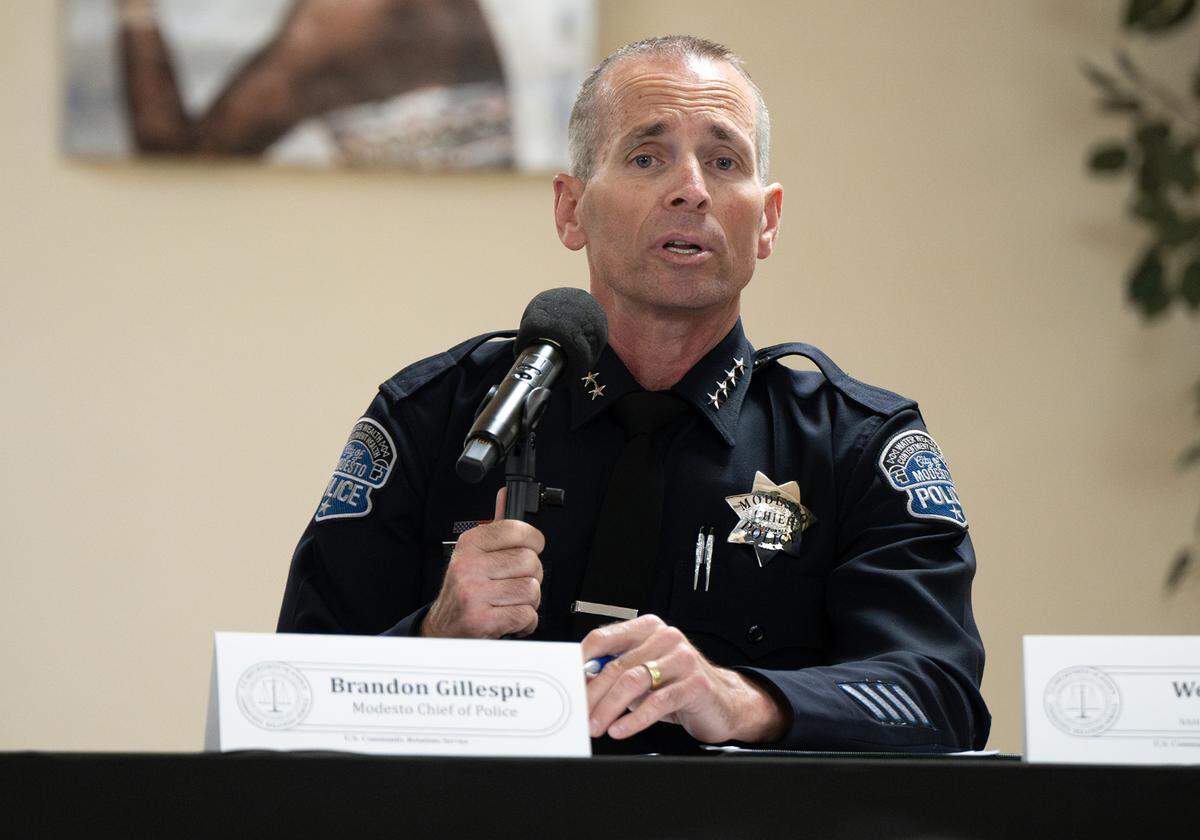
Disparities of income ratios, poverty rates, single-parent households, high school dropout rates, high school completion rates, unemployment rates, population density, arrest rates, rental rates and housing vacancy “have to be apart of the conversation” when talking about disparities in use of force, Gillespie said.
“Centuries-old factors that have really marginalized communities, I think have got to be a factor,” he said.
“Those are problems that we got to continue to talk about if we’re going to solve them and we’re going to do it, but it takes us as a community. It’s not us vs. them, and we got to keep coming back to the table,” said Gillespie.
The chief noted that one statistic law enforcement and the Black community need to work together on is dispatched calls of service. Gillespie noted that 73% of calls that resulted in use of force against Black people in Modesto were because someone called them to come to the scene.
Grant said these numbers were troubling and revealed that he’d been stopped by police in Modesto multiple times and was even in custody once. He added that he worried for children in the community and hoped they could have fun in the summer but also noted “they have to kind of keep in the back of their head that they could be a target in this community as well.”
“It does worry me a lot, strictly, because the number of percentages here, the number of percentages here for African Americans, is low. But that doesn’t mean it will always be low… we should expect African Americans to move in… those people that actually are not from this community, that come from other communities, they’re expected to be safe.”
Event organizers noted the event was just the first in what is planned to be an ongoing series that will delve deeper into the data surrounding use of force and its solutions.
This story was originally published February 21, 2025 at 12:55 PM.