Modesto Councilman Ricci, Sheriff Dirkse advocating for campgrounds for homeless
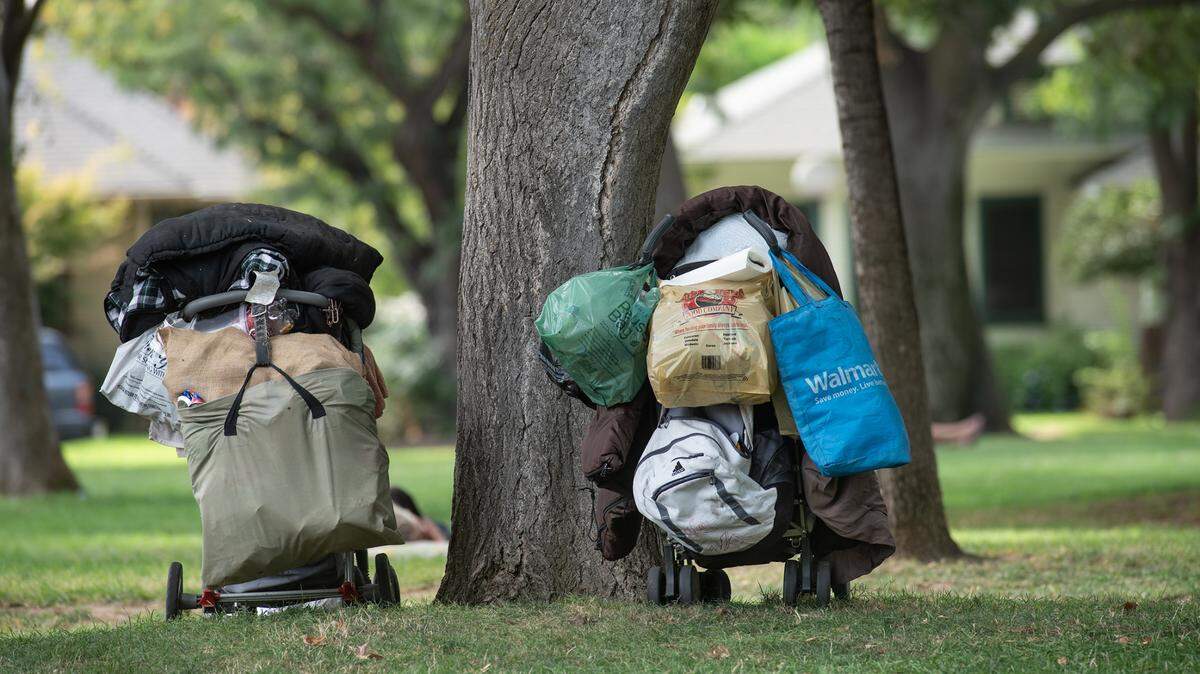
Councilman Chris Ricci is proposing Modesto use park rangers to patrol city parks to curb illegal activity, such as drug use, and designate areas in the city where homeless people can camp or sleep in their cars.
Ricci raised the ideas at Tuesday’s City Council meeting and said in an interview he wants the proposals to be discussed at the council’s next Safety and Communities Committee meeting in October.
The rangers “would be the eyes and ears for the city,” Ricci said, adding he has been talking with City Manager Joe Lopez and Police Chief Brandon Gillespie about the need for rangers for about a month.
While Modesto has about 75 parks, Ricci said the city could start with a small number of rangers assigned full time to the handful of parks that draw the most complaints. He stressed that homeless people, like all city residents, have the right to be in city parks, but they and other residents don’t have the right to engage in bad behavior.
Ricci represents Council District 3 — which encompasses central Modesto — and said he is hearing from his constituents that they are tired of finding heaps of trash, needles and other drug paraphernalia in their parks as well as seeing drugs being used and sold. But he said his proposal is for all city parks that need attention.
He said the idea of designating sites where people who are homeless can camp or sleep in their cars, motor homes and other vehicles came from Stanislaus County Sheriff Jeff Dirkse.
The two discussed it a couple of weeks ago on Ricci’s radio show, Better Modesto, which airs 10 to 11 a.m. Saturdays on KFIV. (Ricci’s cohost, Redeemer Modesto Pastor Jim Applegate, did not appear on that episode.)
In an interview, Dirkse said his proposal is in its very early stages, and he needs to build consensus for it among the elected and other top officials in county government and the county’s nine cities. He said he is just starting to talk with these officials and expects it could take several months before he knows whether he has the support he needs.
“I have started having those conversations,” Dirkse said. “... No one is saying no.”
Dirkse said while the details need to be worked out, he envisions about a dozen campgrounds, each with about two dozen campsites and a maximum occupancy of about 50 people. The campgrounds would provide water, toilets and trash, but the homeless would have to provide their own tents and other gear.
The campers would have to follow rules, such as keeping their campsites neat and clean, or face being barred from the campgrounds. They also would have to pay some sort of rent or perform some sort of service to maintain their campground. Dirkse said this ensures the campers feel invested in the campgrounds’ success.
Outreach workers would visit the campgrounds and refer people to services.
There could be separate sites for people who sleep in vehicles, or the campgrounds could includes tents and vehicles. But each site could not have more than 50 people.
Dirkse said it’s critical the campgrounds are distributed equally throughout the county and its cities. That does not mean every city gets a campground. For instance, he thinks it makes sense that Riverbank and Oakdale could share one site while Modesto could have three or four.
Countywide solution needed
He said homelessness is a countywide issue and the solution must be countywide. He added that placing camps throughout the county makes sense because people who are homeless generally have ties to the communities they live in. So a homeless person in Turlock may be reluctant to stay at a campground in Modesto.
This is similar to the Modesto Outdoor Emergency Shelter, the temporary tent city under the Ninth Street Bridge in the Tuolumne River Regional Park. MOES operated from February 2019 to January 2020, and housed about 450 people.
Dirkse said while MOES gave law enforcement a place to send homeless people rather than having them sleep in parks, alleys and elsewhere, it was too large and that created problems.
Ricci and Dirkse said offering campgrounds does not replace the need for additional services for homeless people and the need for more affordable housing but it recognizes that some homeless people will not stay at shelters. The campgrounds would be a temporary, safe and secure place for homeless people to stay until they were ready to enter a shelter or housing.
“We as a city need to start being more proactive and act faster to address drastic community needs,” Ricci said. “These are things (park rangers and homeless camping) that we can do that won’t cost a lot of money, and will have a dramatic, positive impact on our neighborhoods and unhoused community. It’s a win win.”
NIMBYism an obstacle
Dirske said having designated sites for homeless and car campers frees up sheriff’s deputies’ and police officers’ time to focus on more pressing matters. He said rather than continually dealing with people sleeping in parks or encampments, law enforcement can send them to a campground.
He said his proposal addresses the quality-of-life complaints people have about homeless people living in their neighborhoods or in encampments along the Tuolumne River and Highway 99. But Dirkse acknowledges he has to overcome NIMBYism.
“I guess the question for the public to answer is, ‘Would you rather see them in a designated campground or out everywhere across our community?’ the sheriff said. “For me, I’d rather see them in a designated campground.”
Ricci stressed having rangers patrol parks and providing homeless people with places to camp are not new ideas and are being done in other cities.
Modesto’s current strategy to keep its parks inviting and safe includes using the city’s police cadets and a private security company. The cadets’ duties include checking on city parks. And Rank Security patrols the parks that draw the most complaints and responds to residents’ complaints.
Ricci said while he appreciates the effort, it is not sufficient. He said the park rangers would be a temporary measure until more services and housing come online for people who are homeless.
Pandemic money for rangers?
He believes the city can use its federal American Rescue Plan Act funding to pay for the rangers. Modesto is receiving nearly $46 million from the act to help it deal with the financial impacts of the pandemic. It received half of the money in May, and will get the balance next year.
City officials have said this is one-time money that needs to be spent wisely because of the city’s many needs. And it does not address the structural deficit with the city’s operating budget.
Campgrounds for people who are homeless drew support from a 40-year-old man who was lying on the grass Wednesday afternoon under a tree in Modesto’s Enslen Park. The man — who declined to give his name — said he and his mother have been homeless most of this year after losing their home to foreclosure.
He said he doesn’t stay in shelters because of his dog, an 8-year-old Jack Russell terrier-Chihuahua mix named Bolo. The man said he sleeps where he can, and spent the previous night sleeping on a bench along the Virginia Corridor, the popular paved walking path.
“Right now,” he said, “there is no place to camp.”
This story was originally published September 12, 2021 at 5:00 AM.