With eviction ban ending, Stanislaus trying to get rental assistance to more people
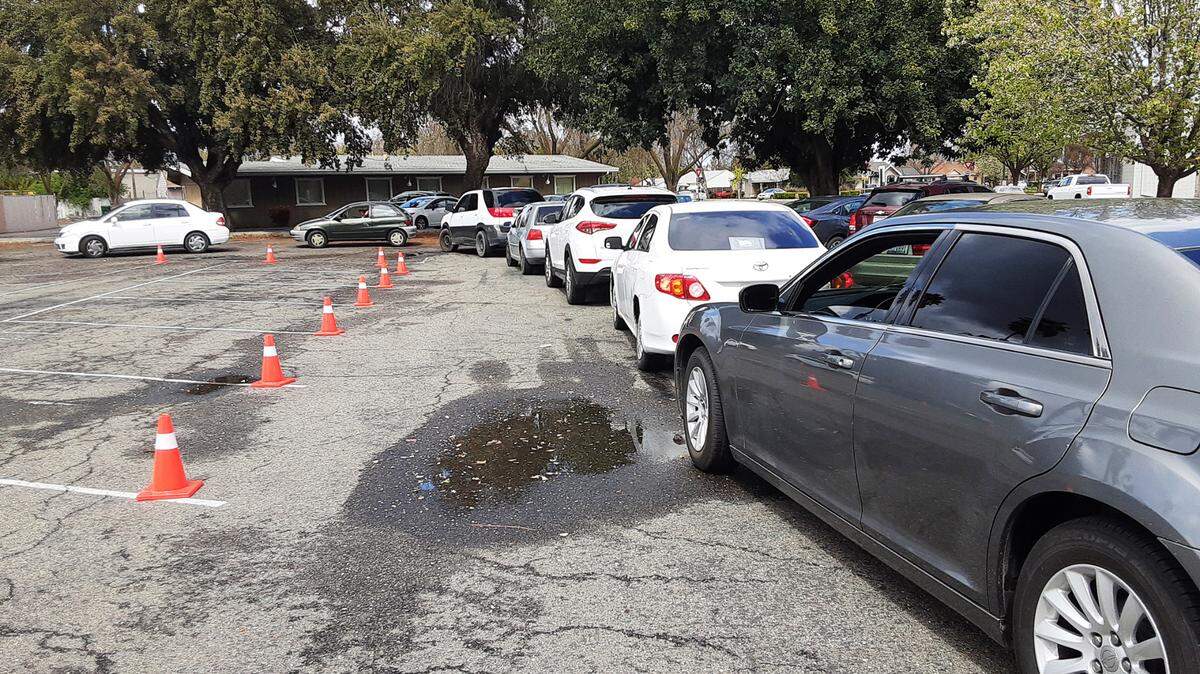
A housing program by Stanislaus County and Modesto has spent about 11% of its $16.4 million to help low-income tenants catch up on their past-due rent and utilities.
This comes as California’s ban on evictions during the pandemic is set to expire Sept. 30, and the program, which was launched in late February, has several thousand applications it needs to finish processing. That is why local officials are turning to California for help.
The county Board of Supervisors on Aug. 31, approved having the county contract with the California Department of Housing and Community Development to process new applications. The Modesto City Council is expected to consider the same action at a meeting this month, according to a city official.
This will let the local program focus on finishing processing the applications it now has, with the goal of getting them all done by Sept. 30. The money can be spent after that date, but with an approved application, a tenant and landlord know the rent will get paid.
Stanislaus Regional Housing Authority Executive Director Barbara Kauss told supervisors this is an “all hands on deck” effort to finish processing the applications. The city and the county have been providing extra support.
Kauss and county Deputy Executive Officer Tina Rocha updated the Board of Supervisors about the program.
The county and city partnered with the housing authority and other local partners to create the Stanislaus Rental Assistance Program in February to administer the $16.4 million the city and county received from the U.S. Treasury’s $25 billion Emergency Rental Assistance Program.
The housing authority operates the program, whose website is www.stanrentassist.com.
The $16.4 million is to help low-income households in Stanislaus County and its nine cities pay their rent and utilities. Payments are made directly to landlords and utility providers.
The program is for households that make no more than 80% of the area median income — as an example, that would be an income of $57,050 for a family of four — and have had their incomes reduced because of the pandemic, such as a layoff, or face increased expenses because of the pandemic.
The Emergency Rental Assistance Program is part of the $900 billion pandemic relief package approved by Congress and signed by then-President Donald Trump in December.
Besides the $16.4 million, Modesto and Stanislaus County also have $17.8 million from the state in federal rental assistance funding. (The federal government provided about $1.4 billion to California and about $1.2 billion to California cities and counties with at least 200,000 residents.)
So Modesto and Stanislaus County have $34.2 million to spend but focused on spending the money they received from the federal government first because it had fewer restrictions than the money from the state.
The Board of Supervisors approved having the California Department of Housing and Community Development process the applications for the county’s portion of the $17.8 million, which is roughly $10.7 million.
Local officials did not have to create the Stanislaus Rental Assistance Program and could have used the state’s program. But earlier this year, the state was paying landlords 80% of the past-due rents and asking landlords to write off the remaining 20%.
Help for small landlords
Rocha, the county deputy executive officer, told supervisors that was not a good fit for Stanislaus County because of the predominance of small-scale landlords who each might own a handful of rental properties. These landlords could not absorb writing off 20%. Officials feared asking them to do so could reduce an already inadequate supply of rental housing for lower-income tenants.
“While this was a more time-consuming and challenging option to implement, the County and its local partners were confident it was the best way to support the tenants and landlords in our community,” a county report states.
But California in late June switched to paying 100% of rent, which is one of the reasons local officials cited in having the state process new applications. The state program also has greatly accelerated its payments since then.
The state had paid out about $73 million as of June 28. It had paid out nearly $426 million as of Aug. 31. Russ Heimerich, a spokesman for the state’s housing agency, said the reasons for this include the state now paying 100% of the back rent as well as streamlining the application. He said an application could take three or four hours to complete but now can typically be done in about 30 minutes.
He said Modesto and Stanislaus County are among about 10 local governments across California that are talking with the state about having it take over their programs. Some cities and counties had the choice of setting up their own rental assistance programs, using the state’s program or a hybrid model using both.
The county report states the Stanislaus Emergency Rental Assistance Program had received 7,120 applications as of Aug. 25, with 603 of them duplicates.
The program had about 4,800 applications that were incomplete and not yet submitted or on a wait list because the applicants had not responded to inquiries after making their initial submission. Nearly 800 applications were being reviewed to see whether the tenants were eligible for assistance.
The program had processed 855 applications, rejecting 589 of them and funding 266 of them. The program as of Aug. 25 had paid out $1.725 million. That represents nearly 11% of the program’s $16.4 million.
Programs struggle nationwide
Nationwide, these rental assistance programs have struggled to get money out to landlords and utilities providers.
About 20% of the $25 billion from the U.S. Treasury’s Emergency Rental Assistance Program had been spent by states, cities and counties as of July 31, according to information provided to The Bee from the Treasury Department. The Department said states and local governments had spent $5.1 billion of the $25 billion.
The county report said the challenges faced by the Stanislaus program include having to create a program from scratch, working out the bugs in a software program and the federal government’s extensive reporting requirements.
Other challenges include renters who were not eligible submitting applications, which still had to be processed, and frustrated landlords applying on behalf of their tenants, but the tenants declining to follow through.
Misinformation about program
Officials also said there was a lot of misinformation about the program and who was eligible. Applications were submitted from homeowners behind in their mortgages and from renters whose incomes were too high or who had not been laid off.
Kauss, the housing authority executive director, told supervisors there was “no template, no instructions,” on creating the program, and the underlying message was “we can’t tell you how to do it, but don’t mess up because then we’ll fine you.”
Modesto and Stanislaus are in line for more federal funding to help low-income renters.
The $1.9 trillion American Rescue Plan that President Joe Biden signed in March includes an additional $21.6 billion for the Treasury’s Emergency Rental Assistance Program. A Treasury spokesperson told The Bee in an email that states and local jurisdictions have had access to 40% of the funding since May.
Stanislaus County expects to receive $22.5 million of the $21.6 billion from the federal government and the state. Modesto expects to receive $10.2 million, according to an email from a city official.