New Modesto-area renters program draws huge response. Here’s how to apply for help
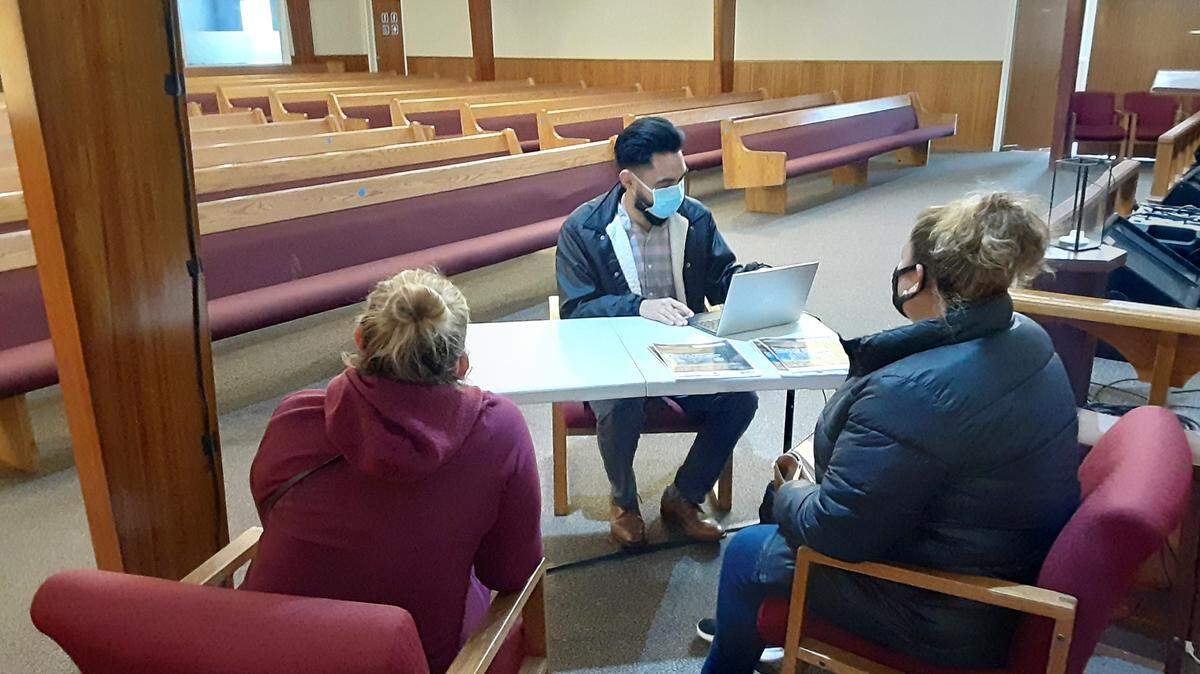
A program to help tenants in Stanislaus County behind in their rent and utilities because of the pandemic is just a few weeks old but already more than 1,100 households have applied and are seeking more than $9.8 million in assistance.
Officials say not everyone who has applied will meet the program guidelines and receive help, but the crush of applicants demonstrates the need.
“I think it’s because a lot of these households are low income and were struggling to stay ahead, and then the pandemic came along,” said Barbara Kauss, executive director of the Stanislaus Regional Housing Authority, which has partnered with Modesto, the county, the United Way and credit unions to operate the program.
Officials have about $16.4 million from the U.S. Treasury’s $25 billion Emergency Rental Assistance Program to help tenants with past-due rent and utilities in Stanislaus County and its nine cities. There also is $19.5 million available from the state in federal Emergency Rental Assistance Program funding.
And more help could be coming. The recent $1.9 trillion federal American Rescue Plan includes roughly an additional $22 billion for the Treasury’s rental assistance program.
Kauss said the Stanislaus County program is structured so that while renters apply for help the payments are made to landlords and utility providers. She said Wednesday that the first checks to landlords and utility providers should go out within about a week. The program started taking applications about two weeks ago.
The program includes a Mobile Outreach Assistance team to help renters. (Information also is available at www.stanrentassist.com or by calling 211 or 877-211-7826.)
The team was at The Gathering Covenant Church in Patterson on Monday as people lined up in their cars and pickups in the parking lot for groceries from the Church Without Walls community food pantry.
Thirty-one-year-old Adriana was among those waiting for groceries. She said she just applied for the rental assistance program and was waiting to hear whether she and her family would get help. The Patterson resident wanted to be identified only by her first name.
‘There are a lot of scams going around’
She said she was laid off in September because of the pandemic and her husband was off work for four months because of the pandemic. He’s back at work but at reduced hours.
Adriana said she owes the Turlock Irrigation District about $1,600 in utility bills and owes her landlord $2,800 for two months’ rent. She said she is receiving unemployment, but that and her husband’s wages are not enough to pay all of the bills for her family of five. She said her husband did not receive unemployment when he was off work.
Adriana said she learned about the rental assistance program on Facebook and thought it was a scam because it sounded too good to be true. “At first,” she said, “it was kind of iffy. I was not sure it was 100%. ... With the pandemic, with social media, there are a lot of scams going around.”
But she was desperate and applied.
“If I don’t get it,” she said, “we will probably have to leave (our rental home). I feel we will be so in debt I won’t be able to pay him (her landlord). How will I catch up? We will probably have to move back with my dad and his family.”
The state has banned evictions in the pandemic, but that is set to expire at the end of June.
Adriana said her dad has a family of six so with her and her husband and their three children that would mean 11 people living in a three-bedroom, two-bath home.
Nico Solorio, an outreach team member, went from vehicle to vehicle in the church parking lot Monday, telling people about the program, giving them flyers and answering their questions. He spoke to people in Spanish as needed.
Solorio said people tell him that they and their families are trying to make ends meet despite layoffs and reduced work hours. And mothers tell him they have to stay home with their children whose schools are closed because child care costs more than they can earn at a job.
“I run into that a lot,” Solorio said, “moms staying home with their kids.”
The rental assistance program is for households who make no more than 80% of the area median income and have had their incomes reduced because of the pandemic, such as layoff, or face increased expenses because of the pandemic.
Some examples of household incomes that qualify for the program include no more than $39,150 for a single person, $44,750 for a family of two and $55,900 for a family of four.
Household income is determined by a household’s income for 2020 or its monthly income at the time it applies for help. Households qualifying based on their monthly income must have their eligibility checked every three months.
Focus first on lowest income renters
During its first 60 days the program is focusing on helping households who make no more than 50 percent of the area median income or those that have been unemployed for 90 days.
Kauss, the Housing Authority executive director, said the 1,100 applicants was as of March 11 and said a few hundred more people have applied since then. The 1,100 applicants have been verified as living in Stanislaus County and are not duplicates.
The more than $9.8 million they have applied for breaks down to $3.84 million for rent, $2.63 million for natural gas, $2.56 million for water, sewer and trash, nearly $743,000 for electricity and more than $94,000 for internet.
Kauss said the Stanislaus rental assistance program is spending the roughly $16.4 million in federal funding first because it pays 100% percent of the past-due rent and utilities.
While the $19.5 million in federal funding from the state pays 100 percent for utilities, it pays only 80 percent in past-due rent, provided a landlord agrees to accept the partial payment and not seek the 20 percent from the tenant.
State hurts Stanislaus landlords
Kauss said it is her understanding the state structured the payments that way to stretch its funding and on the assumption that landlords could afford the financial hit. She said while that may be true in the Bay Area where corporations own huge apartment complexes, that is not true here.
She said in Stanislaus County many landlords operate on a small scale and might own one or a few rental homes. She said they cannot afford partial payments. She said it’s important to make them financially whole so they have less incentive to sell their rentals in a booming real estate market and make the rental housing crisis worse.
When asked whether the rental assistance program has enough funding to meet the need, Kauss said: “That is always a concern in affordable housing. ... The best we can do is access as much of the funding as we can and bring it to Stanislaus County.”
She said the local program can do that by quickly processing applications and getting payments to landlords and utility providers. She said that means Stanislaus County could get additional funding from the state that goes unspent in other counties.