Ceres parents left with questions following arrest of 15-year-old special needs boy
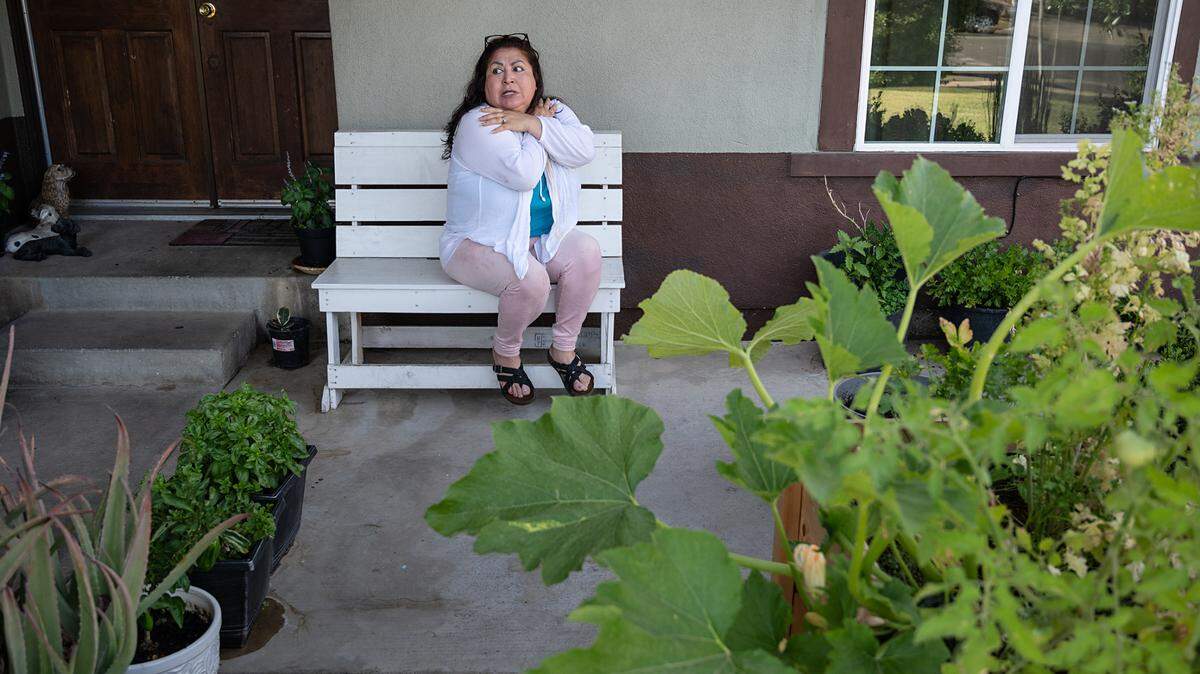
A Ceres mother and community activists are upset over what they say was a misunderstanding with police that led to the arrest and jailing of her 15-year-old son, who has cerebral palsy.
The boy, who was charged with assault likely to cause great bodily injury, faces up to 12 months of having to wear an ankle monitor, a sentence that could be reduced to six months if he pleads guilty.
That he’s being charged at all has left his parents heartbroken and some community members outraged. It was “a great error on our part,” Sonia Ruiz said of her and her husband’s decision to call police to their home.
“If it would’ve been a white boy, they wouldn’t have treated him so poorly,” community activist Miguel Donoso said when he joined the Spanish-speaking couple before the Ceres City Council on May 10.
On April 20, Ruiz, 57, called police in hopes they would talk her son into not leaving the house in search of a better internet connection. The boy had trouble using her hotspot for his homework, and two days before had gone to a nearby shopping center to successfully gain access. Ruiz said she didn’t know the Ceres Unified School District has been offering low-cost to no-cost internet to its families.
But the Ceres Police Department’s so-called juvenile contact report on the incident, shared by the Ruiz family with The Bee, says officers were dispatched to the home “for a physical fight.”
A hug, not a choke, mom says
What happened, Ruiz said, is that while addressing the internet problem, her son raised a folding chair in frustration, bumped his dad’s leg with the folding chair and accidentally knocked over a planter.
Ruiz, who has suffered multiple strokes and has an artificial blood vessel in her neck, said she’s easily alarmed by loud noises or anyone touching her from behind. So when her son put his arm around her neck from behind to apologetically hug her, she got scared.
When officers arrived, Ruiz said she let them know her son has special needs. She also explained why the planter was tipped over, she said. Police asked if the boy would harm them if they went into his room, and Ruiz said she assured them he wouldn’t.
“I am saddened because my son was treated like a criminal,” she said. He spent 10 days in juvenile detention, followed by a mandatory monitoring bracelet around his ankle.
According to the one-page juvenile contact report, law enforcement was dispatched to the house around 5 p.m. It says the son wrapped his left arm around his mother’s neck and “squeezed his arm tight,” causing her to feel like she couldn’t breathe for a few seconds. The report states that if the squeezing continued, it would’ve caused a serious injury. It says the son “threw” the chair at his dad, which Ruiz denies.
During the council meeting, she said more than half the police report is wrong.
Though Ruiz and her husband didn’t call the police because of violence and showed no signs they were hurt, she said, officers took pictures of her neck and his leg.
Also, though the couple made clear they can’t communicate well in English, a Spanish-speaking officer continued to talk to her in English, Ruiz said.
And while told her son would be gone for a few hours or days because of his arrest, that “turned into 10 days,” she told the City Council.
Authorities mum on juvenile case
Sgt. Keith Griebel, Ceres police spokesman, and Mark Ferriera, chief probation officer at Stanislaus County Probation, said they can’t comment on the case because it involves a minor. As for incarcerating a boy with cerebral palsy, Ferriera said, “My staff are trained and are sensitive to any youth who may have any special needs when they are admitted.” There are on-site medical and mental health services offered 24-7, he added.
John Mataka is a community advocate with Modesto-based Valley Improvement Projects, which advocates for social and environmental justice in the Central Valley. He said at the council meeting that the police report has serious inaccuracies, like calling the family incident a physical fight and saying the teen was a danger.
Ruiz doesn’t deny telling officers that when her son put his arm around her neck, she told him to stop because she was hurting her. She said she didn’t want him to damage her artificial artery.
She also said police body-cam footage doesn’t show everything that happened. “The video doesn’t show the part where my son says, ‘But I’m hugging my mom,’“ she said about when officers asked him why he’d choke his mom.
During the council meeting, Councilwoman Linda Ryno asked Ruiz if she knows why her son was arrested. Ruiz replied that she felt like the police just needed business that day.
Mayor Javier Lopez expressed his concern about the situation. “If there’s anything that you need, go ahead and reach out to the council,” he told the Ruiz family, Mataka and Donoso, who also is with Valley Improvement Projects.
Mataka, who is working with others and the city of Modesto to develop a citizens police review board, said something similar should be created in Ceres. “We need an alternative solution when it comes to nonviolent calls.”
He also complained of a dearth of Spanish speakers in the county Public Defender’s Office. “These are legal issues and the interpretation needs to be certified,” he said.
Amy Carroll, director of communications for Stanislaus County, told The Bee that 50% of the special investigators in the Public Defender’s Office are Spanish/English bilingual and so are 50% of the clerical staff, as well as one attorney. “There is no classification for a Spanish-language interpreter,” which is standard for public defender offices across the state, she said.
People of Mexican descent make up a large number of Ceres and Stanislaus residents who pay taxes and thus the salaries of government employees, Donoso said, urging diversity in hiring.
Mayor Lopez replied that the Police Department is between 30% and 50% Latino. “I am Latino. I was born here. With progress, we can talk about this issue,” he said, acknowledging injustices in the system and the need for solutions.
The next court date for the Ruizes’ son is May 24.
This story was originally published May 22, 2021 at 6:02 AM.