Why some people of color in Stanislaus County have been hesitant about COVID vaccine
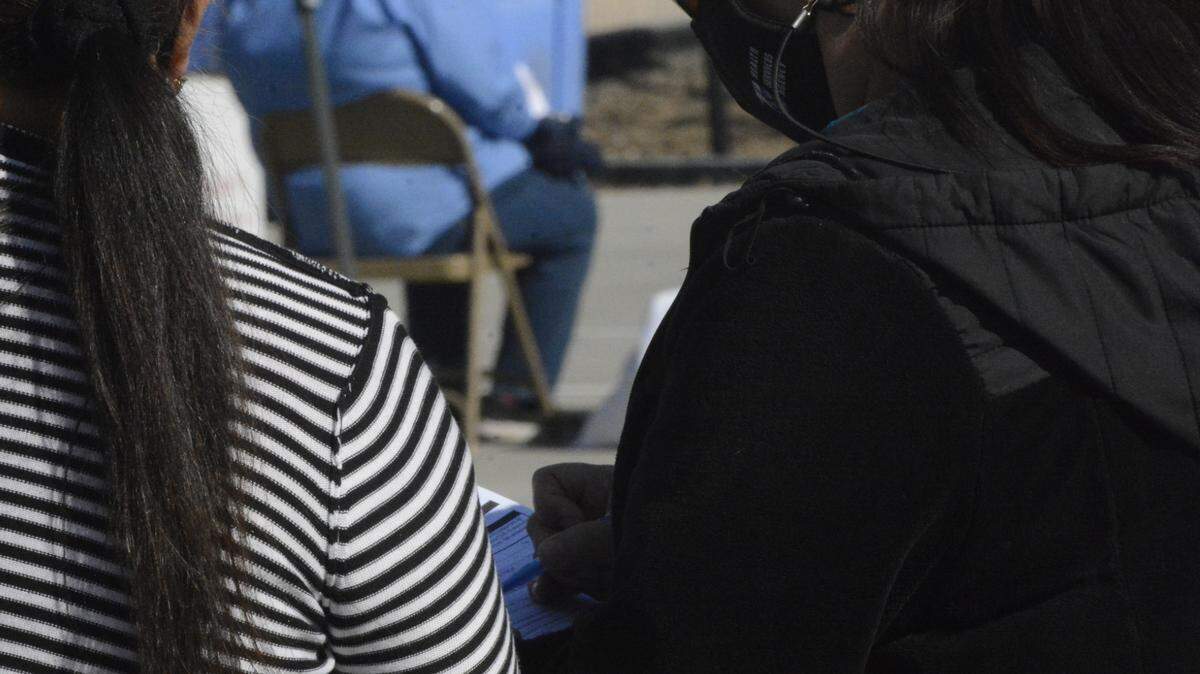
Their reasons may be different — distrust of government, doubts of effectiveness, fear of side effects — but some people of color in Stanislaus County share a feeling of hesitation toward getting vaccinated against the coronavirus.
Latinos in the county make up 30.4% of those either fully or partially vaccinated, while Blacks make up 1.9% and whites 36.6%, according to California for All data. However, Latinos add up to 47.6% of the population in Stanislaus County, Blacks 3.5% and whites 40.4%, according to the U.S. Census Bureau.
An article published Wednesday on the website of the Kaiser Family Foundation says, “Black and Hispanic people have received smaller shares of vaccinations compared to their shares of cases and deaths and compared to their shares of the total population in most states.”
Modesto resident Daniel White, 27, who identifies as a Black man, is adamant about not getting vaccinated. He feels he has a good immune system and doesn’t need it.
“It’s not even a for-sure thing (the COVID-19 vaccine),” White said. “It’s like when you get the flu shot, you’re not supposed to get the flu.”
The Pfizer, Moderna and Johnson & Johnson vaccines have been found to be about 95%, 94% and 66% effective, respectively, against COVID-19, according to the Centers for Disease Control and Prevention. The vaccines contain a “memory,” or T-lymphocytes, that reminds our body of the tools it has to fight the infection. If the body is reinfected, defensive white blood cells produce antigens that attack the virus.
History of deception hard to undo
White believes there’s nothing the government can do to ease the feelings of hesitation among people of color.
Events like the 40-year Tuskegee study, which began in 1932 and in which Black men with syphilis were assured they’d be treated but weren’t, left a stain of distrust toward the government in the hearts of the Black community.
“We’ve had our eyes open to things,” White said.
Wendy Byrd, president of the National Association for the Advancement of Colored People’s Modesto-Stanislaus Branch, said getting vaccinated against COVID-19 is her personal choice. While she believes the risks of the vaccine are insignificant compared to its benefits for most people, she understands why the Black community may resist getting vaccinated.
“I think it will take the Black community more time to see how it turns out for others before many will trust that it is OK for them to take it,” she said.
Sandra Contreras, 40, of Modesto, also feared getting vaccinated but chose to go through with it.
“I thought I was going to have a reaction (to the vaccine) ... but I didn’t,” she said in Spanish. “I just had a bit of a headache and arm pain.”
She said her fear came from people’s comments about what they were seeing on TV in the way of vaccine recipients struggling with side effects.
Like Contreras, 33-year-old Jaime Zamora, of Modesto, was uncertain about being vaccinated. However, the father of three felt he should in order to protect his family.
Getting to where and when people need
He added that work schedules can be an obstacle for people wanting to get vaccinated. Recently, the county public health extended its availability in an attempt to reach more people. Hours have been extended until 7 p.m. at some sites, and weekend appointments are also available.
Two days after Zamora received the J&J vaccine, the CDC announced the rare risk of blood clots developing in patients after they got the shot.
“I was even more scared, but I thought, ‘Oh well. I will endure,’ ” he said in Spanish. “But thank God I didn’t feel anything.”
Kamlesh Kaur, public information officer for the Stanislaus County Health Services Agency, said mild side effects can occur with any of the vaccines, but the probability of experiencing a severe side effect is less than a half percent. Moreover, mild side effects diminish within days and signify that the body is developing protection against the virus.
“These vaccines went through the proper research and manufacturing procedures and none of the steps were skipped,” she said.
Stanislaus County plans to shut down mass vaccination clinics by mid-May and focus on mobile clinics to help target populations who are hesitant.
Despite feelings of uncertainty, Horacio Ruiz, 44, and his wife, Elizabeth Ruiz, 25, of Crows Landing, were thankful for the mobile vaccination site established in March at the West Stanislaus County Fire District.
“It seemed more difficult for me to go somewhere else. It’s more convenient for me here. I live here,” Horacio Ruiz said in Spanish, pointing to his home around the block.
He said if the location weren’t so convenient, he probably would have waited even longer to get vaccinated.
Residents like the Ruizes are exactly why the county is creating mobile clinics.
“Vaccines should be accessible to all residents in the county and going mobile allows us to reach our residents where they live,” Kaur said.
This story was originally published May 3, 2021 at 4:00 AM.