State wants more COVID vaccine to reach poorer areas of Stanislaus, other counties
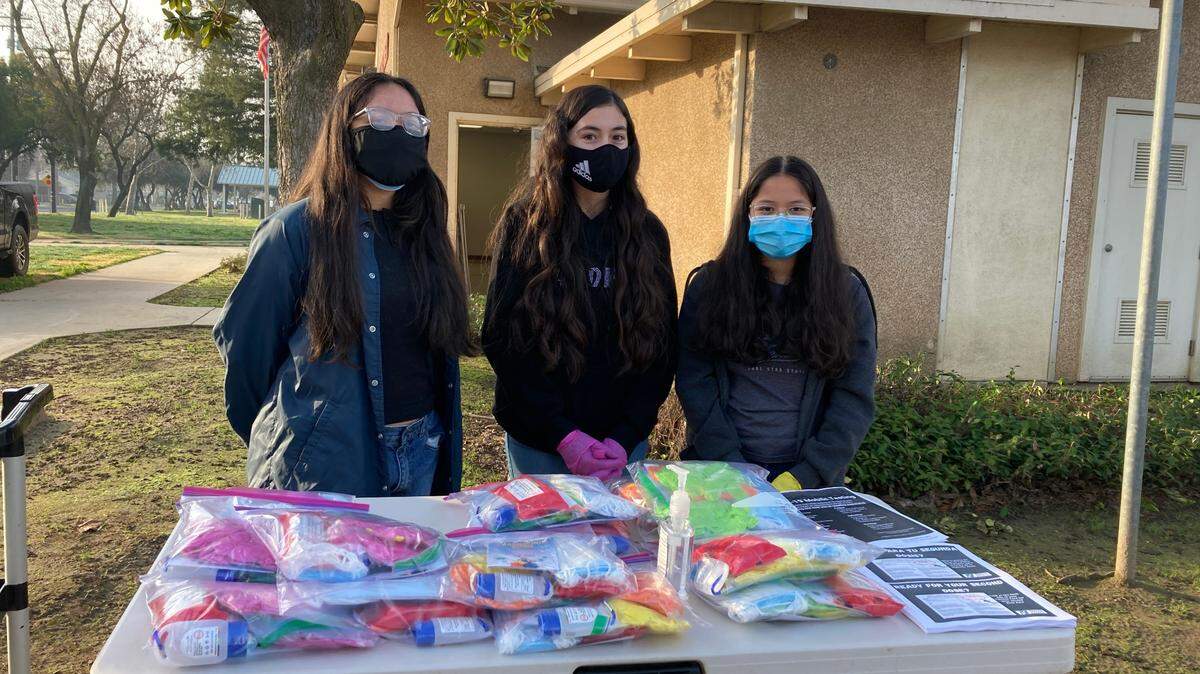
Stanislaus County officials agreed with a new state emphasis to allocate COVID vaccines to underserved communities, which have suffered the most from the coronavirus pandemic.
The county needs to know more about the changes revealed Wednesday night, but thus far it does not alter what the county is doing to provide vaccine to thousands of residents every week.
“We are having some discussions with state officials,” county Chief Executive Officer Jody Hayes said Thursday. “We have been gearing up and planning for a significant increase in vaccine over the next four weeks. What the state is doing fits into that plan.”
As the state attempts to correct inequities in delivering coronavirus vaccines across California, the new strategy will make it easier for counties like Stanislaus to reopen business sectors.
Once 2 million coronavirus vaccines have been given to people in the state’s most disadvantaged ZIP codes, the California Department of Public Health will lower the threshold for counties to move from the most restrictive purple tier into the less restrictive red tier.
Counties will be able to have 10 new cases per day per 100,000 residents to enter and stay in the red tier, instead of the current 7 new cases per day. The test positivity threshold for the red tier — 8% — won’t change. As of Tuesday, Stanislaus County’s case rate was 15.7 per 100,000, more than twice the current limit for the red tier.
About 1.6 million vaccine doses have been administered to people in disadvantaged areas of California and it’s expected to take a week or two to reach the 2 million mark.
“We are currently on track to hit (the current) red tier status numbers,” Hayes said. “It just gives us more confidence we will be able to enter the red tier in the next few weeks.”
Dr. Mark Ghaly, the state’s Health and Human Services director, said roughly 16 percent of coronavirus vaccines have been administered in underserved communities in the state. It was not clear how the additional 400,000 doses will be delivered and administered in economically disadvantaged neighborhoods.
Blue Shield could prioritize to low-income patients
Blue Shield of California, which is managing the state’s vaccine network, could give a priority for vaccine to community health clinics that serve low-income patients.
Hayes said a county like Stanislaus, where disadvantaged neighborhoods were hard hit by COVID outbreaks, would seem to get a larger amount of vaccine under the state’s new allocation plan.
The county, which is in purple, needs to be in the red tier for middle schools and high schools to reopen for in-person instruction later this month. With the lighter restrictions, restaurants could resume indoor dining, and fitness centers and dance studios could reopen facilities.
The new guidelines define the state’s most disadvantaged ZIP codes as those falling in the bottom quartile of the “Healthy Places Index,” a measure of poverty and other factors including residents’ housing status and education level.
To help get vaccines into those neighborhoods, the state will target 40% of doses to residents in those areas. Those areas have seen about 40% of the state’s COVID-19 cases, officials said.
When vaccinations in California increase to 4 million shots for people in the most disadvantaged ZIP codes, the state will also change its thresholds for the orange and yellow tiers of the reopening plan.
Gov. Gavin Newsom, speaking in Stockton on Thursday, said households earning less than $40,000 per year have been impacted by COVID disease two times more than those earning $120,000 a year.
At the same time, households with $120,000 in annual income have received twice the access to coronavirus vaccine. “That is what we have to reconcile,” Newsom said. “We have to own up to that.”
State officials said the new allocation guidelines should not take away from efforts to vaccinate people with disabilities and medical conditions such as cancer, heart or kidney diseases that put them at high risk for serious COVID-19 complications. Those people age 16 to 64 become eligible for COVID vaccine March 15.
Hayes said he believes most of those with severe disabilities and certain medical conditions in Stanislaus County, who become eligible March 15, will receive the shots from healthcare providers.
Will community clinics receive more vaccine?
Stanislaus County has been operating vaccination clinics since January, first serving healthcare workers and county residents age 65 or older, and then employees in education, food and agriculture and other sectors in the Phase 1B category.
According to the state, 102,494 doses have been administered to county residents, as of Tuesday. The county did not have data on the number of people vaccinated in disadvantaged neighborhoods.
During a briefing Thursday, state officials were asked why more vaccine has not been distributed to community health centers that regularly serve patients in low-income neighborhoods.
Stanislaus County receives weekly allocations from the state and has provided 2,000 doses to Golden Valley Health Centers over the last two months, a county official said. Golden Valley has more than 40 clinics in Stanislaus, Merced and San Joaquin counties and served 148,000 patients in the last year.
In a statement Thursday, Golden Valley said it strongly agrees with the new emphasis on equitable distribution of vaccine, “assuring we can vaccinate our underserved and vulnerable population as quickly as possible.”
Through partnerships with county health agencies, Golden Valley said it has administered 5,860 doses to date in the three counties it serves. The health centers plan to administer nearly 3,000 vaccine doses in the next two weeks to health workers, patients 65 and older, and employees working in the Phase 1B sectors.
“We are hoping that the supply of COVID-19 vaccines will continue to be steady so that we can plan more vaccination clinics over the next few weeks,” said Dr. Priti Golechha, associate chief medical officer for Golden Valley.
Golden Valley expressed both excitement and concern about the My Turn system for patient appointments that’s part of the state vaccine distribution network. State officials are expecting all healthcare providers, public health agencies and patients to use the online system for vaccination appointments.
Golechha said introducing an online platform may disenfranchise marginalized residents or patients who are less technically savvy. Golden Valley is working with the Primary Care Association to ensure alternative ways to register patients for vaccinations. The health centers are exploring walk-up vaccination clinics and may use a call center to assist patients in registering with My Turn.
Stanislaus County recently worked with Golden Valley to hold one-day vaccine clinics in Riverbank and Newman, two cities that do not have public vaccine clinics operated by the county. The county supplied 200 doses for the Riverbank clinic and 200 for Newman and all doses were administered, a county spokesperson said.
Leslie Abasta-Cummings, chief executive officer of Livingston Community Health, said its not clear yet how much additional vaccine for its community clinics can be expected from the new state guidelines.
Thanks to more steady public health allocations from Stanislaus and Merced counties, Livingston Health has lately averaged 500 to 800 vaccinations a week for clinic patients and the public. Livingston has clinics in Merced County and Turlock, Hughson and Waterford.
“For us, it is a matter of having the staff that are needed,” Abasta-Cummings said. “Administering the vaccine is quite an undertaking.”
Even with increased availability of COVID-19 vaccines under Gov. Newsom’s new guidelines, there is no guarantee the vaccine will be readily accepted by everyone in designated populations.
Community health workers educate residents
Promotoras from the West Modesto Community Collaborative said they have encountered some resistance to COVID vaccines in the African-American and Latino communities. The community health educators have worked on debunking myths, misconceptions and social media posts that spread false information about vaccines.
Mistrust of government institutions is another barrier to overcome, the promotoras said.
Advocates for health and racial justice applauded the state’s new guidelines for COVID vaccine allocations.
Anthony Wright, executive director of Health Access California, said the pandemic has highlighted an inequitable distribution of care in the health system and vaccine allocation faces the same issues.
“Earmarking 40% of vaccines is vital in ensuring that those most hard hit by this pandemic, particularly communities of color, low-income Californians and those who face higher risks due to their underlying health factors, can get this life-saving shot as soon as possible,” Wright said.
The Sacramento Bee contributed to this story.
This story was originally published March 5, 2021 at 5:00 AM.