What does Stanislaus County need to do to speed up COVID recovery? Experts weigh in
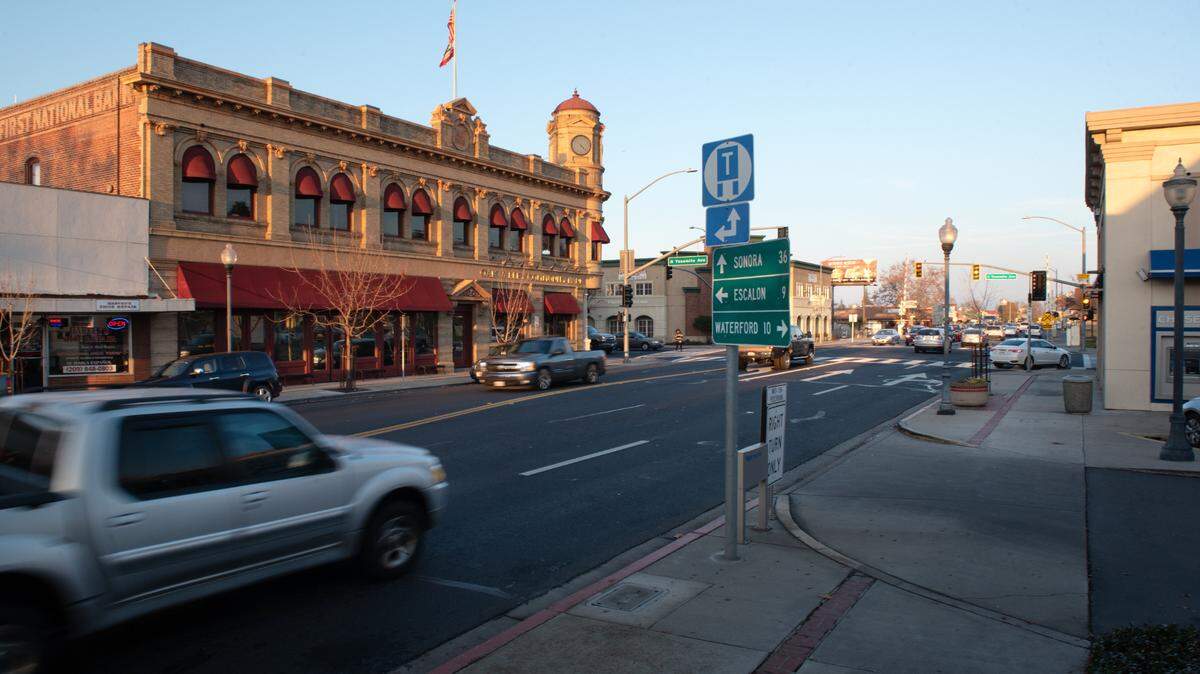
Stanislaus County’s successful economic recovery from the COVID-19 pandemic will depend on meeting vaccination and economic goals in the first few months of the year, according to a study from California State University, Stanislaus.
In the annual San Joaquin Valley Business Forecast, researchers point to increasing case numbers in the last few months of 2020 as a reason for a slowing recovery. Only by meeting high targets of vaccination and strategic economic relief will recovery be able to accelerate after the first few months of 2021, said Gökçe Soydemir, the Foster Farms Endowed Professor of Business Economics, and an author of the report.
“It is important for all of us, individually, to do our part in making sure we suppress this contagious virus spread by the end of the first quarter,” Soydemir said. “Because if not, then it looks like we’re going to struggle more because of the (new strains of the virus emerging) and the speed of vaccinations.”
Economic recovery in the valley began in the second half of 2020, as case numbers decreased and restrictions loosened. Increased cases and new restrictions slowed this recovery in the fall and winter months, as many sectors of the economy were shut down once again.
Now, researchers found, lax adherence to social distancing and other preventative measures — so-called “pandemic fatigue” — and a spotty vaccine rollout are hindering recovery further. If there’s no acceleration of recovery in the first few months of 2021, they say the expected boost to the economy in the second half of the year might not arrive.
A looming crisis
Soydemir and his team had already been bracing for a recession back in 2019, when the Treasury Department’s yield curve began to indicate an impending downward slope. The yield curve is often cited as a leading economic indicator and the harbinger of a recession, having successfully predicted one seven times in the past, most recently with the 2008 recession.
The yield curve and other indicators pointed toward a negative GDP growth in the second quarter of 2020, which ended up coinciding with the pandemic’s onset. Though Soydemir said he saw a recession coming for 2020, he couldn’t have possibly predicted its scope.
Still, he said, recovery from a large-scale economic crisis like the pandemic is often enough to alter the trajectory of the business cycle. Rather than enter a small, cyclical recession in 2020, the world entered a full-blown economic crisis it is beginning to recover from.
“Now we’re expanding, and we’re going to be expanding for a long time,” he said. “And the expansion that is going to follow this recession is going to be much stronger, much (more) amplified, which it wouldn’t have been for a cyclical reason.”
Researchers from the Public Policy Institute of California made similar predictions for the state’s recovery from the pandemic. Virus containment will be critical for a sustainable recovery, and the longer the recession persists, the more difficult recovery becomes.
“Long spells of unemployment are especially challenging for workers; skills and job networks erode over time, and long-term unemployment can be seen by employers as a negative sign,” they write.
Between February and April, California lost 2.6 million jobs, or 15% of the workforce. Following a number of months of growth, both the state and country experienced net job losses again in December. In Stanislaus County, the jobless rate increased to an unadjusted 9.9%, up from November’s rate of 8.2%, according to data from the state’s Economic Development Department. The state’s numbers also increased: California’s December unemployment clocked in at 9%, up from 8.1% in November.
As some sectors change and adapt to the new reality — work from home, adapted workflows that require new skills — others may never recover, the PPIC researchers said, leaving certain workers without the necessary skills or without jobs from which to return.
Sector-by-sector aid
The leisure and hospitality industry — which encompasses hotels, tourism, museums and dining — was most affected by the pandemic, with a decline of 20.9% in 2020. Least affected were education and health services, with a decline of 1.8%, and the financial sector, which declined by 1.1%.
“We were expecting retail trade, employment and leisure and hospitality services employment to be affected (the) worst,” Soydemir said. “But it turned out a lot worse than we projected. It turned out to be a complete catastrophe.”
Even so, employment declines in the San Joaquin Valley were less than the statewide numbers, due to the region’s significant proportion of essential workers in sectors like agriculture, logistics and manufacturing.
The construction sector was quickest to recover from the initial shock of the pandemic, which the report attributes to an increase of building permits in the area by 12.5%, up from 1.5% in 2019. The housing market also recovered quickly in 2020, with a continued increase in home values during the year, which the researchers attribute to a successful intervention from the Federal Reserve to avert the impact of a crisis.
Local real estate agents also spoke of an active market in 2020, with fast turnarounds on sales and high demand with low supply.
Though foreclosure rates remained steady in 2020 due to federal and statewide eviction moratoriums, the researchers expect those numbers to increase dramatically once the programs expire. Gov. Gavin Newsom has extended California’s eviction moratorium until June 30, and President Joe Biden has proposed to extend evictions and foreclosures until September as part of a sweeping $1.9 trillion coronavirus relief bill.
Soydemir said the new administration’s COVID-19 plans — which include federal mask requirements, vaccination targets and economic assistance — are a good start, but that the targets for vaccination and relief must be “more ambitious” to allow the economy to recover at a quicker rate.
He cited targeted sector relief as crucial to a successful recovery, as well as stimulus payments on a continuous basis. One-time payments don’t provide sufficient relief, he said, but must be administered at regular rates and in concert with other relief measures.
“I would definitely do it on a recurring basis,” he said. “Then I would prioritize those category sectors that are part of the largest earners, and those people that are suffering the most. More prioritizing would make it more efficient.”
Jeff Michael, the director of the Center for Business and Policy Research at the University of the Pacific, agrees with Soydemir’s assessment. He said elements of the bill, like additional resources for vaccine distribution, testing and funds for schools, are “very needed and can be extremely effective,” especially since they were not addressed “adequately” in previous packages.
Still, he said, putting forward targeted relief can be difficult and lead to slowdowns in recovery. The important thing, he said, is getting a bill passed and case numbers to come down. There will be lasting economic damage from the pandemic, Michael said, but much of the current recession will “disappear and go the other direction as soon as we can get the virus under control.”
“Then we’ll still have some work to repair all the damage from this cycle,” he said, “but we’ve seen the key to reversing the current negative numbers is to reverse the virus numbers.”
This story was produced with financial support from the Stanislaus Community Foundation, along with the GroundTruth Project’s Report for America initiative. The Modesto Bee maintains full editorial control of this work.
To help fund The Bee’s economic development and children’s health reporters with Report for America, go to https://bit.ly/ModestoBeeRFA
This story was originally published January 30, 2021 at 7:29 AM.