New schedules and playing multiple sports. Athletes and coaches react to CIF news.
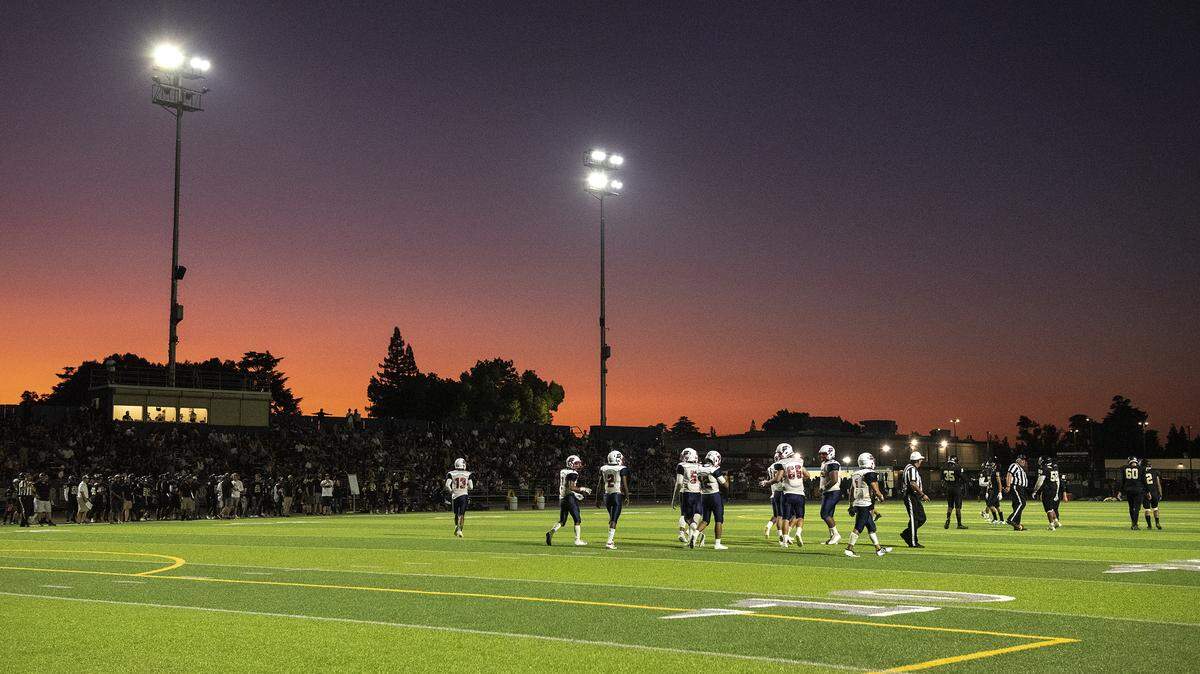
High school sports in California received a dramatic, and largely expected, change on Monday when the CIF announced sports would not start until late December and, in the case of football, January.
The California Interscholastic Federation, the state’s governing body for high school sports, released its sports calendar on Monday, pushing back the start of the fall season four months due to the coronavirus pandemic.
Fall sports, except for football, will begin Dec. 28 in the Sac-Joaquin Section. Football will begin on Jan. 8 and all sports will have full regular seasons while some, including football, will have shorter playoffs.
Football playoffs will be reduced to three weeks and have only eight teams instead of the usual 12.
Sac-Joaquin Section Assistant Commissioner Will DeBoard said there will “almost definitely” be more football playoff divisions, possibly 10 total. There are currently seven divisions.
The fall sports season will end in late February for some and March 20 for others while the spring sports season starts as early as March 1 for boys and girls soccer and as late as March 29 for golf and track and field. The season ends in mid-to-late June.
All “winter” sports (basketball, soccer, and wrestling) have been moved into the spring along with girls golf and girls tennis.
Difficult choices for athletes
As a quarterback, Escalon senior Ty Harris has to make tough decisions.
He has to decide which wide receivers to throw to or change the play because of the opposing defense’s formation.
For Harris, he will have to decide between basketball and baseball.
“At Escalon, they want kids to play multiple sports,” said Harris, who led Escalon to a CIF State Division 4-A football title last year. “It’s going to be a tough decision ... baseball or basketball and which one do I like more?”
Gregori football coach Lamar Wallace said one of his biggest concerns with the new schedule is how will athletes balance playing multiple sports in a smaller time frame.
Will athletes be able to go from football to basketball practice?
“How are their bodies going to handle that over time?,” Wallace said.
Wallace said Jaguars Athletic Director James Davis plans to have a meeting with all of the coaches in the upcoming weeks regarding the season and discuss how athletes will navigate various sports.
“It’s a unique time for coaches in different sports to be working together,” Big Valley Christian football coach Brian Berkefeld said.
Ripon basketball coach Justin Graham said coaches are going to need to have “honest” conversations with players about what sports to pick.
“This is a choice they have to make and the choices aren’t easy,” Graham said. “In the end, it’s really about the kids.”
One big rule change made by the CIF is eliminating Bylaw 600 which allows athletes to participate with club teams while also playing for their high schools. The change will be for one year only.
Tony Silva, who coaches at Rage Volleyball Club, said some high school coaches also coach club sports and because both are time-consuming, they might have to decide which one to coach.
Silva also said some elite athletes may decide not to play for their high school and focus on club to have an opportunity to get recruited by colleges.
“There is also the burnout factor if a player decides to do double practices,” Silva said.
The four-month delay to the start of the volleyball season is good news for Central Catholic junior Abby Castillon.
Castillon, the Bee’s Fall Athlete of the Year in 2019 after leading the Raiders to a Division III title, suffered a torn ACL in her left knee while at a club practice in January.
She was going to sit out the season and continue to rehab but that might change after Monday’s news.
“I may be able to play alongside my two sisters, Hannah, who is a senior and Sophia, a freshman,” Castillon said. “This is the one year we can all play together and I would’ve been heartbroken if I were to miss that opportunity.”
Changes for football players
Harris said the extra football offseason allows the team to prepare and he’s just happy to have “one last ride” with his friends.
Berkefeld said he created a new offseason schedule last week in anticipation of the season moving back to January but his biggest concern is flu season, which has its height between December and February according to the CDC.
“What if we get another spike (coronavirus) or a recurrence of the flu?,” Berkefeld said. “Are we going to have to cancel the sport altogether.”
If sports do resume on time, weather conditions will look different than if they were to start in August.
According to the Weather Channel, the average temperature is 94 degrees in August and 89 in September versus 56 in January and 63 in February.
“If they (athletes) sit on their butts for four months, they open themselves poor performance and injury but if they are doing what they need to do during the offseason, their bodies will do to very well in the climate,” Wallace said.
This story was originally published July 20, 2020 at 1:15 PM.