
Modesto’s Community Police Review Board jeopardizes its neutrality | Opinion
At Modesto’s “No Kings” protest on June 14, an estimated 4,000 community members gathered and marched peacefully from Graceada Park to Five Points. The event was one of the most well-organized, orderly demonstrations I’ve ever seen in Modesto.
On this day, six people were arrested: The majority of those arrested had allegedly worn masks, a violation of restrictions on the use of certain items during public assembly. Some were arrested “on suspicion of disorderly conduct and obstructing officers,” according to The Modesto Bee.
From my view, police presence at the event was balanced and professional — firm where necessary, but overwhelmingly restrained and respectful. That’s why I was surprised by the response from some members of the Community Police Review Board at their June 18 meeting, particularly in response to several complaints regarding the small number of arrests made on June 14. The regularly scheduled board meeting veered into a discussion on the topic after community concerns were voiced during the public comment period. Some board members then chimed in with their own thoughts.
Community Police Review Board Member Austin Grant, who attended both the “No Kings” and the earlier “Ice Out” protest, expressed concern over what he saw as a more-militarized police response at the “ICE Out” event. Without the benefit of any context or briefing from the Modesto Police Department regarding officer deployment, Grant said police at the protest “were ready for war.”
“You go out there and there’s peaceful protests going on,” Grant said. “As a Black man, (I) have seen other protests happen in this city and people not get arrested. (So) yeah, it does make me feel a little weird.”
While such observations are understandable and emotionally honest, they highlight a tension for board members: the need to distinguish between individual experience and the obligation to preserve procedural neutrality and fairness in public commentary.
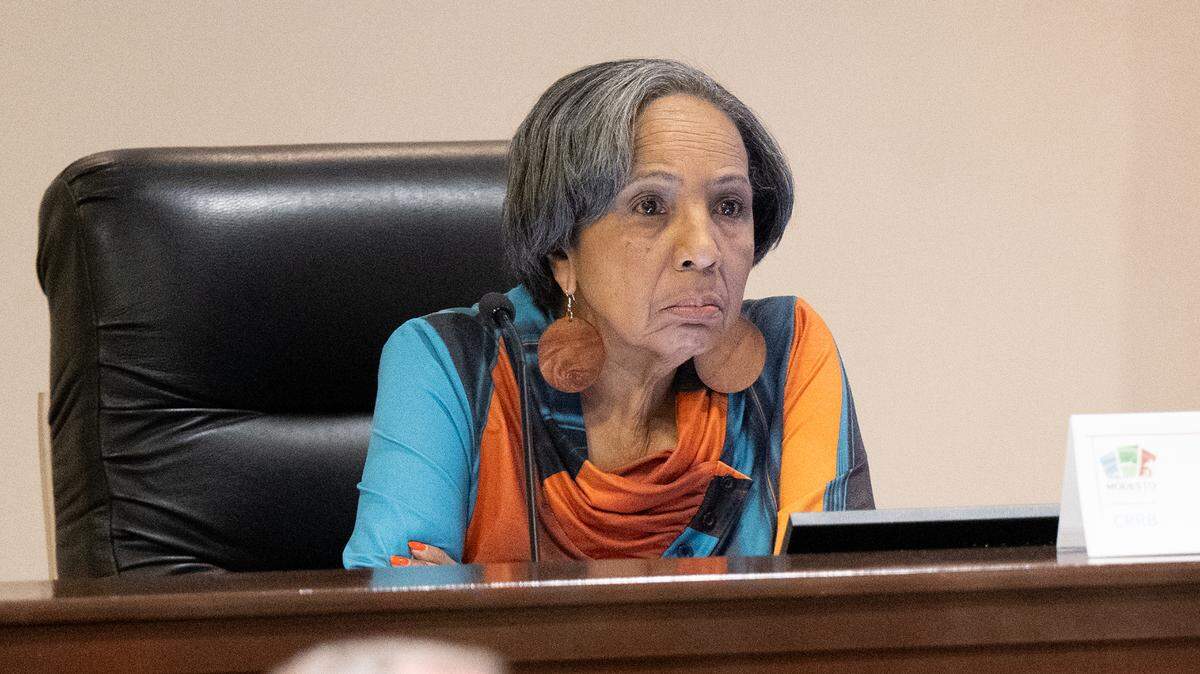
Community Police Review Board Member Wendy Byrd, who is also president of the Modesto/Stanislaus chapter of the the National Association for the Advancement of Colored People, questioned the necessity of the arrests and warned that such charges could contribute to a “prison pipeline” for people exercising their constitutional rights. Byrd’s public comments about the arrests also appeared to be in response to the public comments at the meeting but were made without any updated information from the police department about their deployment or explanation for the few arrests that occurred.
Comments such as those from Byrd and Grant risk undermining the credibility of the Community Police Review Board as a neutral oversight body.
Byrd also made remarks critical of Modesto’s OIR Group, an independent police oversight and review body. In Modesto — and in cities across the country — independent police auditors do not investigate each controversial incident or respond in real time. Their role is to review completed internal investigations for fairness, thoroughness and adherence to policy, not to serve as a parallel enforcement agency.
Despite being fully aware of the OIR Group’s limited audit function, Byrd critiqued their actions.
“It’s not really providing the community with ... the direct action that the community thinks is going to happen at the time,” Byrd said, adding that the OIR “waits a year to review an individual incident, or sometimes, doesn’t review one at all.”
Her public comments about the OIR risk undermining public understanding of the group’s role and damaging its credibility as an impartial oversight mechanism, increasing the risk of creating public expectations the system was never designed to meet.
The Community Police Review Board exists to serve as a neutral forum for oversight. Its members have the difficult but essential job of gathering facts, weighing competing perspectives and strengthening public trust by modeling procedural fairness. When a board member publicly questions police conduct without having first reviewed the facts or heard from the police department, it risks turning a deliberative body into a grievance platform and compromises the very legitimacy we depend on for such oversight to be taken seriously.
When public statements are made by Community Police Review Board members in haste before the investigative process of citizen complaints even begins, it invites critics to dismiss the entire model as biased or political. Unfortunately, that is why many cities and counties have chosen not to create such boards, or have dissolved them after early missteps.
Let me be clear: Police actions at the “ICE Out” and “No Kings” protests deserve a full and fair review.
Modesto’s police oversight process is a necessary and constructive step forward. But my confidence has been diminished by the way the Community Police Review Board handled community complaints stemming from that day. We must seek out facts and information before making judgment calls. Our oversight bodies must lead with discipline, not impulse.
We need to be advocates for the process — not just the outcome — if we truly want to build a system worthy of public trust.