Modesto police chief accepts most oversight recommendations, rejects three
AI-generated summary reviewed by our newsroom.
- Modesto police chief accepted 9 of 12 oversight suggestions from 2024 audit.
- Rejected reforms included faster officer interviews, pretext stop reviews, profanity use.
- Accepted changes improve complaint response, Taser policy, and force documentation.
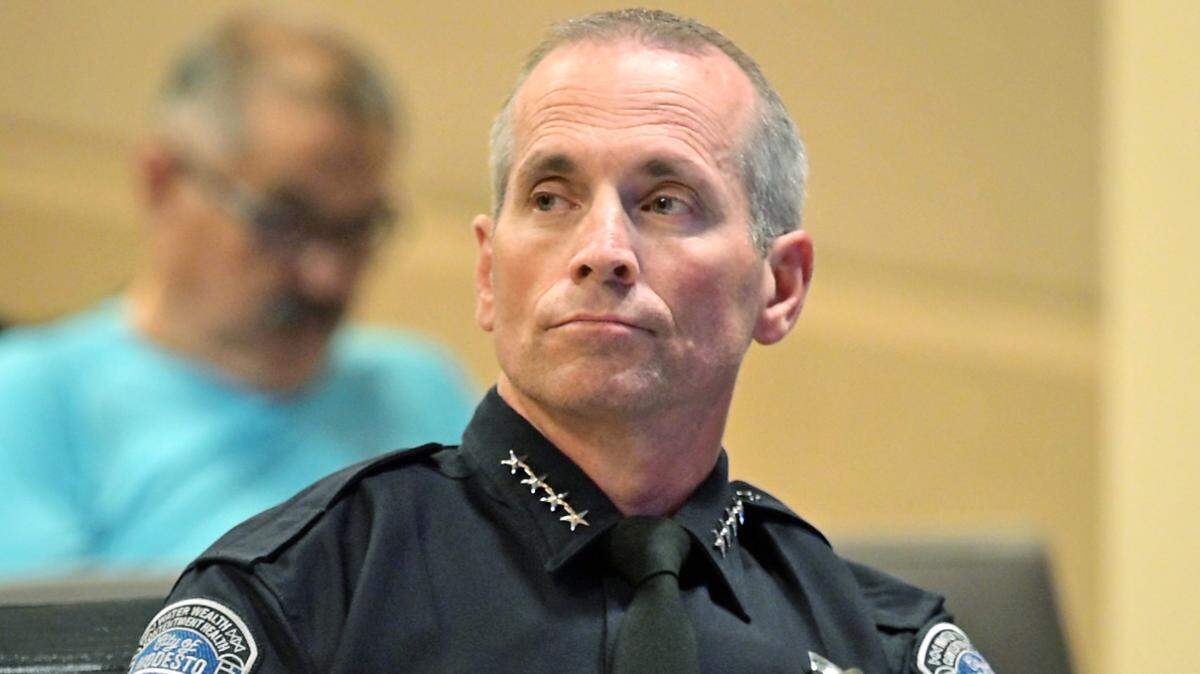
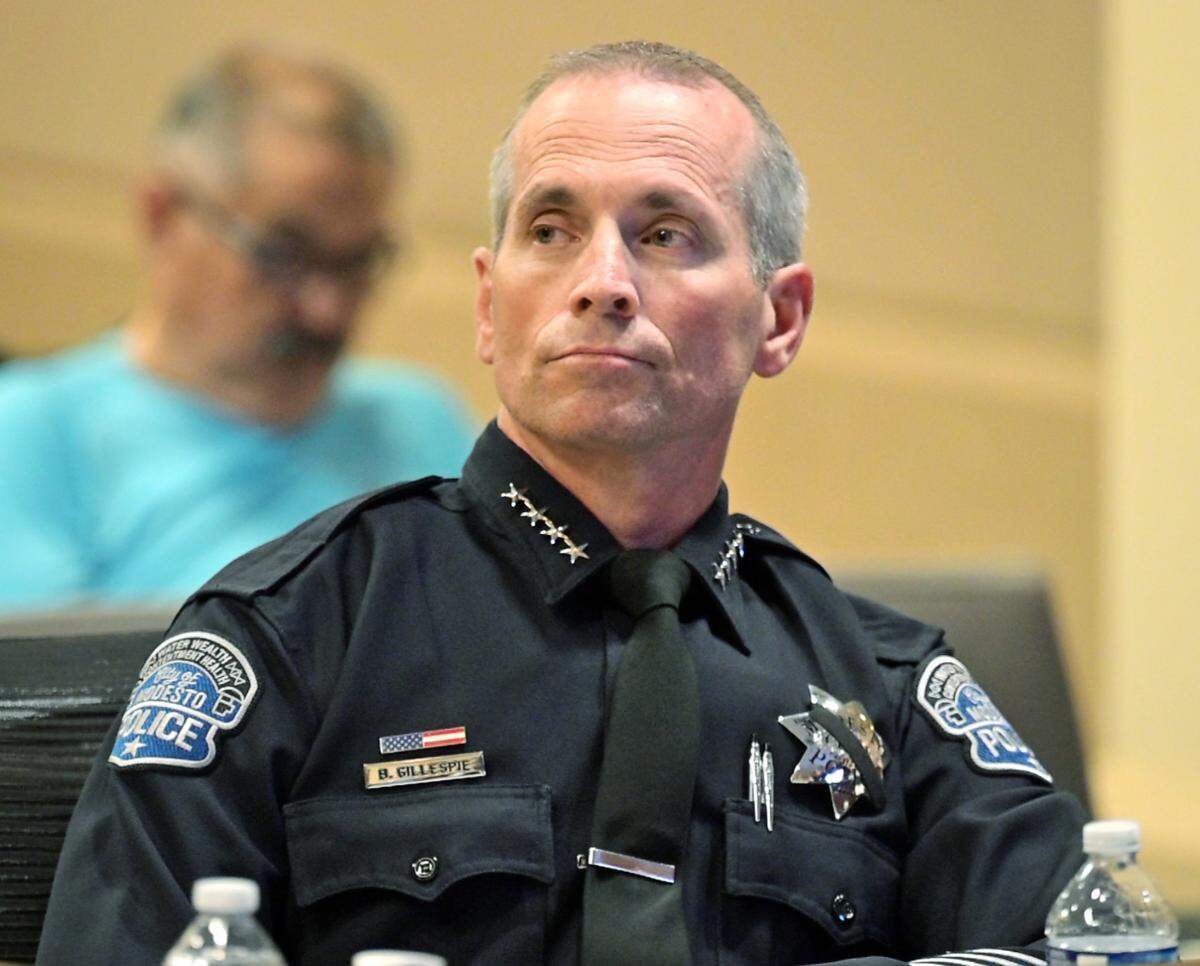
Modesto Police Chief Brandon Gillespie accepted most of the recommendations based on the second independent review of his department’s oversight and accountability systems.
The report, conducted by the OIR Group — a Southern California-based law firm specializing in police oversight — evaluated how the Police Department handled internal investigations throughout 2024. The firm, which has a $451,000 contract over five years with Modesto, serves as the city’s independent police auditor, tasked with bringing greater transparency and accountability to department operations.
The report, which was presented in April, largely commended the department’s practices bit included 12 recommendations for improvement. Gillespie accepted nine and rejected three at last week’s Community Police Review Board meeting.
Rejected recommendations
One recommendation called for officers involved in shootings to be interviewed before the end of their shift to preserve the “investigative purity” of their accounts and to reduce the risk of outside influence.
Gillespie disagreed, stating the department follows what he described as best practices outlined by the International Association of Chiefs of Police. Those guidelines recommend a short recovery period — typically 48 to 72 hours — before conducting interviews.
Another recommendation encouraged the department to evaluate the costs and benefits of pretextual traffic stops “in light of tension between proactive policing and community trust that such stops often exemplify.” Pretextual stops are ones initiated by law enforcement for minor traffic violations, with the actual purpose of investigating or searching for evidence of another crime.
Gillespie declined the recommendation, saying that the department conducts such stops lawfully and that they frequently lead to the discovery of weapons, drugs, stolen property or wanted individuals.
Michael Gennaco of the OIR Group acknowledged the potential benefits of proactive policing but pointed to concerns raised by the state’s Racial and Identity Profiling Advisory Board. The board has criticized pretextual stops, arguing that any benefits are outweighed by data showing such stops disproportionately affect people of color.
As an example, the Los Angeles Police Department adopted a policy limiting pretext stops, prohibiting their use for minor equipment violations in an effort to reduce racial disparities.
“While we respectfully continue to agree to disagree with regard to the use of pretext stops in all situations, we certainly understand that there are competing considerations and respect the Police Department’s and the Police Department’s leadership’s perspective on this,” Gennaco said.
Nico Solorio, chair of the Community Police Review Board, said, “MPD’s response calls pretext stops misunderstood, but for many in our community, especially Black and Latino residents, there is no misunderstanding. These stops are often experienced as harassment. Legality alone does not justify the harm that is done.”
Lastly, Gillespie also rejected a recommendation to revise the department’s profanity policy to include exceptions when officers may use profanity in high-stress or tactical situations. Gillespie said allowing for exceptions would “undermine the professional culture that we’ve worked hard to establish.”
Members of the public questioned the chief’s decision to reject these recommendations, saying that Gillespie citing the International Association of Chiefs of Police is like a “fox guarding the hen house.” A study was also cited that showed officers interviewed immediately after a high-stress incident retained more accurate details, compared to those interviewed after a delay.
Accepted suggestions
Among the accepted recommendations was reaffirming the policy of giving verbal warnings before deploying a Taser. Gillespie also agreed to improve the department’s responsiveness to complaints, committing to contact complainants within 14 days of receiving a report.
He supported a recommendation to eliminate redundancy in case summaries involving multiple employees and affirmed the department’s commitment to evaluating complaints that involve potential bias, stating that impartial policing remains a core principle.
“We’re always open to evaluating our practices to ensure they reflect the professionalism we expect from our staff,” Gillespie said.
Other accepted recommendations include:
Aligning documentation practices during internal reviews of police shootings.
Reviewing how individuals involved in use-of-force cases are interviewed.
Emphasizing body camera compliance.
Improving documentation of K-9 deployments.
Bringing additional attention to the implementation of new policies regarding documentation and evaluation of deescalation efforts in use-of-force incidents.
Solorio acknowledged MPD’s accepted suggestions but said there is no timeline, benchmark or public reporting mechanism for the public to know whether change is happening or not.
Board member Wendy Byrd highlighted recommendation 12, which focused on deescalation efforts and tied it to MPD’s enforcement during the protests held in Modesto on June 14, where MPD detained several people for wearing masks.
This story was originally published June 25, 2025 at 4:48 PM.