
Democrats must drastically change approach to gaining Latino vote | Opinion
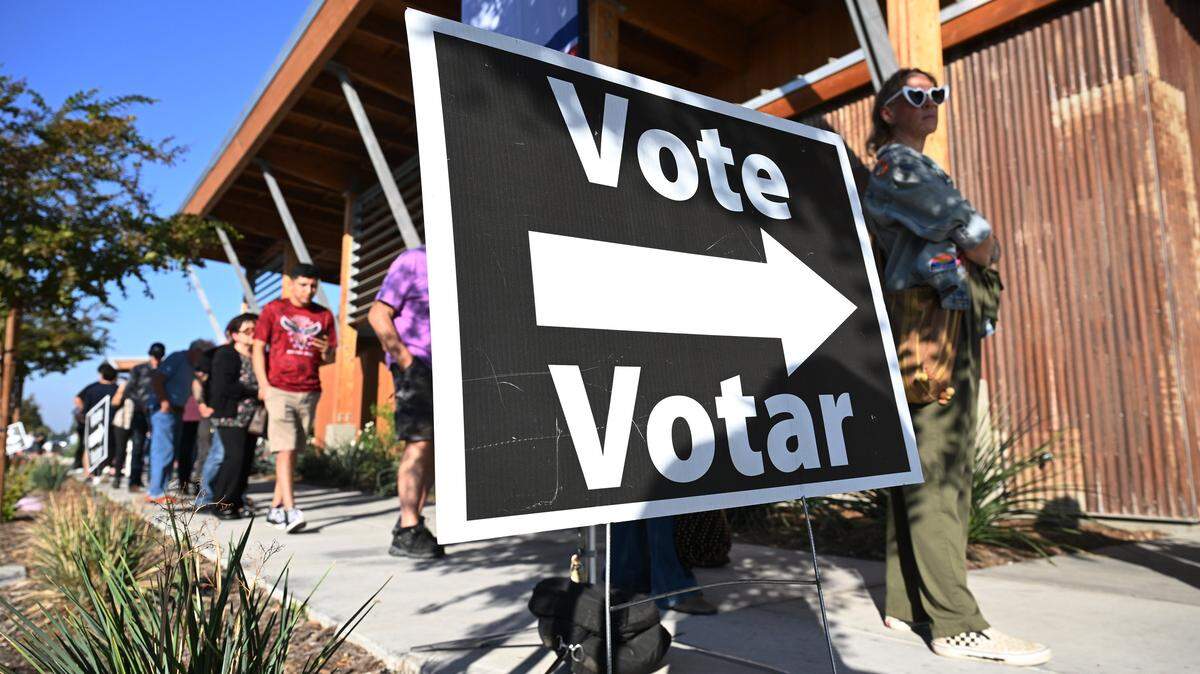
In 2003, Latinos became the largest minority group in the United States. In 2024, Latinos became the largest minority group of voters in a presidential race.
Between 2020-2024, eligible Latino voters increased by 3.9 million — a 12% increase, according to the Pew Research Center.
There is every reason to believe this growth will continue. In the 2024 presidential election, the Pew Research Center determined that 48% of Latino voters supported the Republican candidate, Donald Trump. That’s a new record. The Pew studies also showed that 50%, of Latino men voted for Trump, while 46% of Latina women did so.
These facts reflect the Democratic Party’s inattention to the importance of the Latino electorate for the past 23 years. Unless the Democratic Party drastically changes its approach to gaining the Latino vote, it will be difficult to win future presidential elections.
How to win the presidency
There is, however, an opportunity for Democrats to gain the requisite 270 electoral votes by winning the support of more Latino voters.
California, Texas, Florida, Arizona, New Mexico, New York, New Jersey and Illinois are eight states where 74% of the nation’s Latino 68 million Latinos live, according to Pew Research. Latinos are 20% of the U.S. population.
What can we learn from Latino political engagement — or lack thereof — in these eight states?
I have lived in both the west and east of the United States. Raised in Texas, I obtained all my schooling, including a PhD, in California. Then, my entire professional career took place east of the Mississippi River. I can say with confidence, from my own cross-country experience, that large numbers of Latinos in the eight western states with big Latino voting populations do not feel respected.
When “minority issues” are discussed in the Democratic Party, we are not given the importance commensurate to our numbers. As a result, Democrats have lost two out of the last three presidential elections.
The Democratic Party has had at least 23 years to solidify the support of Latinos in states with large Latino populations, yet it has failed to do so. These states can be made reliable blue states, if the party allocates more attention and resources to this particular electorate.
How to win more Democrats
What needs to happen? First, extensive polling needs to take place because national polls do not include large numbers of Latinos in their sampling. Polling results from these eight states will yield a much better and deeper understanding of this electorate.
Polling questions could include: Why don’t Latinos vote in high numbers? What has the Democratic Party done, or not done, to encourage or discourage Latinos from voting for the Democratic Party? What policy initiatives will attract them to vote Democratic? What are principal sources of political information?
Texas, of course, is the three-decade old challenge. But when Democrats field strong candidates and devote enough resources to their campaigns, they win.
The 2026 senate and governors races in Texas present significant opportunities for the Democratic Party to begin turning the state blue, as indicated by a record-breaking turnout in the recent Democratic Senate race. Soon, the state will be 50% Latino. This momentum must be capitalized on to convert and sustain Texas as an ongoing blue state.
The Democratic Party’s inattention to the importance of the Latino electorate in the eight western states, particularly in Texas, has given us two Trump presidencies. Democratic Party strategists must take the electorate in these states seriously if they want to win back the White House.
Enrique E. Figueroa, PhD, was a professor of agricultural economics at Cornell University, where he was instrumental in creating the University’s Hispanic American Studies Program. Later, at the University of Wisconsin, he served as director of the Roberto Hernandez and Prof. of Urban Planning, where he created the Latino Nonprofit Leadership Program.
This story was originally published June 20, 2026 at 5:00 AM with the headline "Democrats must drastically change approach to gaining Latino vote | Opinion."