
This may be California’s most endangered Republican. How he got there | Opinion
Voters in California’s 22nd Congressional District have sent Rep. David Valadao a message.
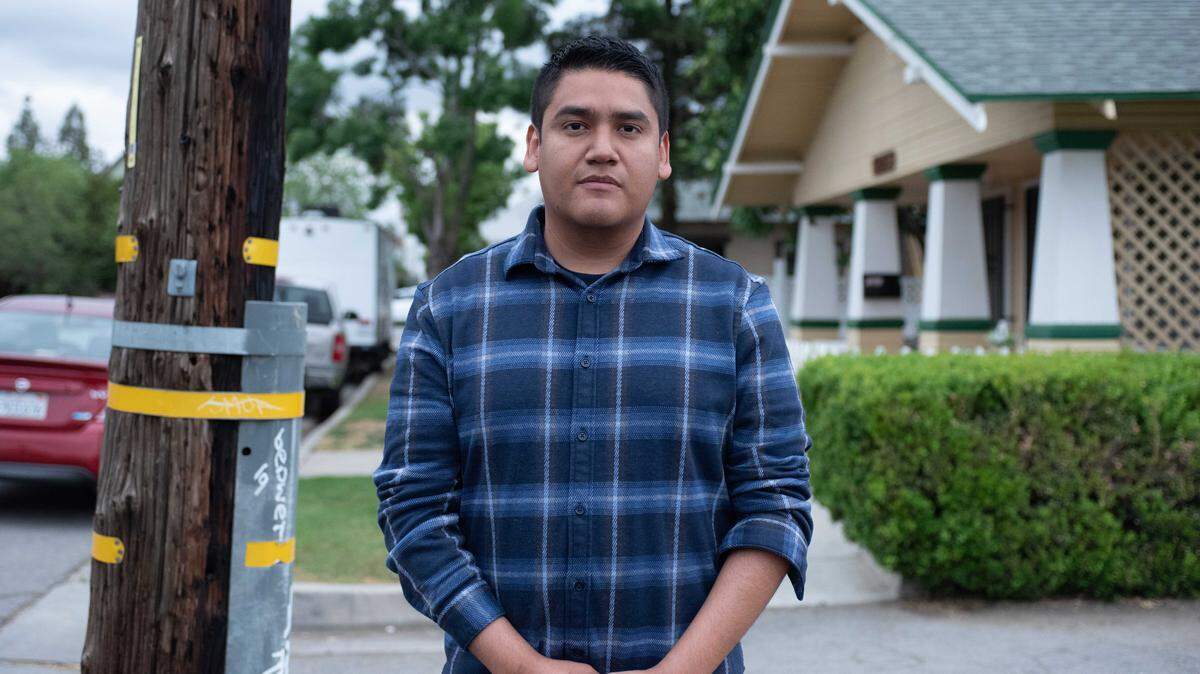
With the final votes still to be counted, the incumbent Republican had slipped to 40.7% of a three-person primary election where two Democrats have so far split the remaining 59% of the votes. In November, Valadao will face Randy Villegas, a college professor, Visalia school board trustee and the son of working class immigrants who grew up in his family’s auto shop.
In a newly redrawn district thanks to Proposition 50, the voter-approved initiative that have largely redrawn congressional districts to help Democrats, Valadao will have to contend with voters who have a lot more in common with Villegas than a Republican whose voting record will be on the ballot.
This time, part of Fresno helps decide the election, including communities such as like Kerman, Caruthers and San Joaquin. Thousands of voters will be introduced to Valadao in this election, and they should know what he has done with the job.
According to The New York Times, the 22nd District has the highest Medicaid enrollment of any Republican held district in the country. About two-thirds of its residents rely on Medi-Cal. In Tulare County, 23% of households depend on CalFresh. These are the people who pick the food the rest of America eats, who staff our hospitals and schools and who keep the Valley running.
Last July, Valadao voted to cut their lifeline and fund the agencies tearing their families apart, in the same bill.
The reconciliation bill, the so-called “One Big Beautiful Bill Act,” locked in roughly a trillion dollars in Medicaid cuts and the largest Supplemental Nutrition Assistance Program cuts in the program’s history. The Urban Institute estimates more than three million California families will lose some or all of their food benefits. State officials estimate two million Californians could lose their healthcare.
That same vote sent more than $170 billion to immigration enforcement, the largest single expansion of U.S. Immigration and Customs Enforcement, including 10,000 new ICE officers, with no accountability attached. ICE enforcement has already killed at least two United States citizens this year.
Valadao knew what was in the bill. In April 2025, he signed a letter with 11 other Republicans warning that Medicaid cuts would devastate vulnerable populations and rural hospitals. Three months later, he voted “yes” anyway.
Valadao points to a $50 billion Rural Health Transformation Fund as cover. California’s share is about $230 million, against roughly $15 billion in Medicaid losses to our hospitals this year alone. The math does not work.
In 2017, Valadao voted to repeal the Affordable Care Act (ACA) and lost his 2018 race over it. This year, more than 85,000 of his constituents on ACA plans saw premiums jump by an average of $85 a month after Congress let the subsidies expire. He has a pattern of telling us he is on our side, then voting against us, then coming home and asking us to forget.
Villegas, by comparison, is something this district has not seen in a long time: a candidate who answers to voters alone. He refused corporate PAC money. His campaign ran on an average donation of $53, with 92% under $100. His top donors were educators and nurses.
Outside groups spent more than $2 million dollars to stop him in the primary and failed. He teaches our students. When he talks about families stretching a CalFresh budget or praying Medi-Cal covers a hospital visit, he is describing his neighbors.
The contrast is public record: Federal Election Commission filings through March show Valadao’s campaign has taken in more than $1.6 million from political action committees this cycle — more than it raised from every individual donor combined. One of these men owes his campaign to the people of this district. The other owes it to the interests his votes have served.
Valadao’s vote continued the same calculation that has cost Valley families for generations. This November, it can finally be answered by someone who lived on the receiving end and decided to do something about it.
We have seen what Valadao does with the Valley’s votes. It is time to give them to Villegas.
Samantha León spent 11 years in healthcare administration at Stanford Health Care and is now a graduate student researching how federal policy affects immigrant households in the Central Valley. She lives in Fresno.
This story was originally published June 11, 2026 at 6:00 AM with the headline "This may be California’s most endangered Republican. How he got there | Opinion."