Stanislaus County voters look ahead to ‘super’ March 3 primary. What you need to know
Soon after New Year’s Day, the holidays will give way to the 2020 election season, with political advertisements replacing holiday greetings in mail slots.
Campaigning for many office seekers will be compressed into a three-month period leading to California’s presidential primary, which has been moved up from June to March 3.
Rather than an often meaningless June primary, residents in the Northern San Joaquin Valley can participate in Super Tuesday this time. Along with the presidential nomination process, the March primary ballot will choose the top two candidates in local, state and federal elections set for November.
Here are eight things to know about the much anticipated 2020 elections.
1. Super Tuesday. State lawmakers rescheduled the primary to make the Golden State more relevant in presidential elections. And this time the state is right in the mix as crucial primaries for Democratic presidential hopefuls are held March 3 in California, Texas, Colorado, North Carolina, Minnesota and nine other states.
About 40 percent of the delegates are up for grabs Super Tuesday, so a front runner could emerge from the pack and ultimately challenge President Trump next fall.
Elizabeth Warren, Bernie Sanders and Joe Biden are given the best chances in California. which has 416 of the more than 1,300 pledged delegates in the pot March 3. It creates motivation for Sanders, who has the largest staff in California, and other Democrats to schedule stops in the Central Valley.
With the California presidential primary, the top candidates divide up the delegates. Of course, the state has held early primaries before that failed to put a stamp on national politics. The February 2008 primary favored Hillary Clinton, who captured 204 delegates, while Barack Obama managed to win 166 on his march to the Democratic nomination and the White House.
Residents can start voting by mail Feb. 3, the same day as the Iowa caucuses.
2. CA-10 contest. In the 10th Congressional District, Rep. Josh Harder, D-Turlock, is waging his first re-election campaign in a district that’s not quite secure for the Democrats.
Slightly more than a year after Harder’s surprise win over former Republican congressman Jeff Denham, the district including Stanislaus and southern San Joaquin County is a place where health care and immigration are emotional issues and support for President Trump can boost a conservative candidate.
Either Ted Howze, a former Turlock councilman, San Joaquin County Supervisor Bob Elliott of Tracy or Marla Sousa Livengood could be chosen as the Republican to challenge the freshman congressman in November. The open primary also features Democrats Ryan Blevins and Michael Barkley.
Democrats, with 38 percent, hold the lead in voter registration in the 10th district, where 33 percent are registered Republicans. No Party Preference registrants represent 23 percent.
3. County election. Voters will begin the process of choosing two new members for Stanislaus County’s board of supervisors. A third board seat is on the March ballot but incumbent Vito Chiesa is unopposed.
Former state Assemblywoman Kristin Olsen is not seeking a second term to represent the Riverbank-Oakdale area, setting up a contest between Modesto Councilman Bill Zoslocki, Waterford Mayor Michael Van Winkle and Matthew “Buck” Condit, a captain for Stanislaus Consolidated Fire Protection District.
Jim DeMartini, a county supervisor since 2005, is headed for retirement in Nevada. Three are vying to represent a district including Ceres, part of south Modesto and western Stanislaus County on the board: Attorney Tom Hallinan and Ceres councilmen Michael Kline and Channce Condit.
The top two vote-getters in each contest proceed to the November election. After the winners take the oath of office in January 2021, three of the five board members will have two years or less experience in county government. Supervisor Tom Berryhill, who represents much of Modesto, took his seat last January after winning election in November 2018.
The county, with a $1.38 billion budget and about 4,600 employees, has taken an increasing role in providing shelter and housing for the homeless. County leaders have also battled a State Water Resources Control Board proposal to re-allocate flows in the Tuolumne, Stanislaus and Merced rivers to revive salmon runs.
4. Modesto election. Inside the municipal boundaries of Modesto, a mega-church pastor is running for mayor. Another member of the Ridenour family is seeking the same office and Mayor Ted Brandvold wants four more years.
The upcoming mayor and city council races sound intriguing. But the city election will be held in November. You won’t find it on the March 3 ballot.
The city is moving from odd- to even-year elections, and in November 2018 voters approved a one-time extension of council terms from four to five years. The seats held by council members Doug Ridenour, Mani Grewal and Kristi Ah You are up for election in 2020.
Ridenour, the brother of former Mayor Jim Ridenour, is among the seven people with sights on the mayor’s office. Also challenging Brandvold are Senior Pastor Rick Countryman of Big Valley Grace Community Church, city building program coordinator Bert Lippert, Naramsen Goriel, former Mayor Carmen Sabatino and Armando Arreola.
Grewal is running for the Legislature in the 5th State Senate District. Councilman Bill Zoslocki, whose term expires in 2022, is running for Board of Supervisors (see above). So a number of council seats could be vacated depending on what happens in various elections next year.
5. State Senate race. The March primary will winnow the field of contestants hoping to succeed state Sen. Cathleen Galgiani, D-Stockton, who is terming out in the 5th Senate District.
Modesto Councilman Mani Grewal, who has Galgiani’s endorsement, has sparred for months with fellow Democrat Susan Eggman, who has one more year as the 13th Assembly District member.
Last month, former Modesto Mayor Jim Ridenour jumped into the 5th District race, offering competition for fellow Republicans Jesus Andrade, a Stockton councilman, and Kathleen Garcia, a Stockton Unified School District board member.
The open primary means two people from the same party could conceivably advance to the November election. The 5th District includes most of Modesto, all of San Joaquin County and a small part of Sacramento County. The Demos have a 41 percent to 30 percent lead in registration over the GOP; more than 20 percent of voters have no party preference.
Competing water interests divide the senate district. Stockton-area politicians have insisted more water from rivers is needed to refresh the San Joaquin-Sacramento delta, while hundreds of residents from Stanislaus caravanned to an August 2018 protest rally in Sacramento against the state plan to reallocate water from rivers.
6. State Assembly. Heath Flora, the Republican incumbent in the 12th Assembly District, is seeking another term against Democrat Paul Akinjo. Assemblyman Adam Gray, D-Merced, is unopposed in the 21st District.
7. Other ballot items. Three of the nine Superior Court judgeships on the March ballot are contested, which explains the social media sites and signs posted by judicial candidates.
Five school districts — Stanislaus Union, Salida, Newman-Crows Landing, Patterson and Chatom Union — have bond measures, each requiring 55 percent approval.
Measure N in Patterson stands out. It asks for approval of $2 million a year for construction of rental housing for high school teachers and staff members. According to an election statement, the measure would help the district hire and retain highly qualified teachers and staff.
The Patterson bond would add $100 annually to tax bills for a $250,000 home.
The Burbank-Paradise Fire Protection District is asking for an annual special tax of $275 per residential unit to help fund fire protection and other emergency services. The tax would raise an estimated $625,000 annually.
8. Notable dates. Voting by mail runs from Feb. 3 to Feb. 25. Requests for a mail ballot must arrive at county elections by Feb. 25. Completed ballots, including vote-by-mail, can be delivered before the polls close March 3. Mail ballots require a postmark on or before March 3 and county elections must receive them no later than March 6.
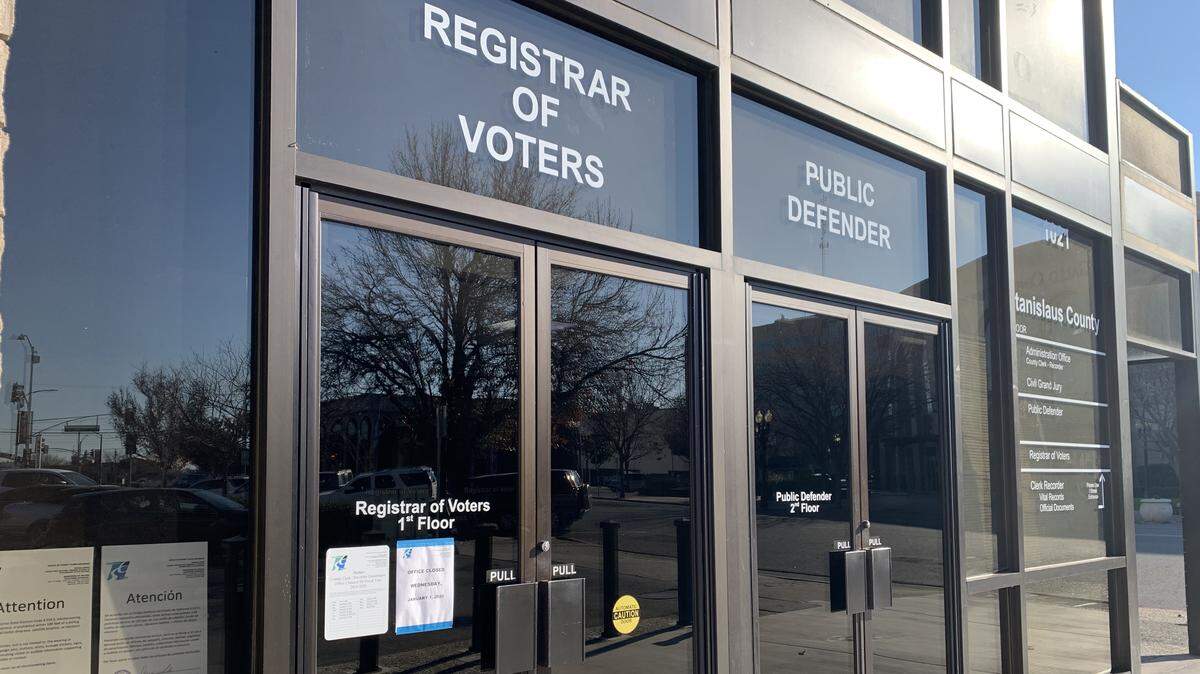
The last day to register to vote in the March 3 election is Feb. 18. People who are eligible may appear in person at the county elections office in Modesto, 1021 I St., to register to vote provisionally from Feb. 18 to March 3.
Polling places are open from 7 a.m. to 8 p.m. on March 3.
This story was originally published December 30, 2019 at 10:40 AM.