War in Iran, inflation cited as deficit causes in Modesto’s proposed budget
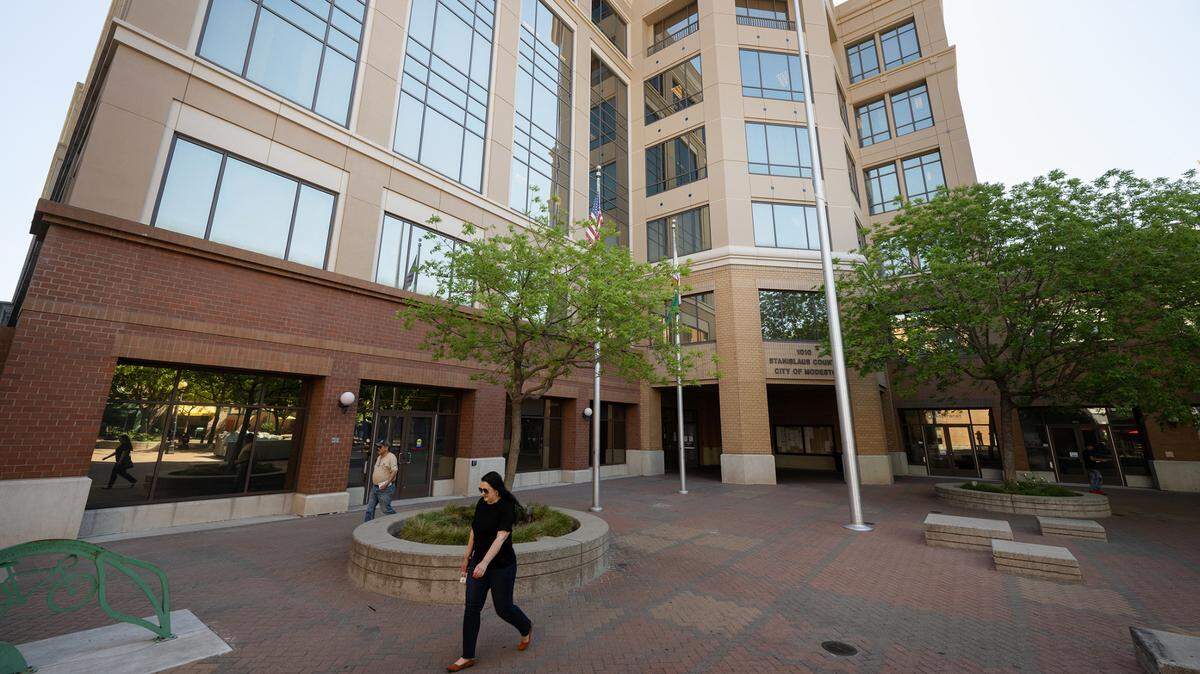
Despite a pessimistic financial outlook last year, Modesto’s purses grew and its deficit thinned, according to the city’s proposed operating budget for the next fiscal year. But increased spending, partly due to inflation costs and the war in Iran, continue to bleed its coffers and prolong its deficit.
The city has five major funds, the largest being the general fund. It also has several smaller ones. Modesto’s total budget, which includes all funds, is $674.9 million for the upcoming fiscal year, July 1 to June 30. Its general fund budget is $215.6 million. Both are increases from last year, which were $639.2 million and $199.9 million respectively.
This is largely thanks to increased tax revenue, at least in the case of the general fund, which was projected last year to dip because of tariffs imposed by President Donald Trump. Instead, tax earnings increased 6.6% when compared to last year, the largest of which came from property tax, followed by sales tax.
The general fund’s deficit, projected to be $15.1 million this upcoming fiscal year, is down from the current fiscal year’s $19.6 million gap, but still will be heavily subsidized by Measure H — a 1% sales tax enacted three years ago to avoid cuts to essential services post-pandemic. The recent practice of using it to patch the deficit, unsustainably, is cautioned by City Manager Joe Lopez.
“Measure H funds need to be prioritized to make improvements to the city and not just be a remedy for all the city’s former financial constraints,” Lopez wrote in his submission to the proposed budget. “We must remain steadfast in our stewardship of public funds, taking decisive action to reduce the general fund’s structural deficit.”
Lopez’s submitted budget blames forces beyond the city’s control for its increased spending, citing “the impact of long-term inflation” raising the costs of parts, fuel and professional services contracts. An “additional area that is being closely monitored” by the city is the war in Iran — never referenced by name in Lopez’s submission but instead referred to as “the conflict overseas.”
“The changing landscape in this conflict has implications on an economic level but more importantly a human level with the lives that are being impacted,” Lopez wrote. “City staff will continually monitor the potential financial effects of these changes and adjust accordingly.”
In a procedural move Tuesday, the proposed budget was combined with a message regarding it from Mayor Sue Zwahlen. The proposed budget is still technically a draft to be formally adopted at a public hearing June 2.
Zwahlen’s message — parliamentarily to announce any modifications, to which she had none — acknowledged that spending was outpacing the city’s earnings but also highlighted Measure H’s accomplishments beyond its ability to buoy the budget.
Measure H’s spending plan calls for funding $7.6 million on new programs and $28.1 million on ones previously approved. More than $13 million in Measure H funds will be used to supplement the General Fund’s deficit, an increase of $2 million from last year.
This story was originally published May 13, 2026 at 1:26 PM.