How Trump’s new executive order may impact mail-in voting in Stanislaus County
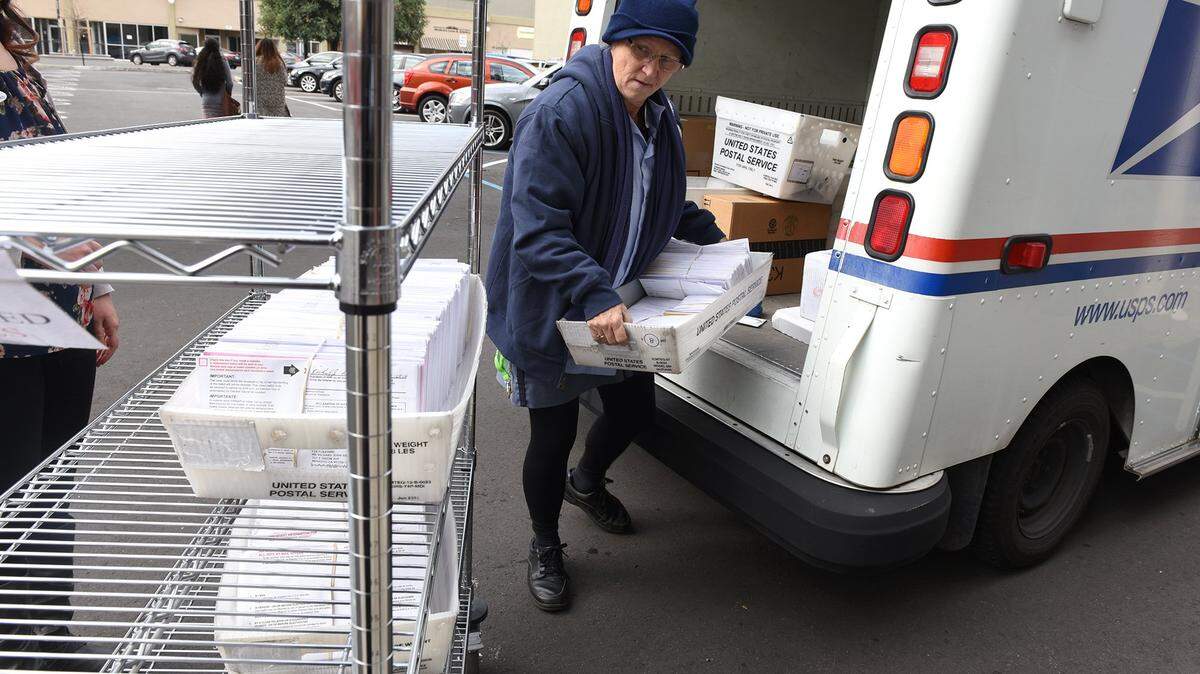
On March 31, President Donald Trump issued an executive order that requires federal screening of mail-in voting. Voter advocates say it could limit participation in a state that overwhelmingly chooses to vote by mail.
In the early 1990s, Stanislaus County became one of two counties in California to pilot an “all mail ballot” model, in which eligible registered voters automatically receive their ballot in the mail. The results were increased participation by voters in a county with historically low voter turnout and a decrease in administrative costs. Its success paved the way for eventual statewide adoption.
During the last special election, on Proposition 50, 93% of votes received in Stanislaus County were mail-in ballots, higher than the 89% statewide. In that election, Stanislaus ballots received by mail were almost evenly split between “yes” and “no” votes, with “no” votes being in the slight majority.
In September 2021, California decided to permanently send mail-in ballots to every registered eligible voter. Since 2018 through this past special election, there has been a 24% increase in vote-by-mail use in California.
Jennie Sweeney, chair of the voter services committee at the Stanislaus Chapter of the League of Women Voters, said that in general, the league is opposed to any action that would hinder access to vote.
The League of Women Voters issued a statement shortly after Trump’s order was issued. It reads in part: “The Constitution is clear: election administration is the responsibility of the states, not the executive branch. This [executive order] expands the president’s power while narrowing the voting class to a select few.”
Nate Monroe, a professor and Tony Coelho chair of public policy at UC Merced, said that despite what may be considered a strategic advantage to Republicans in the executive order, it may be hard to predict how a lower voter turnout will shake out in more rural and conservative sections of the state.
“Increased barriers to vote by mail could end up costing some of that advantage that Republicans would have that touch Stanislaus County,” Monroe said.
Multiple groups, including The Leadership Council on Civil and Human Rights and the ACLU, have already denounced the order, stating it conflicts with the election clause of the Constitution, which says each state legislature is in charge of the place and manner of elections.
The new executive order states that “to enhance election integrity via the United States Mail, additional measures are necessary.”
According to the order, the Department of Homeland Security in collaboration with the Social Security Administration– must issue bar codes based on federally maintained lists. It also tasks U.S. Postal Service with creating universal standards for mail-in ballots.
David Colnic, a political science professor at Stanislaus State University, said when he first read the executive order, he could not imagine how most of it was constitutional. “I don’t see how it would survive a legal challenge,” Colonic said.
California Attorney General Rob Bonta and State Sen. Alex Padilla both made statements Tuesday in opposition to the executive order and the Democratic National Committee and the League of Women Voters have asked a Judge to stop the order from taking effect.
Devin Lavelle, assistant director of the California Research Bureau in the California State Library, presented a study of voter fraud from 2020-2024. It includes news reporting of instances of fraud, instances of claimed voter fraud compiled by conservative think tank The Heritage Foundation, and the conclusions of grand jury hearings.
“Over the last several years, 14 counties have gone through [grand jury reviews], and none of them found any evidence of wrongdoing within them,” Lavelle said. “The most fairly common call was to give them more resources so that they can more effectively do the work they’re doing.”
The counting process for mail-in ballots is open to observers at the county registrar’s office and follows a strict standard procedure to prevent miscounts or fraud.
The executive order would allow the government to withhold federal funding from states that failed to comply with the order.
The order does not have an effective date but requires DHS to establish a database for issuing these barcodes within 90 days of March 31.
It also requires states to inform the Postal Service of their intent to provide mail-in voting 90 days in advance of a federal election.
Because the primary election is less than 90 days away, it is unlikely it would have an effect on the election scheduled for June 2. But if upheld, it will impact the Nov. 3 general election.
This story was originally published April 2, 2026 at 11:16 AM.