
Stanislaus mental health workers claim county is stingy in contract negotiations
AI-generated summary reviewed by our newsroom.
- Stanislaus County workers protested low wages and high caseloads this week.
- SEIU seeks fair pay to improve staff retention and essential service delivery.
- County cites budget limits while bargaining with remaining 25% of workforce.
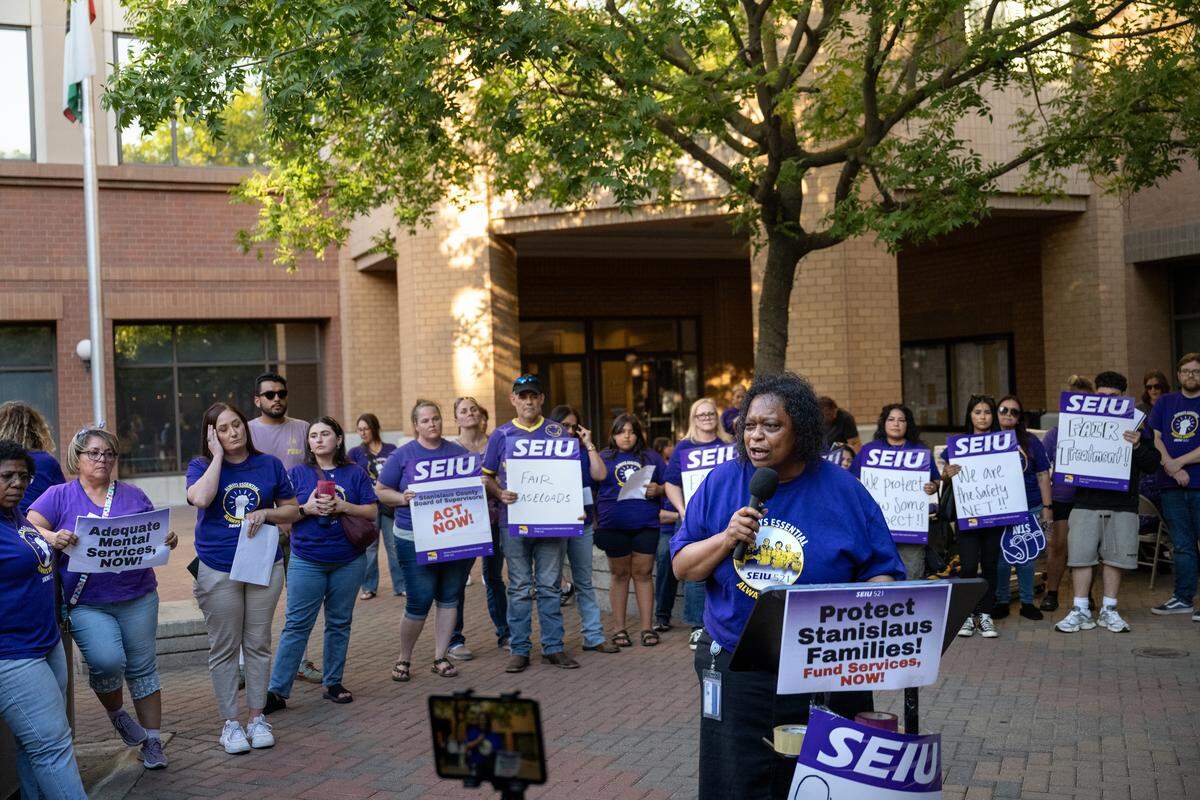
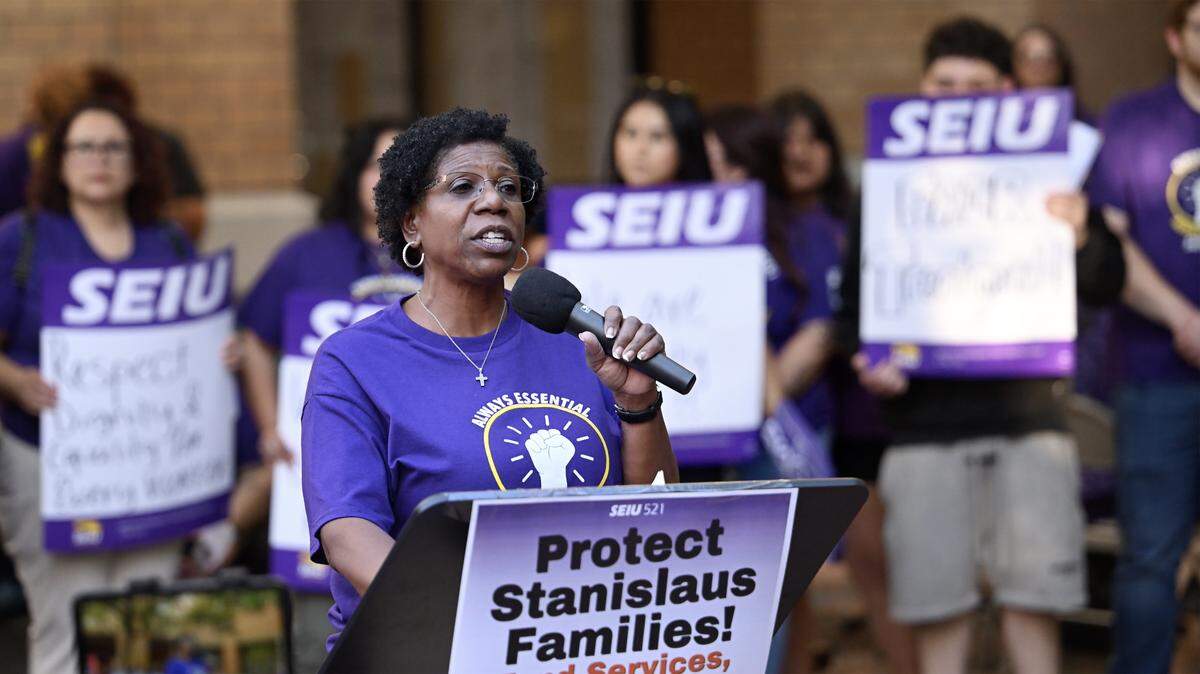
Stanislaus County behavioral health employees and social workers held a rally Tuesday as contract negotiations continued with the county.
About 100 workers carried picket signs and aired their protests at Tenth Street Plaza in downtown Modesto before employees spoke at the evening Board of Supervisors meeting.
Service Employees International Union Local 521 said staffing levels in county Behavioral Health and Recovery Services never fully bounced back after the cuts during the Great Recession and below-average pay takes a toll on staff who deliver services today in mental health, child welfare and other programs.
The union is representing frontline workers in BHRS, child welfare services, Child Protective Services and health programs in contract negotiations that began in March.
Employees told county supervisors they work with difficult clients and the excessive caseloads create safety issues.
“When our wages are fair, we can keep our public service experts who know how to keep children safe and families united.” Carmen Villa said.
Amanda Barnett, a behavioral health specialist for 10 years, said the services were far superior when she started with the county, but the work today is marked by higher caseloads, potential threats from violent people and low pay for being on call. “We can’t keep staff because of the working conditions and low wages, especially with the cost of living,” she said.
Workers said the county most recently offered a 6.7% pay raise over three years. Some speakers reminded supervisors that last month, they approved an 11% raise over three years for elected officials and management staff.
“This situation is not sustainable,” said Jody Smith, a nine-year county employee. “Our work demands compassion, resilience and long hours, yet some of us are struggling to make ends meet.”
County leadership said it’s committed to bargaining in good faith with the unionized employees.
The county has entered contracts including wage agreements with about 75% of its workforce in the past year. Negotiations are continuing for the remaining 25% who are represented by SEIU and other labor organizations. “We continue to focus on reaching fair, sustainable agreements,” the county said in a statement.
The statement said the county’s goal in labor negotiations is “reaching agreements that recognize the dedication of our employees, safeguard public resources, and keep vital services available to the people of Stanislaus County. ...We know how important reliable services are to the community. County departments are committed to maintaining essential operations and ensuring residents continue to receive the care and support they depend on, even as bargaining moves forward.”
SEIU members said a fair agreement would stabilize employee retention. It also would help reduce overflowing caseloads for social workers.
County Chief Executive Officer Jody Hayes said at Tuesday’s board meeting that the two sides are not at an impasse. He said he expects to see movement on both slides but he questioned why the talks are taking so long. He referred to more than a monthlong delay between the last bargaining session in August and the next meeting this month.
“There is a lot of room to go in this negotiation process,” Hayes said. He noted the union’s early demand after bargaining began in March was about 30% over three years, which would amount to a $63 million financial impact to the county.
Hayes said the 11% increase over three years, which has been often cited since last month, is what was negotiated for the majority of the county workforce, and financial modeling has shown it could be worked into contracts with the remaining groups.
“We are required (by law) to go through this back and forth with the various groups we work with,” the CEO said. “It’s not pleasant for either side.”

This story was originally published September 17, 2025 at 9:00 AM.