California law could end Stanislaus County health program that helps immigrants
AI-generated summary reviewed by our newsroom.
- New law shifts funding, jeopardizing Stanislaus programs
- Promotora outreach links Latino residents to care, easing distrust and fear
- Clinic attendance remains steady, though fear could limit in-person patient visits
The Promotoras Community Health Outreach Workers program, a bridge between Spanish-speaking residents and services in Stanislaus County, could come to an end next year.
This comes as more Latino community members become hesitant to access resources amid fears of immigration enforcement under President Donald Trump’s administration.
Since California voters passed Proposition 1 in 2024, the county Behavioral Health and Recovery Services department no longer can use the same funding it once relied on for the Promotoras program. The program used to be supported by Prevention and Early Intervention funds under the Mental Health Services Act of 2004.
However, Proposition 1 replaces the MHSA, changing the name to Behavioral Health Services Act and restructuring the use of funding and expanding on existing requirements. It reforms behavioral health care funding to prioritize services for people with the most significant mental health needs while adding the treatment of substance use disorders, expanding housing interventions and increasing the behavioral health workforce.
BHSA went into effect this year and must be implemented by Stanislaus County Behavioral Health and Recovery Services by next July.
Ruben Imperial, the county’s behavioral health director, said the department is looking for other ways to keep the Promotoras program running through Medi-Cal managed care plans such as Health Net and the Health Plan of San Joaquin, which can fund community health worker services. But that funding comes with different requirements, which could limit how flexible the program can be, especially when it comes to community outreach.
“It’s very disappointing, and I think there’s many of us that are trying to figure out any way to continue to support and sustain the program,” said Imperial, who started the Promotoras program in Stanislaus County about 15 years ago.
Beatriz Lopez, senior manager of public relations for Health Net, said the company values the opportunity to serve Stanislaus County’s Medi-Cal enrollees and to work with the county to implement the state’s Community Health Worker benefit according to guidelines.
In February, Lopez said, Health Net and Behavioral Health and Recovery Services briefed local groups, including promotoras contractors, on the Community Health Worker benefit and contracting options. Last month, Health Net met with the county Public Health Department to answer additional questions and offer guidance on using promotoras in clinical settings.
“The company invested in promotoras, workforce training and enabling technology long before Community Health Worker services became a mandated Medi-Cal benefit,” Lopez said in a statement. “Our early vision was to meet the most vulnerable where they are, help them navigate a complex system and connect them to the care they need.”
The role of promotoras
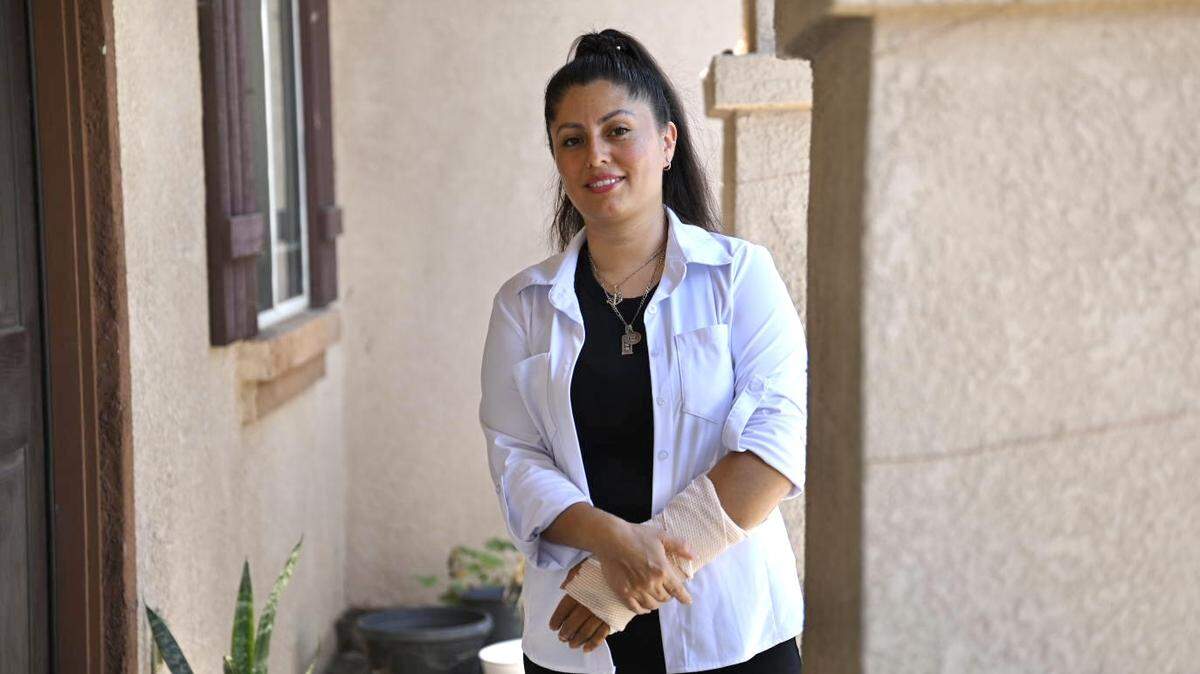
On a Friday morning at a park in Newman, promotora Rosa Hernandez Gomez led about 10 women in a dance class. In an arm cast because of a recent injury, she showed up to teach the class early in the morning, before the day’s heat set in.
Gomez, a promotora for six years, leads wellness classes in Spanish every weekday, ranging from dance to yoga, with art classes for children in the afternoon. After some sessions, participants stick around to chat, share updates and exchange information. Gomez’s main focus is on mental health.
“Mental health is in everything: economic, things going on with family. Everything is connected with mental health,” said Gomez.
Promotoras, Spanish for “promoters,” are Latino community members who provide basic health education and guidance in accessing community resources. This model started in Latin America and was introduced to the U.S. in the 1960s. The intent of the promotoras is to provide outreach and access to care to rural, marginalized and hard-to-reach communities.
Outreach is a big part of Gomez’s role. She attends community events, posts on a Facebook page she made for the group and encourages people she meets to join her classes or other programs. Then the word gets around and more people start joining, she said.
If she sees that someone needs more support than the free wellness activities can provide, she talks with them one-on-one to assess their needs and connect them with appropriate services, such as counseling or therapy.
“It’s hard for them to trust a place, so the best way for us to do it is to be out, not be waiting for them to come to our office,” Gomez said.
She said residents feel more comfortable asking promotoras for service recommendations because they trust them. If someone reports a negative experience at an appointment, she will follow up with the provider to find out what happened.
Promotoras also help connect residents with Spanish-speaking staff or teach them to ask whether a program or facility has someone who can speak Spanish.
“Sometimes they don’t know they can even ask a simple question like that,” Gomez said.
Angelica Santellan, a Newman resident who has attended Gomez’s classes for five years, said she first joined while struggling with anxiety and depression. Drawn by the program’s focus on mental health and wellness, she found that it not only helped her well-being but also connected her to services she hadn’t known existed.
Santella worries that if the program ends, she won’t know where to turn or who to contact for guidance on local resources.
Dominga Santillan, another Newman resident and participant, learned about the program through a friend. She joined to meet people and build friendships. Since participating, Santillan has gained knowledge about health resources offered by BHRS, including mental health and blood pressure trainings. She remains hopeful that the program can be sustained in some form once it ends.
Impacts on health care access
Since the new presidential administration, there have been reports of increased fear among immigrants to go out and seek services, including medical appointments.
David Quackenbush, CEO of Golden Valley Health Center — a local federally qualified health center that provide services to underserved communities — said patient attendance and appointment patterns have seen only minor changes. Staff have noted that a small number of patients have expressed worries about immigration and accessing health care facilities.
“In response, providers and staff are working to maintain trust through supportive communication and reassurance of appointment availability for all patients. GVHC continues to emphasize patient confidentiality and rights in our messaging to help ease concerns during this time,” Quackenbush said.
Amy Collier Carroll, vice president and chief communications officer at GVHC, said the clinic has seen fewer patients in person. However, it’s unclear whether that’s due to fear of attending in person or because more patients are choosing virtual appointments.
GVHC runs a program called Food Pharmacy, in partnership with Second Harvest Food Bank, which donates shelf-stable food each week to patients experiencing food insecurity. Patients identified as needing food receive a “prescription” allowing them to take a bag of food when they leave the clinic.
Carrol recalled one patient with a Food Pharmacy prescription who was too afraid to come in because of her immigration status, so she asked a neighbor to pick up the food on her behalf.
“It gives you a direct sense of the kinds of hard decisions that people are making in terms of, conditions of suffering and not feeling like they’re free to access the services they need,” Carrol said.
The county reported that overall patient attendance at its clinics has remained stable, although there have been fewer visits from newly arrived refugees. It added that they have not seen a rise in canceled or missed appointments directly tied to immigration concerns. Some providers have noted that patients occasionally voice worries about seeking care, but it doesn’t collect data to show how widespread these concerns are.
“Our staff reassures all patients that their health and well-being are our priority. We do not collect or share information about immigration or citizenship status. Patients can feel safe coming to us for care, and our focus is always on supporting their health needs,” said Kamlesh Kaur, public information officer for Stanislaus County.
Building trust with communities
Gomez said her classes used to be as large as 30 to 40 people. Now the number of people who attend is smaller, but she understands if people are too afraid to show up. Most of those who do attend are documented, she noted.
She added that people are often hesitant at first, but some return weeks later once they feel more comfortable.
In June, Gomez’s group had plans to dance at the farmers market in Newman. However, there were rumors circulating that Immigration and Customs Enforcement officers were there two days prior. She was transparent about this with the group, telling them it was up to them if they still wanted to go, but that she didn’t want to put anyone at risk. They ended up not going.
She reassured the group that she would be there for them, and even started hosting Zoom meetings so that they would still feel connected. Little by little, people started coming out again, she said.
Gomez said she’s also held some “Know your rights” presentations for the group to reassure and inform them.
Dvera I. Saxton, a medical and environmental anthropologist who has worked with immigrant and farmworker communities in Central California, said promotoras played a crucial role during the pandemic by building trust and strengthening networks of care within these communities.
“These are the knowledgeable, experienced, and familiar folks within health care and social service systems that immigrants are most likely to trust,” said Saxton. “And, we are in a moment where federal policies and state mirroring or cowing to federal policies is discarding what we’ve learned over decades and in recent history about how to provide healthcare to immigrant community members.”
Exacerbated barriers
Saxton said the relationship between immigration enforcement policies and reduced access to health care and other essential services is not new. Immigrant communities, particularly Latinos, already face longstanding barriers to accessing care.
“The intensity and violence being used to surveil and target immigrant communities through many and multiple avenues, including, potentially, through health care systems, only exacerbates and heightens the risks along with the already longstanding barriers to healthcare access for immigrant communities,” Saxton said.
In the Central Valley, these obstacles include transportation challenges, long distances between rural communities and clinics and shortages of physicians — especially those who are multilingual.
“Telephone translators can only go so far,” Saxton said. “It is really important to staff health care institutions and clinics with people from the community, who are trusted by the community.”
Distrust of health care systems also exists in some communities due to past harmful practices or historical legacies of harm in medicine. Avoiding care, even for minor issues, can have broader impacts across communities, Saxton said. Many immigrants rely on personal networks and shared knowledge to care for themselves and one another, and promotoras often play that role in building and maintaining these trusted networks.
This story was originally published September 17, 2025 at 3:08 PM.