Turlock launches police advisory board. Here’s why meetings aren’t open to the public
After the Turlock Police Department’s new advisory board met for the first time last month and began giving feedback on homelessness, Interim Chief Steven Williams said he plans to request perspectives on additional issues ranging from race to use of force.
The 11-member advisory board is set to meet for the second time April 21, but Williams said the meeting is again closed to the public to allow members to speak freely.
“We’re still getting to know each other and I want the members of CABCOP to be able to speak freely and truly express their opinion without any pressure of potential scrutiny,” Williams said. “Or ‘Now I can’t say what I want because I have other people listening’ and just be reserved in their comments, vs. feeling that they can speak freely because it’s just this group.”
For now, Williams said there are no plans to publicly open Community Advisory Board to the Chief of Police (CABCOP) meetings. The department does not intend to release meeting agendas or reports, either, he said. The board members’ recommendations are not binding, he added, and the body lacks both voting power and oversight authority.
When the board met for the first time March 25, Williams said he gave an overview of the program and members introduced themselves and shared feedback on the city’s homeless emergency response plan. The meeting ran half an hour over schedule, Williams said, but they discussed homelessness for only about 45 minutes. So Williams requested a second meeting in April for more insights on the declared encampments crisis.
Since Capt. Miguel Pacheco, former Chief Nino Amirfar and Williams began developing the board last year, Williams said the goal remains the same: to bring different perspectives for the chief to consider. The board is designed to review policies, programs and events such as critical incidents, the department has said in applications and press releases.
Multiple advisory board members told The Bee they look forward to working with the group and described it as diverse.
Turlock police advisory board members share views
Pacheco and Williams, who have taken turns serving as interim chief since Amirfar retired in October, have worked together to form the board. Applications opened in October and were due in November. Interviews took place in December, followed by background checks in January and finalizing selection in February, Williams said.
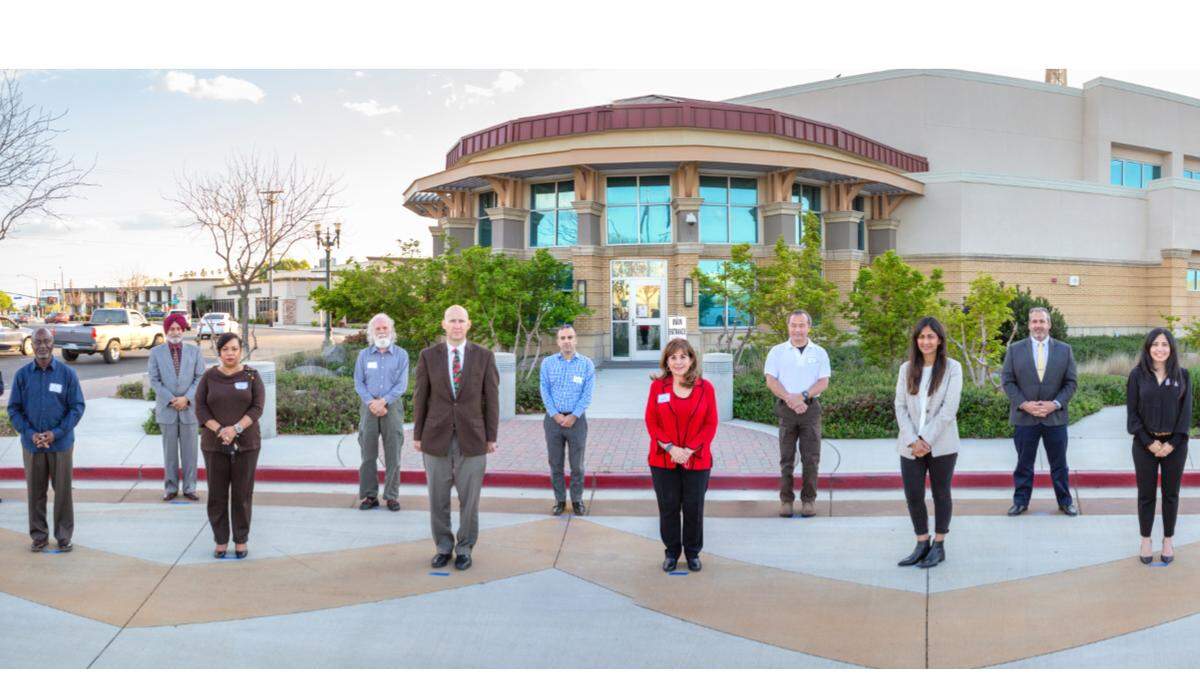
The 11 members hold a variety of affiliations, from business owners, school administrators and nonprofit leaders to members of ethnic and religious groups, according to a list provided by the Police Department. The chief selected them from 33 applicants, department spokesperson Sgt. Michael Parmley said in an email. All either live or work in the city.
Born and raised in Turlock, Sandy Singh said she applied to bring her voice and experiences to the board. A member of the Sikh Temple in town, Singh also is a board member for We Care, which provides shelter for homeless men. However, she does not represent We Care in her duties on the advisory board.
Her parents have also owned Turlock businesses the last couple of decades, she said.
“It felt really safe growing up and it felt really good to be in community,” Singh said. “I want to uphold that for the next generation, especially as my family grows.”
Other people of color on the board include Nana Bekoe-Sakyi and Linda Romero Soles, who is Latino, involved in multiple local nonprofits and a former assistant chief executive officer for the Stanislaus County Superior Court. Bekoe-Sakyi runs an agribusiness consulting company, Bekoe Corp., and the nonprofit Harvest Keepers International, which does most of its work in Africa.
No stranger to advisory boards, Bekoe-Sakyi said he serves on the elder board for Harvest Church, a multicultural church in Turlock. The 11 advisory board members represent different perspectives and can bring their long-term community ties to policing discussions, Bekoe-Sakyi said.
“I don’t see myself representing the Black community per se even though I do by default because I’m Black,” Bekoe-Sakyi said. “But that’s not really how I’m approaching my work. ... I’m there as a an individual who is part of the Turlock community.”
Advisory board member Stuart Wooley likewise said he does not represent or speak for organizations he works for, but provides a citizen’s input to the chief. Wooley serves Church of Jesus Christ of Latter-day Saints congregations in Turlock as a stake president and also works in academic affairs for California State University, Stanislaus. For the police board, Wooley said he aims to bring an educator’s analytical thought process.
Next steps for police board
The board will meet at least quarterly, Williams said, but more often for emergencies such as the city-declared homeless crisis. In the future, Williams said he intends to share statistics on both use-of-force issues and police officer investigations. The board would not delve into allegations details or investigation outcomes, he said.
For hate speech incidents or racial issues, Williams said he may also seek input from the board. Wooley described Williams as the one who sets the agenda and said he looks forward to giving input on matters the chief brings forward. At the same time, Wooley also named racism and white supremacy as possible issues for the board to discuss.
Noting he is not a spokesman for the board, Wooley said members could perhaps facilitate dialogue on policy recommendations supporting people of color.
“Overall, how do we foster an environment that lets everybody, whatever race or background, really feel comfortable and safe?” Wooley said.
Meanwhile, Singh indicated an interest in increasing transparency through the board. In her feedback on homelessness, for example, Singh said she requested police notify residents and businesses impacted by the planned shelter bed overflow site at the county fairgrounds.
Members’ thoughts on whether to keep the meetings closed also varied. Whether to open meetings to the public, Bekoe-Sakyi said, is the chief’s call. Romero Soles declined to make a recommendation in an email, but said a flyer about the board emphasizes community trust, collaboration and staying connected. State judiciary committee meetings she participated in have been open for the public to listen to, Romero Soles said, but only accepted public comments beforehand.
Five board members are set to serve a one-year term and six will serve two years, Williams said. How the board moves forward largely depends on who serves as the next police chief.
The City Council froze funding for a permanent police chief position for the current fiscal year ending June 30. The city has not released information about a search to recruit a permanent chief.
This story was originally published April 6, 2021 at 10:14 AM.