Turlock-area Sikh Americans feel weight of COVID-19 wave, farmers protests in India
For Turlock resident Devinder Singh Bains, India marking 300,000 COVID-19 deaths last week was far from abstract — the disease recently killed one of his college friends working as a doctor in the city of Bhopal.
Sikh Americans in the Turlock area like Bains are still grappling with how the latest coronavirus surge tore through their homeland, while also worrying about the now-six-month-long farmers’ protests tied to some of their loved ones’ livelihoods.
India recorded its worst month for coronavirus cases and deaths in May, per the New York Times virus tracker. At the same time, Indian farmers continued demonstrations they began in November against new agriculture laws protesters say will put them at the mercy of large corporations, The Associated Press reported.
Bains attended a last ritual ceremony funeral for his friend via a video conference in late May. They graduated college together before Bains immigrated to the United States in 1978, he said. But as the U.S. and California prepare to ease coronavirus safety rules, Bains said hospitals in India last month ran out of beds, oxygen and other medical supplies.
“People are running out of the cemeteries for the cremations,” Bains said of the surge when about 3,000 died per day. “Bodies are waiting in the line in the heat to be cremated. Now people are just letting the bodies go in the flowing rivers.”
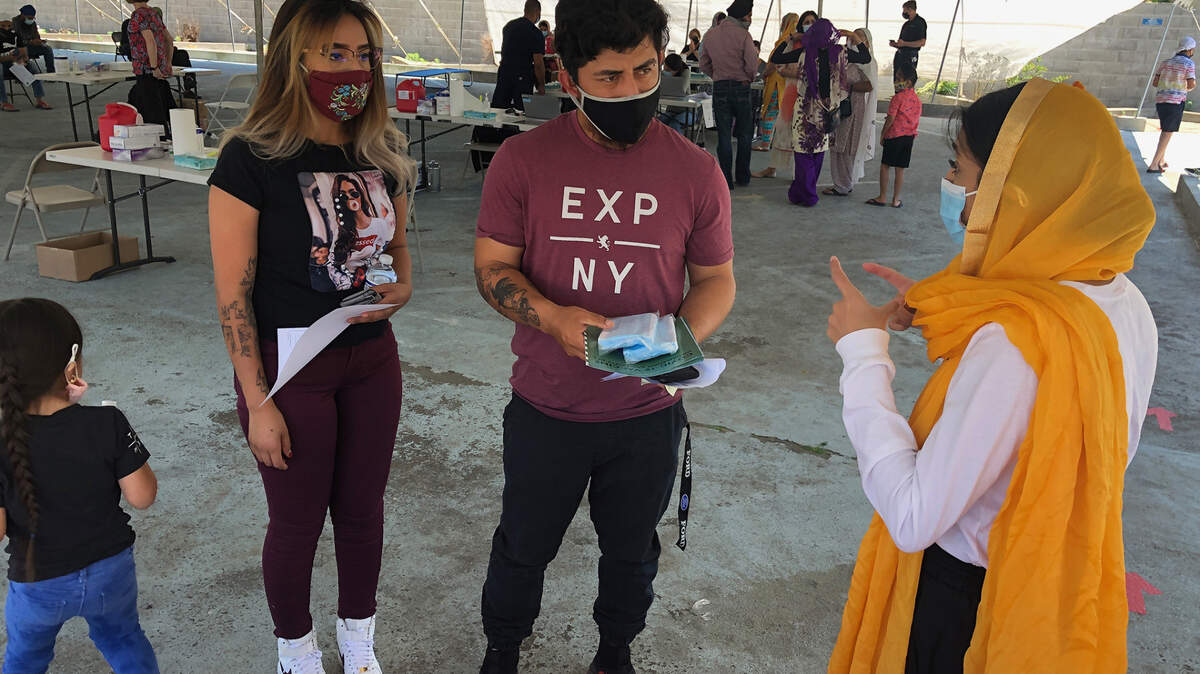
Meanwhile, at the Turlock Sikh Temple on May 23, the Jakara Movement partnered with Optum Health to vaccinate roughly 170 people against COVID-19. Jaspreet Kaur, a community organizer for the nonprofit empowering Punjabi Sikhs, said different circumstances represent an uneasy privilege.
“Since it’s so readily available to us, we have this choice of whether or not we want to get tested, whether or not we want to get the vaccine,” Kaur said. “Whereas (for) people in India, it’s like liquid gold. It’s something they will do anything for.”
Her extended family in Punjab are not leaving their houses because of the coronavirus, Kaur added, but she is fully vaccinated and able to live her life.
Farmers protests also concern Turlock-area Sikhs
The ongoing farmers protests, Kaur said, are not any more or less important than the latest coronavirus surge. For her family living in a countryside village, Kaur said their sense of belonging and livelihood lie in farming.
Indian government officials say laws passed in September will raise income for farmers by adding private investment, the Associated Press reported, but farmers say the legislation will force them to sell crops at lower prices to corporations.
Kiran Takhar’s family in Punjab have participated in protests, she told The Bee. Takhar, who lives in Livingston and frequently visits Turlock, said her cousins in their 30s try to support demonstrations as much as possible when they do not have work at home. They ask their elders not to go out as much because of possible medical complications, she added.
To support the protest movement, Takhar said she sends money to family in Punjab. She asks them to buy essentials such as blankets, rice and shampoo, then drop them off at demonstrations. Takhar often sends family members WhatsApp messages to check on them and said she also watches videos of the protests.
“There are people who are 80, 90 years old sitting out there who have been sitting at the protests for months, and it sucks because that could easily be my grandparents,” Takhar said. “It’s just so heartbreaking hearing them, watching them. Every few days you hear someone committed suicide because they just can’t take it.”
Takhar said she has also been talking about the protests with friends outside the Sikh community. Some people mistakenly think the protests caused the latest coronavirus surge in India, Takhar said, so she tries to educate people about the issues. Experts say factors such as lifting lockdowns, an underfunded health care system and emerging virus variants helped cause the outbreak, USA Today reported.
Donations offer way to help Indian communities
A lack of consistent medical information frustrated many of her friends living in cities such as Bangalore, Chennai and Kolkata, Turlock resident Sandy Singh said. She heard about efforts to access plasma therapy, only to later read that the Indian government determined the therapy does not treat COVID-19, for example.
Singh also used to check WhatsApp messages from her friends every morning, but recently, Singh said she removed it from her wake-up routine because it was too depressing.
“I feel incredibly helpless and that’s how (my friends) feel,” Singh said. “I’m even further away so I feel even more helpless.”
At the same time, Singh said she has donated to organizations supporting Indians affected by the COVID-19 surge such as Khalsa Aid International. Others who spoke to The Bee for this article, including Kaur, said they have directly sent money to their village or people they know in India.
Throughout the COVID-19 surge and farmers protests, Kaur said faith has kept the Sikh community together in India and Stanislaus County. They try to stay in the chardi kala spirit, she said, which means eternal optimism in the face of hardship.
“Yeah, it’s upsetting, it’s frustrating, it’s sad,” Kaur said. “But at the end of every conversation it’s like, ‘but we’re in chardi kala; but we’re all OK.’ That’s what we’re hearing within our families and that’s what we’re hearing here even in the diaspora. At the end of it all, Guru is gonna guide us.”
This story was originally published May 30, 2021 at 5:00 AM.