How a Modesto man’s triumphant journey is inspiring youth to pursue higher education
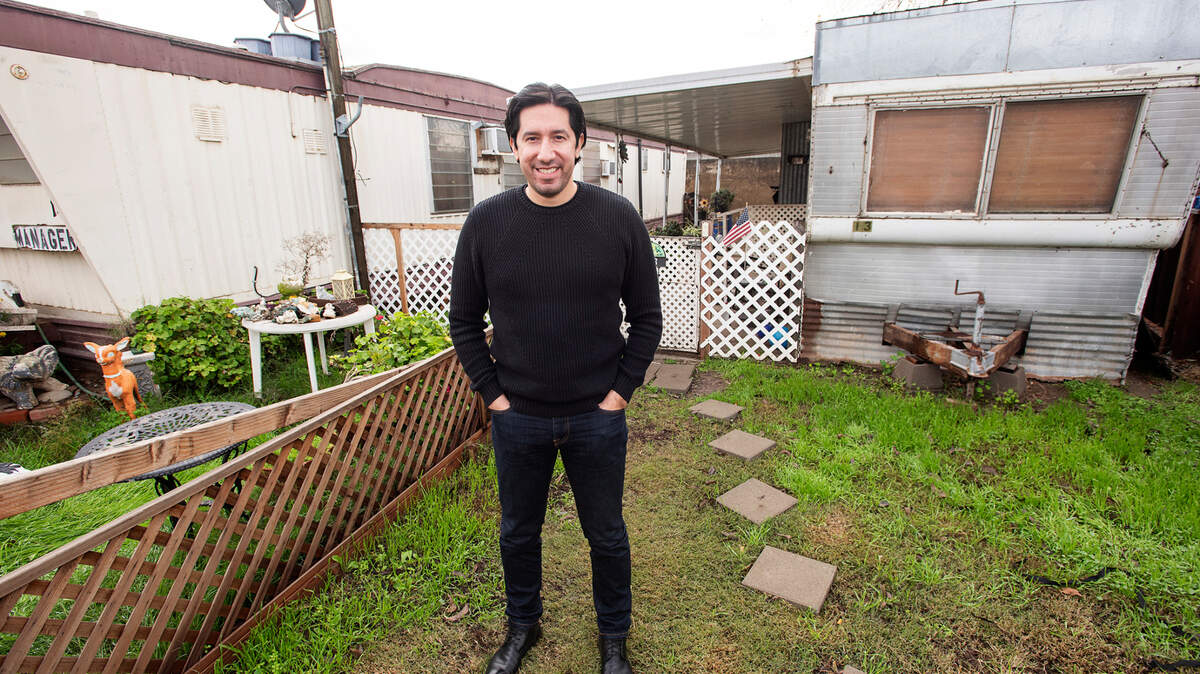
As a once low-performing student who lagged many classmates in computer skills, Emmanuel “Manny” Escamilla never thought that he’d one day have a master’s degree and be pursuing a second, nor that he’d launch a coding program for kids.
He was reared in a trailer park in south Modesto by a single mother battling a drug addiction. He grew up low-income, sleeping on the floor of the trailer next to his mother’s cot while they rented out their only room in order to get by.
As a boy, he would often walk through what locals call “Devil’s Street” to get to Starbucks or McDonald’s so that he could use its free internet connection to complete his homework. But in middle school, when laptops started becoming a commodity, it was clear to him that not having access to that technology put him at a disadvantage.
“It was like an embarrassment because (my classmates) knew how to type already and I didn’t,” said the now 31-year-old.
Escamilla said he also noticed how different he was from his 2004-2008 Grace Davis High School peers, who talked about which colleges they wanted to attend. Though his mother encouraged him to pursue college, he felt he wasn’t a good enough student and he didn’t know how to go about applying.
He completed some applications, though, and was accepted into Sacramento State and Stanislaus State. He applied to schools nearby because he wasn’t ready to leave home, he said, and felt responsible for taking care of his mother.
“There was an expectation that I had to help,” he said.
Warehouse work didn’t work for him
Escamilla also realized his senior year that he wasn’t ready to attend a four-year college, so at 18 he got a job at the Fastenal warehouse and enrolled at Modesto Junior College. But because he was trying to work a full-time job while also doing school full time, he ended up dropping all his courses the first three semesters.
The money from his job was good, but biking to work every day and lifting heavy boxes during 10-hour shifts wore him down over two years. He was then 19 years old, wearing a back brace and feeling exhausted.
“Working at the warehouse was kind of the catalyst for me to try to go back to school and try to do it again,” he said.
Escamilla decided to save up his earnings for tuition because he didn’t qualify for financial aid, quit his job and fully dedicate himself to his education. He wasn’t sure how to choose a major that would lead him to a good career, so he turned to God for guidance.
“I was like, ‘Well, God, I don’t know what I want to do for the rest of my life and I don’t want to make a mistake,” he said. “ ‘God, I’ll give you my education … just make it all worth it’.”
After graduating from MJC with an associate’s degree in 2012, Escamilla was accepted into the University of California, Berkeley, in 2013. He took a course in which the professor spoke of elementary school students being taught how to code as a way to prepare them for the tech industry. It dawned on Escamilla that this could be a pathway to success for disadvantaged youth in Modesto.
He graduated from UC Berkeley in 2015 with a bachelor’s degree in religion and a minor in computer science. That same year, he started his master’s degree in divinity at Harvard University and graduated in 2018.
As a Harvard student, when he had time during the school year and summer breaks, he worked to connect with those in the Modesto community who could help him launch his vision. He obtained funding and in 2015 launched a test program called CodeX at Hanshaw Middle School, where during the summer he taught a class of about 25 kids how to code.
The program’s success shined through in 2018, when an app created by two of his students over the summer was selected as the winner of then Rep. Jeff Denham’s Congressional App Challenge. The pair created “Homeless Network,” an app on which the homeless could drop a dot on a map where resources are needed so providers could better know where to direct them.
Escamilla also was honored as one of The Modesto Bee’s top 20 under 40 in 2018, along with others who helped him launch the CodeX program, like Jose Sabala and James Bates.
Program went beyond coding
But Escamilla offered more than coding. At the end of every class, he would talk about the importance of going to a good college and show the kids college and career options.
“The kids’ eyes would just light up. They just had no idea that there was even something like that in the world,” said Brent Wedge, computer science professor at MJC, who helped teach students and provided Escamilla with resources for CodeX.
Jane Zavala, 18, was one of those students. She said she always desired to be involved in extracurricular activities, but her parents lacked the transportation and money for her to do so. She leaped at the opportunity to be a part of CodeX, not only because of the promise to learn coding but the opportunity to learn about colleges and careers.
“It made me realize that we do have help around here,” she said.
Zavala didn’t go on to study computer science, but she said the program allowed her to discover her major. Now she’s a freshman at CSU Long Beach studying biomedical engineering.
Azucena Tellez, 19, said she felt intimidated by the experiences of her more privileged peers, who were enrolled in outside programs and got to take field trips. She thought there was no way she would get into the same colleges as those fellow students.
“CodeX was the only thing that I had,” she said.
But when she looked at Escamilla, who came from a similar background and was then a Harvard student, she thought that if he could do it, she could, too. The first-generation student said she burst into tears when she learned she was accepted into UC Davis.
“You could tell that Manny really cared about this program and seeing every single one of these students succeed,” she said.
Now a UC Davis sophomore, Tellez said she’s a political science major but she’s been taking coding classes at the university for fun. Though she’s getting good grades in those courses, she plans to keep coding just a hobby.
CodeX continues at Modesto City Schools
The CodeX program was transitioned to be offered as an elective course at Modesto City Schools in 2019. Escamilla said the transition needed to occur because the CodeX team no longer had the capacity for it and obtaining capital for the program was extremely difficult.
“Our vision was really just to help the school district implement it into their school day,” Escamilla said.
The inability to get capital motivated him to study the issue further, and pursue his MBA. He’s now a full-time student at UC Davis, and remains tied to the Modesto community as treasurer of the Stanislaus Equity Partners, formerly known as the South Modesto Partnership, and a board member of the City Ministry Network.
“I think (Manny’s) an outlier,” said George Boodrookas, dean of advancement and executive director of the MJC foundation, who has reviewed more than 700 alumni stories over the past seven years.
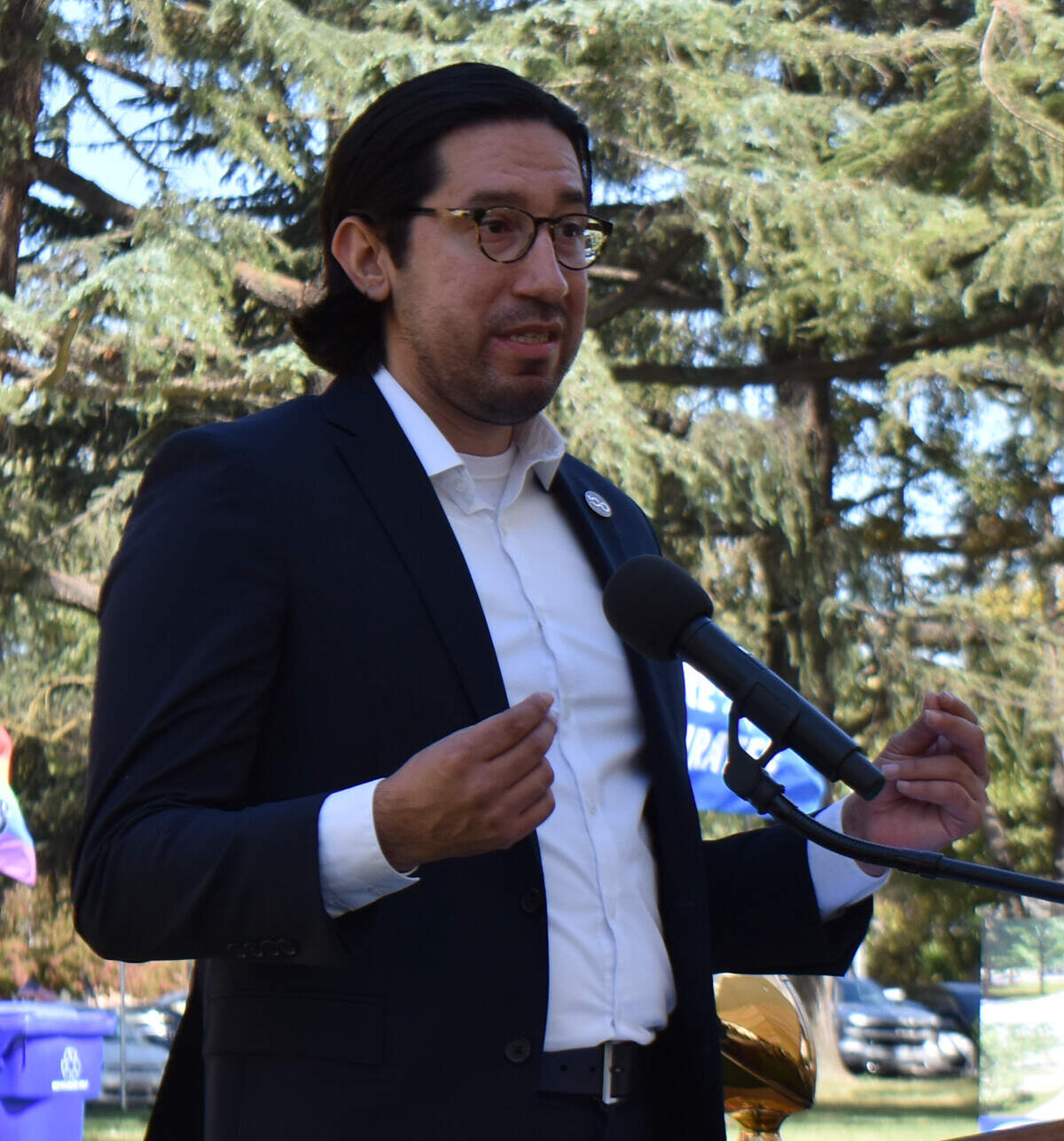
Escamilla was selected to share his MJC story by speaking at the college’s centennial founders day celebration in 2020.
Boodrookas added that over the years, Modesto has struggled to move the needle in terms of collaborative community partnerships, increasing education and producing leaders. He said there’s power in Escamilla sharing his story and he hopes it leads to action from the community.
“None of our organizations can do it alone,” Boodrookas said. “We need leaders like Manny to be out front to help us collaborate and make more change happen.”
This story was originally published January 19, 2022 at 6:00 AM.