What COVID-19 safety measures will Stanislaus State, Modesto JC require this fall?
California State University, Stanislaus, and Modesto Junior College will welcome more students back to campuses in August, but most courses will continue online.
The schools are preparing COVID-19 safety precautions that officials hope will make students more comfortable on campus and reduce the risk of spreading COVID-19.
“We’ve decided to keep a lot of things into the fall,” said Kellie Marshall, interim director for safety and risk management at Stanislaus State.
The university operated completely online for the 2020-21 school year. As of July 13, the campus planned to offer 41.5% of course sections in person for the fall semester, said Kristina Stamper, director of communications and creative services.
Rough enrollment numbers for MJC as of July 7 indicated 52% of classes will be online asynchronous, 21% synchronous on Zoom and 27% fully in-person or a mix of online and in-person, MJC President Santanu Bandyopadhyay said.
Neither college has finalized all details of public health procedures. Student leaders told The Modesto Bee they’re still hearing confusion from their peers and hope for more clarity soon. Classes at both campuses start Aug. 23.
Here’s what students at MJC and Stanislaus State can expect.
Modesto Junior College
Bandyopadhyay said the college will offer twice as many in-person classes as the previous fall. Enrollment data showed most students want hybrid classes, he said.
MJC will not mandate vaccination for COVID-19, but people can submit proof of vaccination to be excused from wearing a mask, Bandyopadhyay said. Students and staff without a vaccination card on file must wear a face covering. He was not sure how the college will enforce this.
For student athletes, Bandyopadhyay said the college plans to separate masked from unmasked people, or vaccinated from unvaccinated people, in gyms. MJC has considered implementing the same kind of separation for students in lecture halls, but that may not be possible in the fall due to the challenge of tracking every student’s vaccination status, Bandyopadhyay said.
“Who’s going to be the mask police?” Bandyopadhyay wondered.
MJC student body President Maria Marquez said she will wear a mask regardless of the college’s rules. She’s fully vaccinated but wears a face covering because it makes her feel safer.
“I feel weird even when I’m not wearing it in public,” Marquez said. “Maybe that would be the case for other students as well.”
Over the past year, MJC has asked that people coming to campus fill out a COVID-19 self-screening form to help the college with contact tracing. Bandyopadhyay said MJC plans to eliminate this screening when the fall semester starts.
“Realistically, as we have more and more people accessing the campus, it becomes virtually impossible to track those kinds of contamination or contact tracing,” he said.
Students will be spaced 6 feet apart and classrooms will operate at about 60% capacity at most, he said.
If students voluntarily disclose their vaccination status and a class reaches an 85% vaccination rate, social distancing will not be required, Bandyopadhyay said in an email.
A student survey demonstrated mixed feelings on class formats, Bandyopadhyay said. Younger students said they preferred classes in person, but older students, especially those who work or have a family, preferred remote learning. Demand for in-person classes was lower than for hybrid and Zoom synchronous classes, he said enrollment data showed.
Initially, student services will be open by appointment only, so MJC officials can gauge how many people want to come in before deciding how to control traffic flows.
Other COVID-19 safety measures will include:
Plexiglass dividers and shields installed
Use of industrial quality cleaning materials
Air filters changed frequently, and ventilation systems adjusted to increase airflow in all classrooms in use
Directional signage posted to control traffic flows and minimize face-to-face interaction
Hand sanitizer stations
A mask stockpile to distribute to people in need
California State University, Stanislaus
Stanislaus State will require masks for everyone indoors.
“It’s the safer thing to do,” Marshall said.
School officials have not yet worked out a disciplinary policy for mask-wearing, she said.
The CSU system has not yet mandated the COVID-19 vaccine for its 23 campuses. Even if a student is vaccinated, there’s not a way for them to show the university.
In April, the CSU and University of California announced they would require students, staff and faculty to receive the COVID-19 vaccine upon full approval of at least one vaccine by the U.S. Food and Drug Administration. The UC said Thursday that the COVID-19 vaccine will be required before the fall term begins. CSU, however, has continued to wait for full authorization.
A mass vaccination clinic on campus recently closed. Marshall said she’s looking at offering pop-up vaccine clinics in the fall. Students can also get vaccinated at pharmacies near campus.
Free testing will continue to be offered on campus. Testing is required for student athletes. School officials weren’t sure if testing will be required for other students.
Anyone coming to campus must complete a daily COVID-19 screening form. The forms are sent to Marshall, who calls people who signaled any signs of COVID-19 on their form.
Students should continue to practice social distancing at 6 feet apart, Landscape, Custodial and Events Director Hugo Hernandez said.
All departments were asked to complete risk assessments that evaluated occupancy levels, high-touch surfaces and more. University departments can order supplies from a basement storage facility stockpiled with PPE including various types of masks, sanitizer, wipes and temporary barriers.
All students and employees will need to complete online COVID-19 training that is specific to the CSU system. The training will cover topics including why wearing a mask is important and why people should receive the COVID-19 vaccine.
Student services such as advising and financial aid will be available in-person and online. Staff will work on a hybrid schedule, coming to campus two or three days a week to ensure students can access either format.
Student events will also be offered in both formats, Stamper said.
The university has released videos displaying safety measures students can expect and sends newsletters to students on fall plans, Marshall said.
But student government President Cynella Aghasi said there hasn’t been enough communication from the university on what coming back to campus will look like. She’s heard many students wondering whether their online classes are at risk of moving to in-person, what study spaces will be available and what services the university will provide in which mediums.
“There’s, like, a big question mark,” she said.
Stamper said current course offerings will not change modes. The university could add course sections either online or in-person to accommodate transfer students who enroll throughout the summer, she said in an email.
University officials said additional COVID-19 safety measures will include:
Red floor signs to indicate where people should stand for 6 feet of physical distancing
Semi-permanent barriers installed in places with a large amount of face-to-face interactions
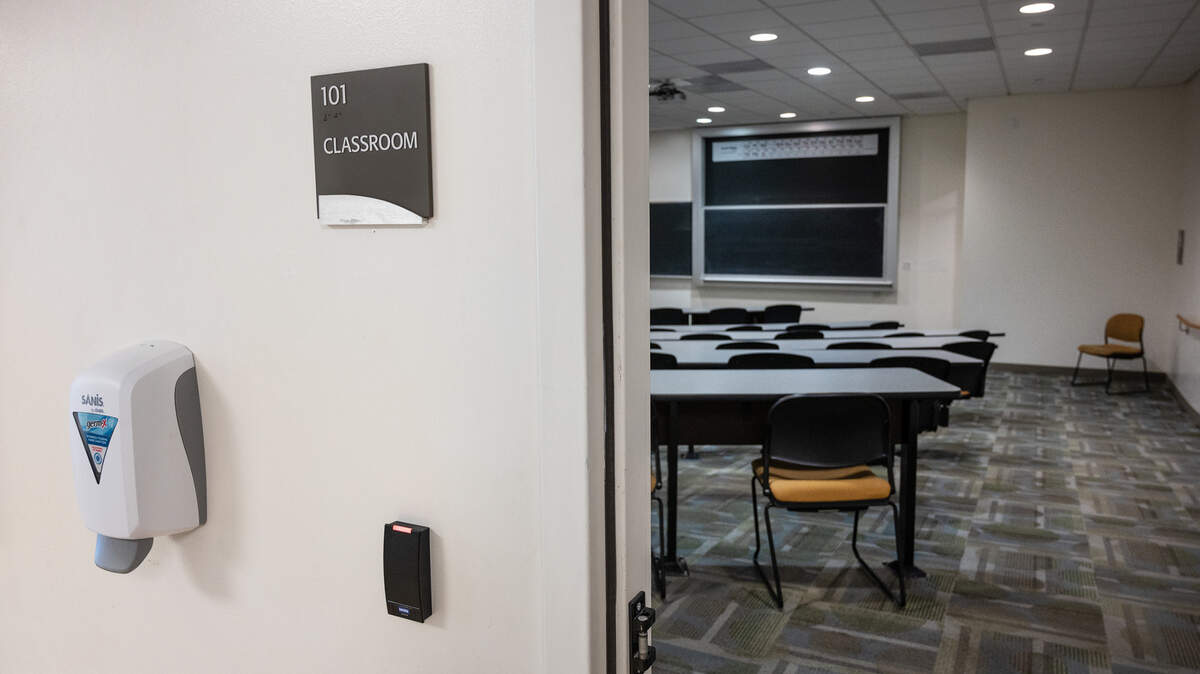
Hand sanitizer and sanitizing wipes installed at entry points to every lecture hall and lab
High-capacity air filters installed, filtration levels updated a year ago
Drinking fountains locked, but people can refill water bottles at refilling stations
Classrooms disinfected more often, using a new disinfectant
Face coverings placed in every classroom
This story was originally published July 21, 2021 at 5:00 AM.