Stanislaus County school district to bring struggling 7th-12th graders back to campus
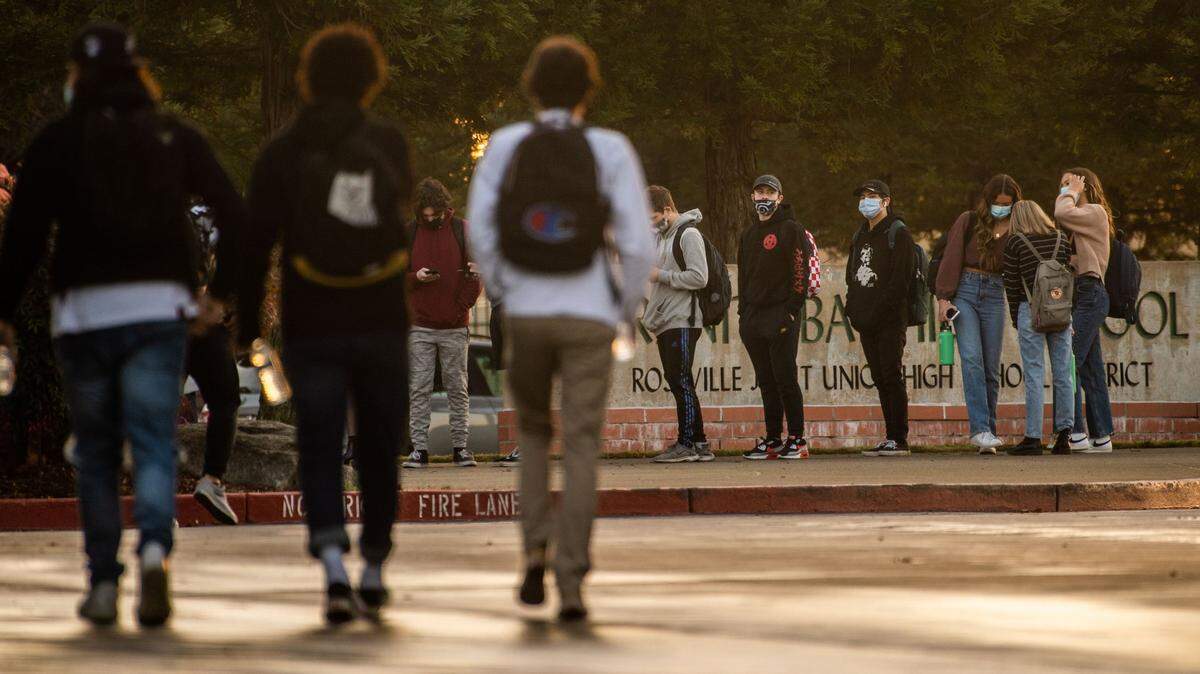
Starting Feb. 16, Ceres Unified School District will bring back to campuses small cohorts of those seventh- through 12th-grade students struggling most with distance learning.
They’ll share classrooms with teachers, but not the ones instructing them. The students will be on Zoom calls with their teachers, while the educators in the classroom will be teaching their students who are at home.
Under current guidance from health officials, there could be as many as eight students per classroom, but there probably will be fewer, district Superintendent Scott Siegel said Thursday.
Not all families who are offered the cohort option are likely to accept, he said, and students would not be required to attend in person all four days a week (Wednesdays are distance-learning days for all students). The students can show up any day or days that work for them, then continue to study from home (or wherever they may be) on the others.
The district has had success with cohorts of special-education students and English learners “for some time now,” said Siegel, who noted that its continuation Argus High began them in November.
“This is for the remainder of the students who may be struggling for a variety of reasons,” the superintendent said.. “We have a lot of kids who were C and B students in the past who are F and D students right now.
“Some of it may be because they have internet connectivity issues, or distractions at home may make it not the best place to do this. We’re trying to provide as many students as we can an alternative location for distance learning.”
Teachers who oppose the cohort plan have said that setup still will be distracting to students. Several who are named as “site representatives” on documents shared with The Bee, which lay out concerns about the cohorts, and proposed alternatives, declined to speak on the record.
But one document reads, in part, “Students will likely be distracted by the teacher instructing their own class (speaking, calling for participation, playing Kahoots, or music).
Many teachers are loud and enthusiastic in order to hold students’ attention via Zoom, and most cohort students would likely have trouble focusing in this environment if they are not a member of the supervising teacher’s Zoom session.”
Siegel said the experiences in the existing cohorts show there’s not a problem. The cohort students use headphones and are focused on their instruction, he said, and their own interactions via Zoom tend to be quiet and not a distraction to the teacher in the room.
Another concern teachers state in the document is the timing. They say it’s being rushed and is starting immediately after students will have been off a week. That week off, Feb. 8-15, could result in a COVID-19 spike that is further spread upon return. “Staff have shared they would be more comfortable after taking the vaccine,” the alternative cohort proposal says.
Other alternatives proposed for Ceres district
Among alternatives proposed are allowing teacher participation on a voluntary basis, and opening empty rooms, cafeterias, multipurpose rooms, and gyms to cohorts overseen by substitute teachers, ASES (after school education and safety) staff, paraprofessionals or security personnel.
Siegel said the same health and safety protocols already in place under the hybrid learning model at the TK-6 level are being implemented now in 7-12 classrooms and will be fully ready when cohort students arrive.
Students will be on campus three hours a day. With only 25%, at most, of the students on campus, restroom facilities are more than sufficient to ensure students are safely able to use them, he said.
Students will not be eating lunch on campus, Siegel said, but will receive grab-and-go meals to take home.
As for getting the kids to and from school, the transportation department is working out routes now, he said, though “I can’t guarantee everything will be 100% in place by the first day.”
Earlier board of education action allowed for the cohorts, so approval to this return of 7-12 students was not needed, the superintendent said, though trustees are aware it’s happening.
Siegel said there are teachers who support the cohorting, and those who oppose it. Division has been the case for every step the district has taken as it’s navigated the pandemic, distance learning and the hybrid model, he said.
“When we had teachers report to their classrooms instead of working from home this year, there was a lot of outcry about how terrible that was. And actually it was the right decision in retrospect,” the superintendent said.
“There were people who were very upset that we were opening our elementary schools for hybrid learning. I have found that I have no regrets of any decision we’ve made that’s worked toward reopening.”
His only regrets are that in some instances, the district didn’t move faster, Siegel said. “I’m not waiting for us to have a consensus to move forward. If I wait for that consensus, it won’t happen.”
This story was originally published February 4, 2021 at 2:28 PM.