Filmmakers include Modesto course on religions as part of ‘The Antidote’ to unkindness
A world religions course taught in Modesto City Schools, the only public school district in the nation that requires such a class for high school graduation, is featured in a new documentary on kindness that was produced and directed by a pair of Emmy Award winners.
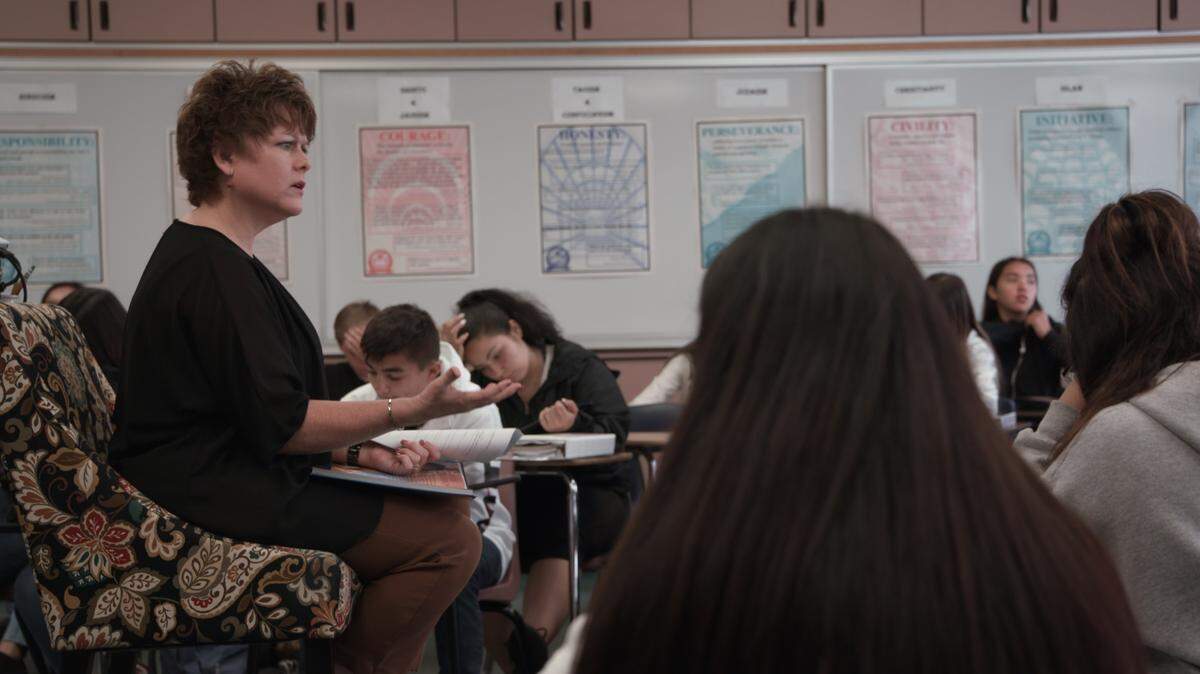
The course is taught in all the district’s high schools, but the doc, titled “The Antidote,” focuses on Johansen social studies teacher Sherry McIntyre and her students, who were visited by the film crew in 2018. McIntyre was the first to teach the class, and has been doing so for 20 years.
“The Antidote” was produced and directed by Kahane Cooperman, who won 11 Emmys for “The Daily Show with Jon Stewart,” and John Hoffman, a six-time Emmy winner whose work includes Discovery Channel and HBO Documentary Films productions.
The filmmakers say “The Antidote” is a response to “the times we are living in” and tells stories of kindness and decency in America. In a phone interview Monday morning, Cooperman and Hoffman said it’s not about random acts of kindness but intentional efforts to lift up people and communities.
Early on, they laid out six questions they felt the movie needed to answer, and among them was, “How do we teach our children?”
“We had a strong feeling from the beginning that we wanted to have in the film a story that explores teaching tolerance,” Hoffman said. Neither he nor Cooperman recalls exactly how, but while searching for such a story, their team came across on YouTube an October 2017 TEDxModesto presentation by McIntyre titled “Dreams, World Peace, and Freshmen; Why I Teach World Religions.”
The teacher’s talk was full of “incredible energy,” Cooperman said, and McIntyre is dynamic, which is an important consideration when making a film. After doing some research that included talking with the teacher and others in the school district and Modesto community, “the story of Modesto and Sherry McIntyre and what the whole world religions program is doing really, really seemed like a perfect fit” for the film, she said.
The film’s production notes refer a couple of times to the course teaching “tolerance.” But in an interview with The Bee last week, McIntyre said she’s not a fan of simple tolerance, which sounds “like an ‘I don’t like you but I won’t kill you’ kind of thing.”
She added, “I feel like we need to get beyond tolerance and maybe celebrate each other and appreciate each other, and kindness is part of that. When they watched the TED talk, I think that’s the message they heard. It wasn’t explicit, but I think the ideas of appreciation and kindness were implied enough, and that was what they were looking for.”
‘I don’t see the point,’ student says
The segments of “The Antidote” that focus on Modesto show McIntyre teaching and interacting with her students. It allow the kids to be heard in and out of class.
One student seen a few times during the course of the movie says initially, “I did not want to take this class at all” and “tried so hard” to get out of it. “I don’t see the point,” the girl says. “Like, I’m not in any of those religions. I have my own religion. ... If you want to have a different religion, that’s cool, but I don’t want I don’t want to learn about your religion.”
Later in the film, she asks McIntyre during class what can be done if a student doesn’t want to be be present for discussion of a religion. The teacher replies that she would attempt a compromise, but “in all of my years,” she’s not had such a situation. “Most people are like, ‘OK, teach me. Tell me what you got.’”
In the girl’s final clip, when the crew revisited Johansen months later, she talks about growing up Christian and viewing Jews, Muslims and people of other faiths as weird. She and friends sometimes would joke about them, “and now I can’t imagine myself doing that, because that is their religion.” She said it was “horrible” that she made fun of people for their faith.
At one scene, McIntyre asks students to share in class the essence of what they’ve learned.
“Everything we did learn just came up to one idea, which is respect,” one answered. “You need to respect everyone even if you don’t understand what their religion is. You still have to respect them because they are human.”
Another said, “All the religions really lead up to, like, the main point is kindness.”
At core, religions are so much alike
Yes, terrible things have been done in the name of religions, McIntyre said, but “if you look at what the religion itself teaches, the beginning of the religion, the person who founded it, the experience they had, they’re all so much alike. They’re not exactly the same, but they all teach the golden rule that you should treat each other the way you want to be treated. And the way human beings use those ideas thousands of years later aren’t always the way the founders intended.”
Philip Goodwin took McIntyre’s course as a freshman in 2008. Talking by phone Monday, he recalled being surprised back then that it was a required class in a public school, but is surprised today that it’s not required by a lot of districts.
It was strange but interesting to talk about faiths among his classmates, Goodwin said. “It makes you realize how many religions are out there that you’d never heard of, or maybe religions you had questions about but never asked them. Maybe you were afraid to ask them because you might have been asking the wrong thing.”
He said the course gave him a better platform for his undergraduate studies at St. Mary’s College of California, where he now works as senior admissions counselor and visitor center coordinator. It gave him an appreciation for other religions and a more informed approach to interacting with people of various faiths.
“Throughout my time here at St Mary’s, I did service work in both South Africa and Kenya, and talk about a plethora of different religions those two countries encompass,” he said.
“The Antidote” will be released to theaters Oct. 16 for virtual screenings and then released Oct. 27 for video on demand (VOD) streaming services. Learn more about the documentary at theantidotemovie.com.
This story was originally published October 6, 2020 at 5:30 AM.