Update: All the different directions Scott Peterson’s case could go following hearing
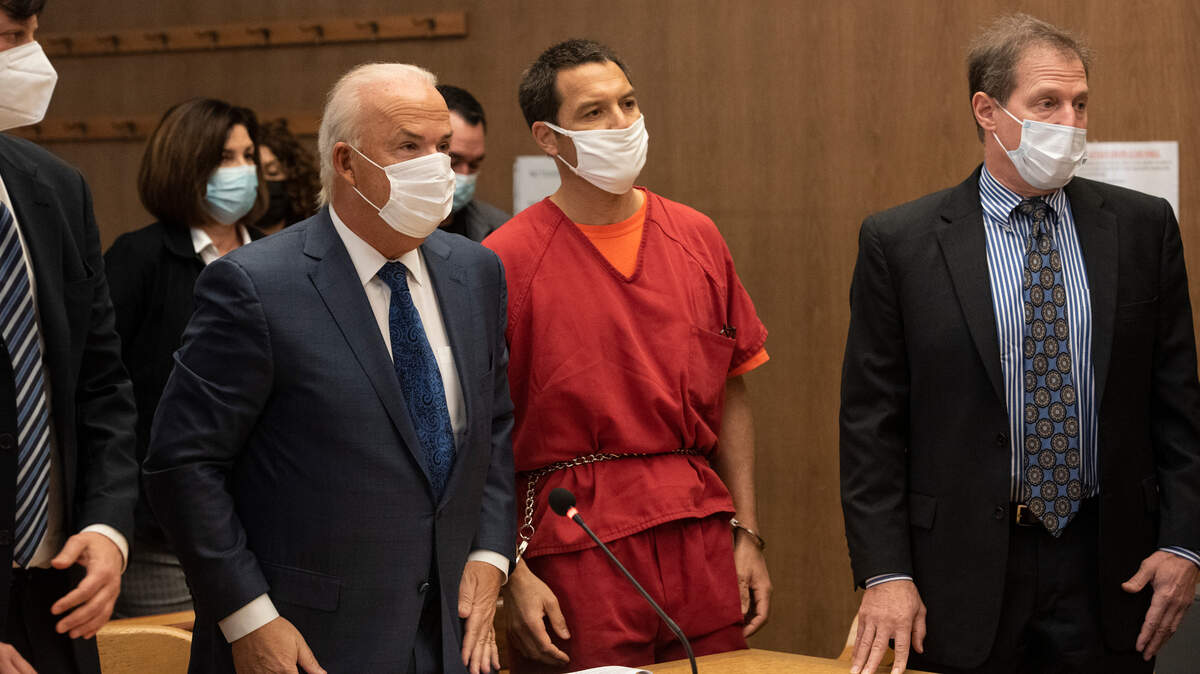
The evidentiary hearing that begins Friday in Scott Peterson’s case is being held to determine if his conviction for the murders of his wife, Laci, and their unborn son, Conner, should be overturned on the grounds of juror misconduct. Regardless of the outcome, the saga will be far from over.
The approximately weeklong hearing will focus on one of 19 claims in Peterson’s petition for habeas corpus filed by his attorneys in 2015. It alleges a biased juror lied on a jury questionnaire about being the victim of a crime and party to a lawsuit so that she could sit in judgment of Peterson.
Superior Court Judge Anne-Christine Massullo will make a decision within 90 days of the hearing’s conclusion, but no matter the outcome there are legal options for the losing side, which could take years to exhaust.
The California Supreme Court in October 2020 ordered that the issue be decided by a judge in San Mateo Superior Court, where Peterson’s 2004 trial was held due to the the pretrial publicity in Stanislaus County.
In its ruling, the California Supreme Court also denied or found moot the other 18 claims in Peterson’s habeas petition.
Attorney Cliff Gardner spoke to The Bee in December about all the possible directions Peterson’s case could go following the evidentiary hearing. Gardner worked on both Peterson’s habeas corpus petition, which is the reason the case is back in court, and his appeal, which resulted in Peterson’s death sentence being overturned in 2020.
If Peterson loses
Should Massullo uphold Peterson’s conviction, his attorneys can bring a new habeas petition to the state Court of Appeals and then the California Supreme Court on the single juror misconduct claim, Gardner said.
“It could take a few more years in state court assuming we lost at every level,” Gardner said.
Then Peterson could take the habeas petition to federal court, not just on the juror misconduct claim but all 19 claims in the original petition filed in state court. The other claims include ineffective counsel by Peterson’s trial attorney, and doubts about the credibility of some expert testimony and aspects of the investigation like a cadaver dog with a poor track record.
A federal habeas petition would start in the U.S. Northern District Court, because the case was tried in San Mateo County. If Peterson lost his case there, it could be appealed to the U.S. Ninth Circuit Court of appeals and finally, he could seek review of the habeas petition by the U.S. Supreme Court.
Gardner said that process can take several years at each level and there’s a low likelihood the U.S. Supreme Court would grant review. The court hears just 80 to 85 cases of the 5,000 to 7,000 it receives each year.
If Peterson wins
If Massullo overturns Peterson’s conviction, the Stanislaus County District Attorney’s Office has appeal options it can pursue before going into another trial.
If relief is granted, the state may take the case through higher levels of the state system and possibly seek review in the U.S. Supreme Court, Gardner said.
He said the state does not have the option to take the case into the lower federal courts, and whether it can seek review by the U.S. Supreme Court depends on if Massullo’s decision is based on state or federal law, Gardner said.
If based on state law, the federal courts would have no jurisdiction, Gardner said.
Again, the case could take several years at each court level.
If the DA decides not to seek an appeal, new charges would have to be filed and the case could be settled or retried.
Following Peterson’s resentencing, Massullo ordered that he be transferred from the San Mateo County Jail back to San Quentin State Prison, within 10 days of the conclusion of the evidentiary hearing.
No longer a condemned inmate following the overturning of his death sentence last year, Peterson isn’t housed on death row, where he’d spent the last 16 years of his life. He could be moved to a different prison altogether.
Massullo will have 90 days to make her decision following the conclusion of the evidentiary hearing. Peterson will likely be back in prison by then, but if the judge overturns his conviction, he will be brought back to county jail.
There, Peterson would have the opportunity to seek bail. However, his attorney Pat Harris said it’s unlikely, given the case’s history as a former death penalty case, that a judge would grant bail.
Evidentiary hearing
Why is Peterson back in court and possibly getting a second chance at a trial?
His attorneys have accused Richelle Nice, a juror in Peterson’s 2004 trial, of lying when she wrote on a jury questionnaire that she’d never been the victim of a crime or a party in a lawsuit.
Nice was pregnant in 2001 when she obtained a restraining order against her then-boyfriend’s former girlfriend for stalking and threatening them. Also, the year before, the same boyfriend was arrested on charges that included domestic violence in an incident that named her as a victim.
Prosecutors say Nice did not understand that a restraining order is a type of lawsuit. Regarding the domestic violence incident, Nice’s declaration described the incident as a “heated argument.” She said it was her then-boyfriend, not her, who called the police and she did not consider herself a victim.
But Peterson’s attorneys allege Nice knowingly put false information on the questionnaire because she wanted to sit in judgment of Peterson, “in part to punish him for a crime of harming his unborn child.”
This story was originally published December 13, 2021 at 5:00 AM.