Modesto police keep racial data for stops. But they couldn’t use or explain the numbers
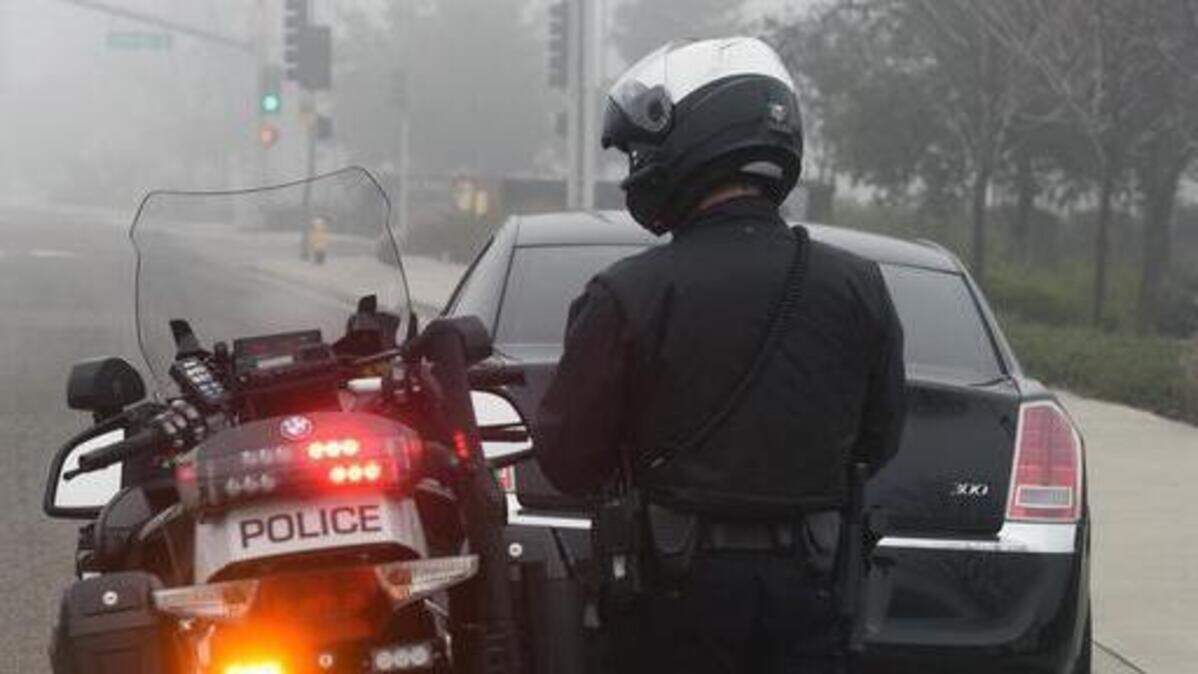
A Modesto Police Department presentation on data crucial to ending racial and identity profiling by law enforcement raised more questions than it answered.
The presentation last month to the Community Police Review Board gave a general overview of what the Racial and Identity Profiling Act is, what the RIPA board does and how MPD collects its data, which is sent to the state annually.
Numbers provided to the board included only statewide data from 2022, including population comparison to stop data, a breakdown of stops by race or ethnicity, stops by gender and stops by age. None of it was specific to MPD.
Unanalyzed and unorganized raw data specific to the Modesto Police Department was given to the board. CPRB members asked if an analysis or user-friendly version of the numbers was available, but were told in a variety of ways that it was not.
The presentation to the CPRB was by Lt. Brian Kleiber, who said that there is “no user-friendly way to gather that data,” but that MPD did have some historical numbers of stops and arrests.
Board member Nancy Smith said she’d like to see a Modesto-specific breakdown of where a stop occurred, the perceived gender of the person stopped, the perceived race and other information. She also asked if the number of stops made in a certain year was available.
“RIPA is still fairly new and it’s something that when I look around, at least the county and beyond, I don’t know that there’s a lot of agencies that are trying to analyze (it). … I’m sure there are a few, but not anywhere locally that I’m aware of,” Chief Brandon Gillespie said at the meeting, in response to Smith.
Three days before the CPRB’s Sept. 18 meeting, the San Francisco Chronicle published a user-friendly format database of all 2023 RIPA data for every California law enforcement agency. The database included RIPA data for MPD and would have answered some of Smith’s questions.
The Chronicle’s database shows there were 9,703 stops by MPD in 2023. It notes that MPD officers were 2.9 times more likely to stop Black people than white people, based on stops per 10,000 residents. This information was not presented to the board.
RIPA was passed in 2015 to stop identity-based profiling in law enforcement. It also created the RIPA board, which releases an annual report at a statewide level based on data provided from agencies throughout California.
Officers in participating agencies must log virtually all details of a reportable stop, defined as “any detention of a person by a peace officer.” This includes traffic, bicycle and pedestrian stops.
Kleiber said officers input data after every stop by using an app on their phone or by using the laptop in their service vehicle.
The data is detailed. It includes a stop’s date, time, duration, location, reason, response and actions taken during. Information regarding people stopped includes how they identify their race and gender, or how an officer perceives their race and gender.
This raw data is collected and stored by MPD until it’s submitted to the state annually. This data is pooled and used to make recommendations to state legislators. Kleiber said the RIPA Board does not make specific recommendations to specific agencies, such as MPD.
CPRB members said they were unable to make sense of the Modesto-specific raw data provided to them, and both Gillespie and Kleiber said they could not, either.
“When I’ve looked at the data, and I believe we’ve even discussed a little bit over email in the past, it’s not really in a very usable format… I don’t know if it requires a computer science degree, but it requires someone who’s more computer literate than I am to analyze it,” Kleiber said.
MPD considers training analysts on the data
Gillespie said MPD is looking into training its analysts to “figure out how to use the data” but that it was “not simple whatsoever.”
“I’ve seen the raw data as well and it’s something much beyond my expertise to try to analyze that data,” the chief said.
The 2023 RIPA data has not yet been published on the California Department of Justice’s data portal, but The Chronicle did receive early access through Alex Chohlas-Wood, faculty co-director of Harvard Kennedy School’s Computational Policy Lab.
To analyze the data, The Chronicle reported that it “did basic processing” such as extracting the year each stop occurred. More complex analysis was done by Chohlas-Wood. He translated numerical codes for perceived race and broke down data on actions taken during a stop.
MPD began sending data at the beginning of 2022, as part of the rollout schedule based on an agency’s size. The RIPA board includes 17 members to represent the public, law enforcement and educators.
This story was originally published October 4, 2024 at 4:00 PM.