Did Modesto police pay increase cause the city’s budget gap? It didn’t help
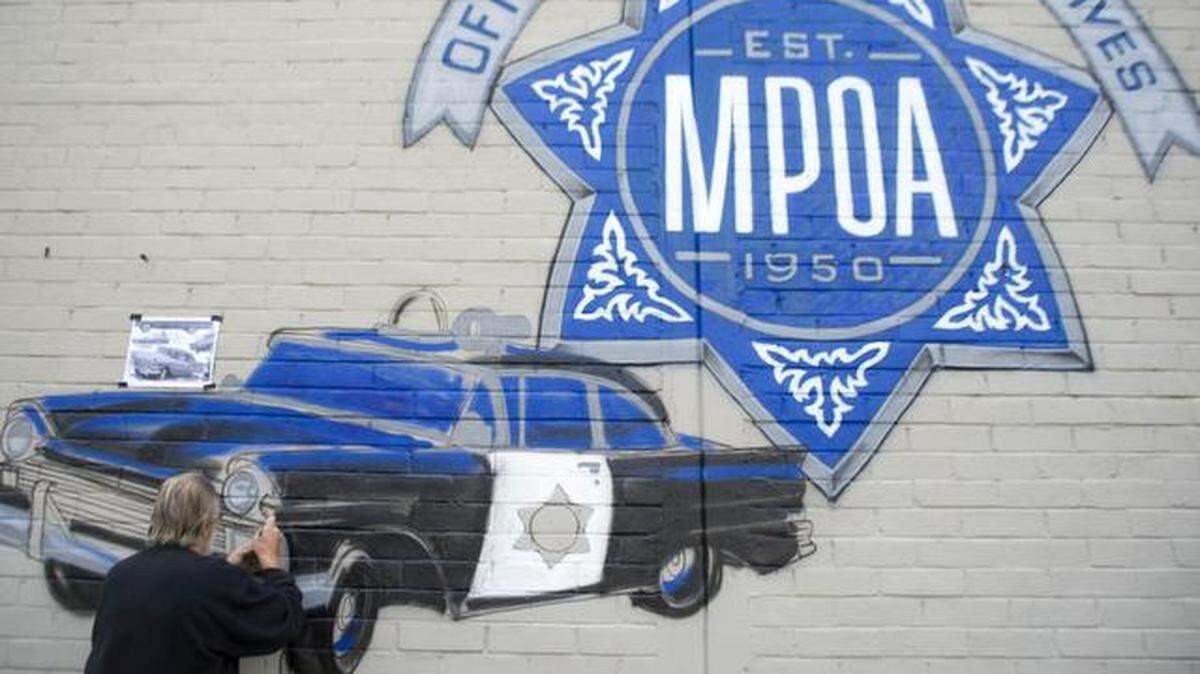
The Modesto City Council on Tuesday passed its $675 million budget, which includes a general fund deficit that likely is caused by large, recent increases in public safety spending.
In 2023, the City Council unanimously approved an agreement with Modesto Police Department’s union that gave its employees a compounding pay increase totaling 17% over four years, as well as a web of enhancements and incentives.
The union, Modesto Police Officers Association, has endorsed every member of the City Council during elections. It also donated to five members’ campaigns.
In 2022, before the labor agreement, the general fund had a $3.6 million surplus. It now faces a $15.1 million shortfall.
Since the agreement was passed, MPD’s general fund budget went up 31%, from $75.3 million in the city’s 2022-23 fiscal year to the $98.6 million budget passed on Tuesday. The total general fund budget during that same time period rose 25.9%.
Police Chief Brandon Gillespie said the investment was necessary, saying it improved recruitment and retention in a competitive job market, which is still an issue for the department.
“Since the 2023 agreement was approved, we have seen significant improvements in both areas, resulting in increased staffing levels, reduced vacancies, stronger public safety services, continued reductions in crime, and an improved quality of life for Modesto residents,” Gillespie said in a statement.
Even with its financial consequences, City Councilmember David Wright defends the city’s decision to increase police officer pay three years ago and, like Gillespie, deemed it necessary. Wright also noted the drop in crime, including not having any homicides last year, as one of the reasons the labor agreement with MPD’s union was necessary.
Asked if MPOA’s endorsement or its $1,000 contribution to his campaign had any influence on his decision, he said “it didn’t matter.”
On whether he’d consider cuts when the labor agreement expires and negotiations resume next year, he said, “Who knows? I can’t answer that, there’s a lot of ‘what ifs.’ One of the last things we would look at is cutting public safety. All of our departments are running lean.”
MPD had the largest dollar increase in the general fund budget since 2023. By percentage, though, it was on par with general fund budget increases for all departments.
Just a few weeks before it agreed to terms with the Police Officers Association, the city cut a deal with unions representing the majority of its employees. It included compounded raises for those not in the unions as well, including City Manager Joe Lopez and Gillespie.
While the deal raised most city employees’ base pay 13% over four years, it raised base pay for police officers and sergeants 17% over the same time period.
Incentive bonuses for police included master officer/detective pay, increased standby rates, four-hour court appearance overtime minimums, animal perks and a compounding legacy scale that increases based on tenure: 2.5% at six years, 5% at 11 years, 7.5% at 16 years and 10% at 21 years.
During a presentation on MPD’s budget in April, Gillespie said salary and benefits were the department’s biggest expense.
What’s the plan to close the gap?
For the 2025-26 fiscal year, the city blamed President Donald Trump’s tariffs policies for its pessimistic outlook on its tax income. Instead, tax earnings increased 6.6%. This year, the city noted inflation and the war in Iran for its increased spending.
Asked what Lopez’s plan is to close the deficit during the coming years, the city says it is analyzing the situation and reviewing its spending, but the gap won’t seem to go away.
“Despite these efforts, general fund revenues continue to be outpaced by the growth in expenditures,” city spokesperson Sonya Severo said in a statement. “The city is diligent about being fiscally responsible with taxpayer dollars and continuously works to identify economic development opportunities that increase the city’s future revenue base.”
The city is banking on more development and increased tax revenue to fill the void. Measure H, a 1% sales tax passed in 2023, will continue to plug the gap. Measure H was pitched to voters as a way to increase public safety funds but also pay for a swath of other projects and services such as parks, tree trimming and maintenance. For years, though, it has increasingly been used to supplement the general fund deficit.
In his address to the City Council included in this year’s budget, Lopez warned of continuing to use Measure H funds to supplement the deficit. He wrote that the tax should be prioritized to be used on city services and “not just be a remedy for all the city’s former financial constraints.”
Councilmember Nick Bavaro said Measure H was passed to fund the city’s top priority, and for him, that’s public safety. Bavaro and Wright said the measure is doing that by having its funds moved into the general fund to pay for police wages. Consequently, the public safety has improved, they said.
Bavaro added that before MPD’s labor agreement was passed, the department lost 20 officers to the Stanislaus County Sheriff’s Office and the city needed to be able to compete.
“The endorsement of the union, I don’t know about the other council members, but they endorsed me because I made public safety a number one priority in my campaign,” said Bavaro. “Of course, I ran unopposed, that helps.”
The Modesto Police Officers Association did not respond to a request for comment by this story’s deadline.
This story was originally published June 5, 2026 at 3:34 PM.