Modesto man charged 2nd time with dad’s murder. Why this is prosecution’s last chance
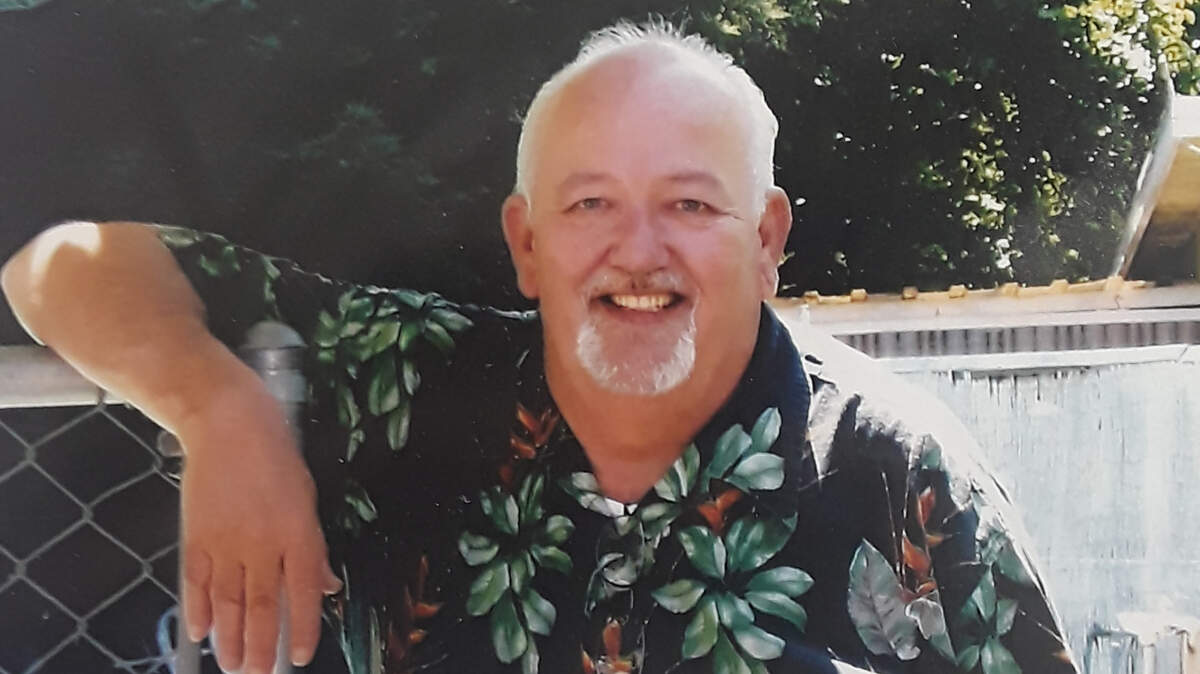
Wayne Ferriera cared for his mentally ill son, Bryan, for his entire life. Through Bryan Ferriera’s drug use, threats and violent outbursts, Wayne always welcomed his son back into his home.
“My dad’s dying wish really was to never see Bryan homeless and to make sure he got his medication,” said Ferriera’s daughter Darlene Reyes. “And it cost him his life.”
On Feb. 26, 2019, after she was unable to reach her father by phone for more than a day, Reyes went to his east Modesto home. She saw Bryan Ferriera, distraught and saying he didn’t know what happened; there was blood on his hands, according to court records. Then she found her 72-year-old dad, lying in a pool of blood and cold to the touch. On Wayne Ferriera’s stomach was a series of numbers written in blue ink, and there were scribbles on one of his calves.
Authorities later found that Wayne Ferriera died of asphyxiation and blunt force injuries, according to court records.
Bryan Ferriera was arrested and charged with the second-degree murder of his father.
But his mental competency quickly became an issue in the legal proceedings, and because of that, he could eventually be released from custody without his case ever going before a jury.
“I don’t want my brother to be another one of those (mentally ill) people walking the streets; that’s why my dad never kicked him out,” Reyes said. “I know that he will get back on drugs if he is let out and become a big problem to my family and the community.”
Ferriera, 50, has been diagnosed with schizoaffective disorder and bipolar disorder, as well as severe cannabis, amphetamine and cocaine use disorders.
He has spent most of his time since his father’s death in secure mental health facilities, and the District Attorney’s Office had to drop charges against him over the summer so he could be admitted into the most recent one in Vallejo.
Last month, a doctor determined Ferriera no longer met the criteria to be held there. He was released from the facility Thursday and transferred to a board and care home in Modesto, from which he would be free to come and go.
The District Attorney’s Office was ready. It already had filed new charges and Ferriera was rearrested within hours of arriving back in Modesto and booked into jail, with bail set at $1 million.
However, if all legal options are again exhausted, prosecutors won’t be able to charge him a third time.
Mental competency and conservatorships
Back in 2019, Ferriera was sent to a state hospital to have his competency restored. After about a year there, doctors determined there was “no substantial likelihood that the defendant will regain mental competence in the foreseeable future,” the Stanislaus County District Attorney’s Office said in a press release in July.
The release said the DA then requested the County Counsel’s Office and the Public Guardian investigate whether Ferriera was suitable for two different types of conservatorships. Either one, if obtained, would place him in the care of the county and keep him in a locked mental health facility.
The first, a Murphy conservatorship, required a finding that Ferriera represents a substantial danger of physical harm to others. A psychiatrist who evaluated Ferriera said he doesn’t, according to the press release.
County Counsel and the Public Guardian then initiated a conservatorship proceeding pursuant to the Lanterman-Petris-Short (LPS) Act.
Deputy District Attorney Erin Schwartz said the county was able to secure a temporary LPS conservatorship but not a permanent one.
A permanent LPS conservatorship required a finding that Ferriera is gravely disabled as a result of a mental disease and is unable to provide for his basic personal needs for food, clothing or shelter. A psychiatrist said he is not.
County Counsel Tom Boze said the reasoning behind the psychiatrist’s determination is confidential but, speaking in general, a person is not gravely disabled if he can live safely in the community with the help of a responsible third party. That could be family or friends or, in this case, the board and care facility.
Last chance in court
The court process is starting over, but there is a time limit. Under state law, a defendant only has two years to be restored to competency from the date he or she is found incompetent to stand trial.
Those two years are up for Ferriera.
If he is again found incompetent in this new case, the criminal case will be over and, if things play out like they did before with the conservatorships, he will likely again be released to an unsecured facility with nothing stopping him from leaving.
So how is someone who is found incompetent to stand trial also not found to be a danger to others or gravely disabled?
They are all different legal standards.
To be competent to stand trial, a defendant must understand the nature of the charges against him and be able to assist in his own defense.
“A person could easily be able to provide for their own basic needs (especially if they have family or others assisting them), and yet be unable to understand a criminal case against them, or cooperate effectively with their attorney,” Boze said. “As an example, a developmentally disabled person may be capable of providing for their own basic needs of food, clothing, and shelter, yet not able to understand the intricacies of a criminal case filed against them.”
In Ferriera’s case, Schwartz said doctors made the findings at different times, possibly when he was taking, or not taking, different medications.
Still, she said, “It is very difficult for me to understand that as well. ... How can those two things reconcile themselves?”
Violence leading up to homicide
Reyes said no doctor has asked for her input or to provide history or context about her brother’s mental health.
“If anyone knows someone who is mentally ill, it’s the family,” she said.
Reyes said her brother knew how to manipulate his dad and she believes he did the same thing with the people involved in his conservatorships.
“He has been in the (mental health) system for so long he knows what to say,” she said.
Reyes recalls a time their older brother was trying to get disability benefits for severe asthma. She said Bryan Ferriera told him, “Just tell them you’re crazy. When they ask you what the voices are saying, just tell them you don’t want to talk about it.”
“He’s over here trying to explain to his brother how to pretend to be crazy,” Reyes said.
She said when Bryan is off illegal drugs and properly taking his medication, he is smart and kind.
When Bryan and Wayne Ferriera would go grocery shopping, they’d make a game out of trying to guess how much everything in their cart would cost. Bryan would always guess the amount within $2, Reyes said.
“When he is not high and he’s on his medication, he really is a loving person,” Reyes said. “He loves animals, he loves his family; but mental illness and drugs, they don’t mix.”
But when he’s using, he becomes violent.
Reyes said Bryan Ferriera was using when their father was killed. He’d been violent and threatened to kill Wayne Ferriera on multiple occasions in the months leading up to it.
During one episode, Bryan chased his dad with a metal pole and threatened to kill him. Wayne Ferriera locked himself inside a vehicle until his oldest son intervened.
On another occasion, police responded to their home when Bryan Ferriera punched Wayne in the face and broke his dentures. Reyes said she begged officers to arrest her brother, but an officer told her the incident was mutual combat because Wayne had pushed Bryan.
Weeks before Wayne Ferriera’s death, Bryan spent three days at a mental health facility on an involuntary hold after threatening to kill his dad, but like all the times before, he was released.
Bryan Ferriera pleaded not guilty during his arraignment Friday. His public defender did not return a call seeking comment and The Bee could not request an interview with Ferriera because he, like any inmate entering the jail, is on a 14-day COVID-19 quarantine.
Few options for the mentally ill
Reyes laments that there aren’t more options for the mentally ill and their families. She wants her brother to remain institutionalized to protect both him and the community.
“How can we let society get like that? There is no help for these people. If they don’t think they need help, they aren’t going to get the help,” she said. “I don’t want my brother to be another one of those people walking the streets yelling into the wind.”
Reyes predicts that if the legal proceedings play out the same during the second go-around and he ultimately is released, that is exactly what will happen.
“The Public Guardian told me he is a ‘model patient ... he is willing to be placed somewhere, he is willing to go with the program,’” she said. “Yeah, because he has structure now. What if he walks away? Then what happens?”
Reyes said just last month, Bryan Ferriera told their older brother he can’t wait to get out and get high. He’d be even more dangerous, she said, because now he thinks he can get away with murder.
Reyes visited her brother in jail about a week after their father’s death.
“He told me, ‘You’re lucky I didn’t cut him up in a bunch of little pieces and you guys never would have found him,’” Reyes said. “Someone with a mindset like that does not need to be out in our community.”
This story was originally published October 18, 2021 at 5:00 AM.