Tuolumne River Regional Park advocates create a native plant garden to heal ecosystem
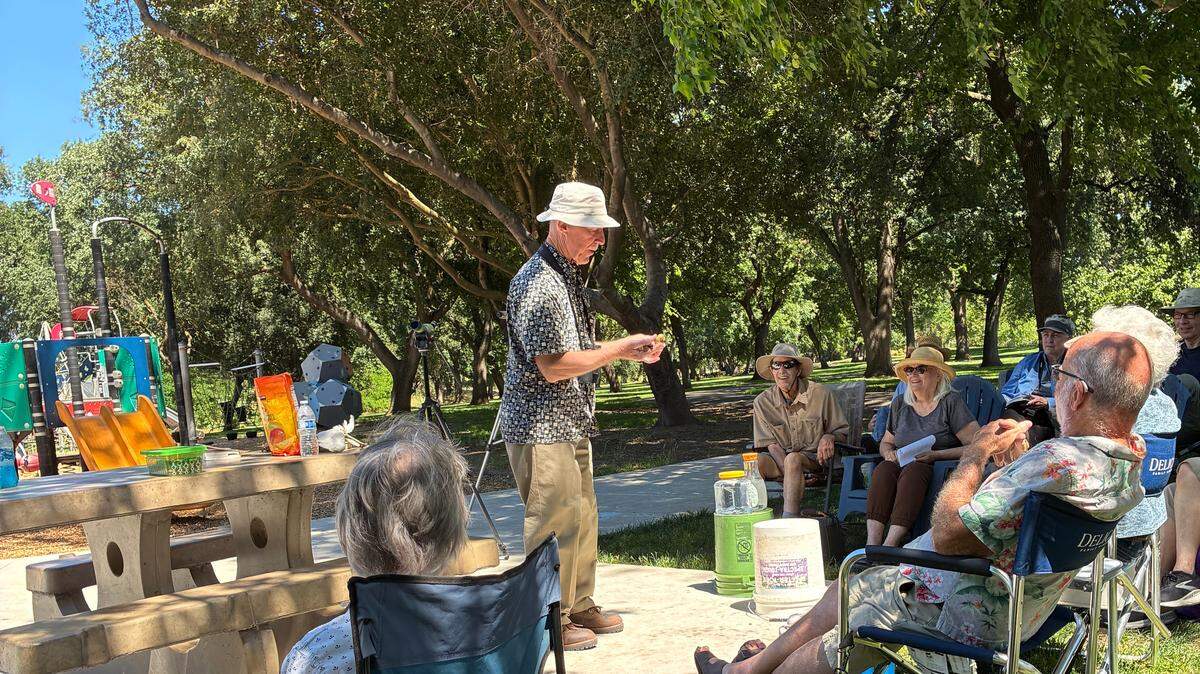
It was a beautiful day Friday at Tuolumne River Regional Park. Members of Urban Forestry Modesto, the Sierra Club and the Stanislaus Audubon Society gathered to discuss the local ecosystem and how to create sustainable habitats along the Tuolumne River in Modesto. Speakers noted that park improvements to appeal to humans may come at the expense of local wildlife.
Andrew Carmichael, a resident of Modesto and member of Urban Forestry Modesto for the past year, said he joined after his mother, who is in the Modesto Garden Club, suggested the outing.
“If you want to see native plants, this is one of the few places to go,” Carmichael said. “That’s a bit of a shame, but I mean, it makes sense. Really large valley oaks don’t always fit on normal parcel sizes.”
A light breeze played through the native trees in the park adjacent to the Modesto Airport. Around 20 people chitchatted about environmental issues and local development while sitting in fold-out chairs and eating packed lunches in the shade of a valley oak.
Intermittently, there would be a stop in conversation, a call to identify a bird that swept down from the trees – a wren, a robin, or maybe a thrush.
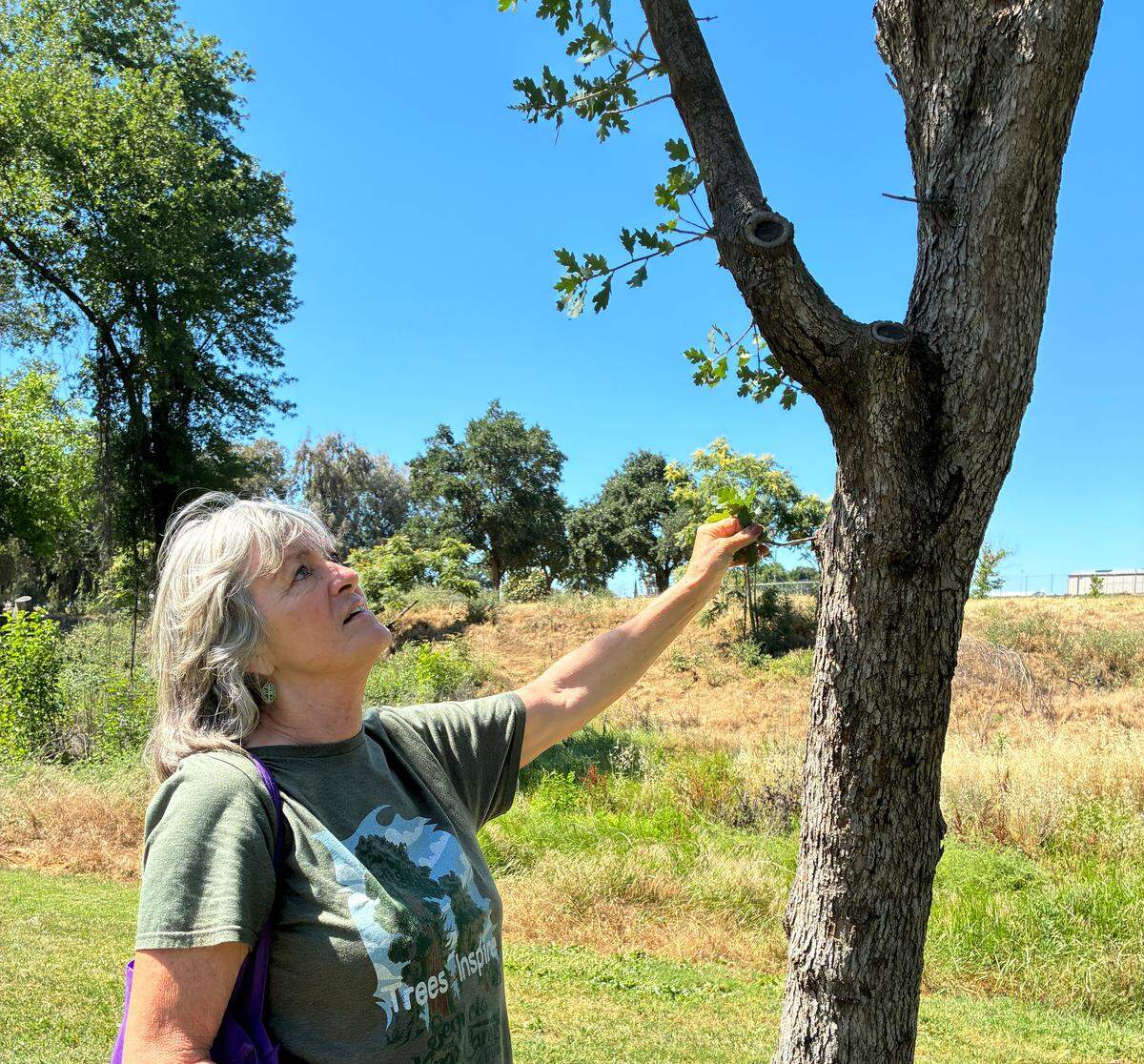
Rhonda Allen, of the California Native Plant Society, started off the presentations. She described the different types of oak trees in the park – canyon live oaks, coast live oaks, valley oaks and blue oaks – passing branches around the group as she explained leaf characteristics.
Oaks are considered a keystone species, responsible for creating the habitat for thousands of birds, animals and insects.
Dean Richardson, chair of Urban Forestry Modesto, said the large oak trees are what attract him to the park. “The oak trees are 200 years old, maybe more. Those things have survived and been here longer than any of us.”
Bugs needed to bring birds
John Fulton, a member of the Stanislaus Audubon Society, spoke on how crucial insects are to attracting birds to the park.
“It’s amazing with all these trees, how few insects there are,” Fulton said.
He explained that oak apples, bulbous papery balls that fall from the oak trees, are produced in response to a chemical released by insects that native woodpeckers feast on.
Along with diminishing insect population, Fulton said there is another break in the ecosystem that contributes to the lack of native birds: trees not being allowed to reach their full life cycle. When a tree dies, it becomes a hollow place for birds like woodpeckers and nuthatches. Bolder trees often are removed as they pose safety risks for people walking underneath.
“We’re losing the links between the trees and the birds,” Fulton said.
After the presentations, Richardson invited attendees to take a walk to see the new native plant garden and to walk in the oak grove on the east end of the park, which is a habitat for local gray foxes.
Irrigation for grass not good for tree
Allen identified a canyon live oak and said she was worried about it because leaves toward the bottom of the canopy had turned yellow. She said the tree is drought tolerant and the irrigation for the grass has impacted the tree.
“Some of them, the grass is right up to the trunk, it’s not good,” she said.
Allen said she’s advocated to the city to create a distance between the grass and the trees to prevent them from getting root-rot and dying, but hasn’t had much support.
“There’s still sort of a fascination with all the green, perfectly mowed lawn that doesn’t vibe with the water regimen for the trees,” Carmichael said.
Allen also pointed out invasive species cropping up along the riverbank, like tobacco trees, eucalyptus and white mulberry trees.
Michael Hart, a California Department of Fish and Wildlife volunteer who frequents the park, said there used to be native mugwort in the park, but the city used pesticides that killed it off.
In the absence of intervention by the city, some members of the group have taken the health of the park into their own hands.
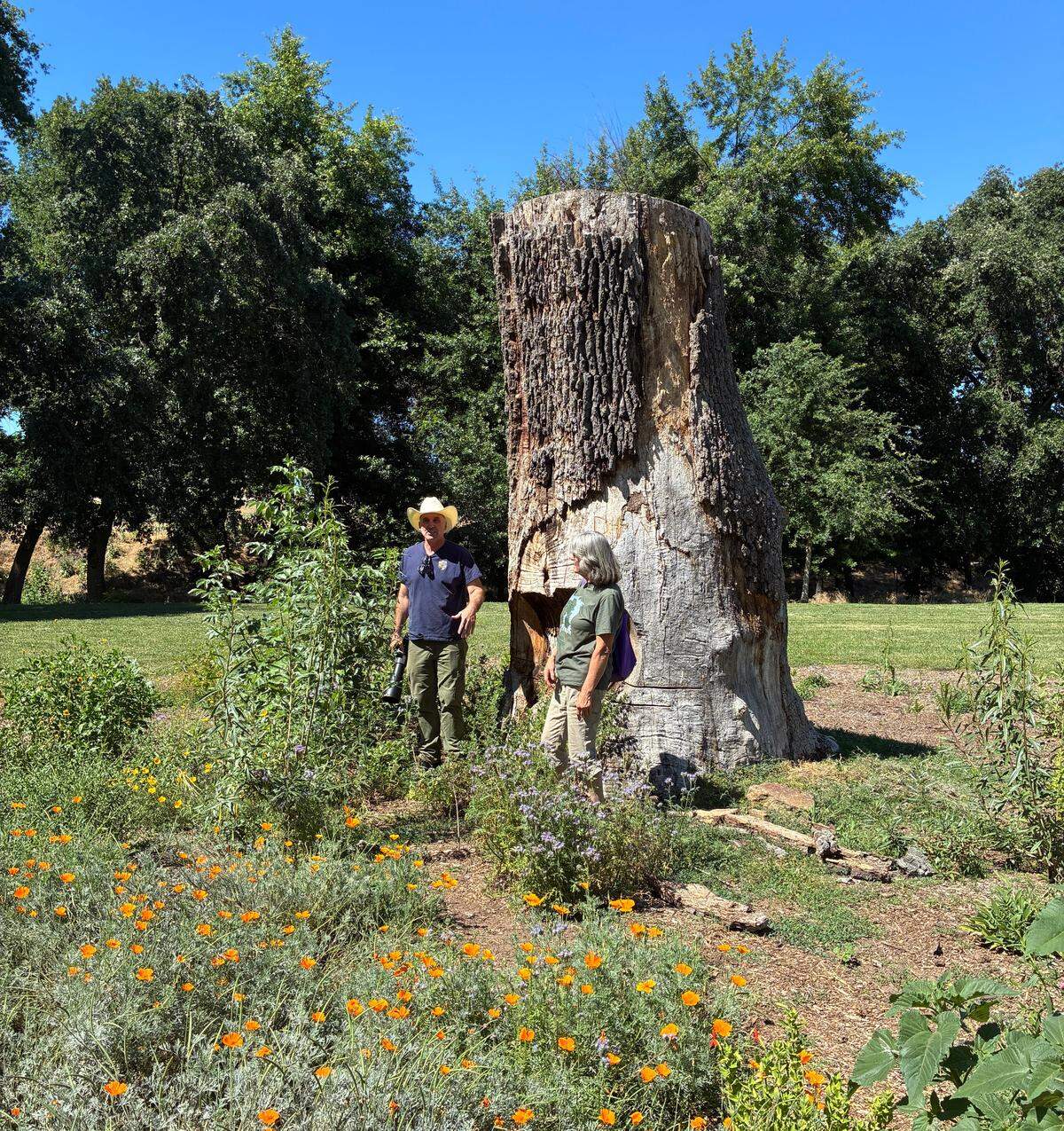
Allen created a native plant garden situated around a historic oak trunk estimated to be around 250 years old. The city tried to remove the tree in 2018, but was unsuccessful since the cavity had been filled with concrete to presumably prolong its life. Now it sits in the middle of the garden surrounded by poppies, sunflowers, elderberry and buttonwillows.
“Look at all the butterflies,” she said. “They like our garden.”
She periodically comes in and weeds the garden herself to stave off invasive plants that come with the planted bermuda grass that surrounds the garden.
The garden was created to house riparian native plants and bring back some of the insects that would normally be in the park.
“This was planted this fall, and it does need some tender loving care for the weeds, but it’s really thriving,” she said.
This story was originally published May 11, 2026 at 5:57 PM.