
Stanislaus County doesn’t have a pass/fail system for health inspections. Why?
It’s been two years since The Modesto Bee relaunched its weekly roundup of Stanislaus County food facility inspections. In that time, our submission form has gathered many questions regarding how the inspections work.
Here are answers to six of the most commonly asked ones.
What qualifies as a food facility?
A food facility is an operation that stores, prepares, packages, serves, vends or otherwise provides food for consumption to the public, according to the Los Angeles Department of Public Health website.
Other than restaurants, examples of food facilities include grocery stores, gas stations, liquor stores, retail stores that sell packaged snacks and drinks, food trucks and trailers, senior living facilities, county jails and juvenile detention centers, home-based businesses with a permit to sell indirectly, school cafeterias and commissary kitchens.
Are all 2,400 facilities in Stanislaus County really inspected twice per year?
At one point, the Stanislaus County Department of Environmental Resources website said the majority of the 2,400 permitted food service establishments in the county receive two unannounced routine food safety inspections per year.
Now, it says, “the majority of the 2400 permitted food service establishments in Stanislaus County receive unannounced routine food safety inspections each year.” The website no longer states each facility is inspected twice per year, nor does it specify how many times they are inspected.
The Modesto Bee was sent 2,504 inspection reports from the department in 2025. Included in this number are inspections conducted after construction work, reinspections conducted after the department found violations, new restaurant opening inspections and inspections conducted for change in ownership.
There is no telling the exact number of food facilities that exist in Stanislaus County or how often they are inspected, but saying they are inspected at least once per year seems to be more accurate than saying they are inspected twice per year.
Will the Stanislaus County food inspections website be updated?
The first time The Bee conducted an investigation of the county’s inspection reporting system, it highlighted persistent public access issues including the website not being up to date and the lack of an option to search inspections by most recent.
In March 2024, DER director Robert Kostlivy told The Bee the department’s website was “in the process of revamping the entire online inspection report portal to provide an easier customer interface.” The estimated timeline for the upgrade was by the end of 2024.
Nearly two years since that statement, on Wednesday, Feb, 18, Kostlivy said that “county IT staff are still working on upgrades.”
Why isn’t there a pass/fail or grading system for inspections in Stanislaus County?
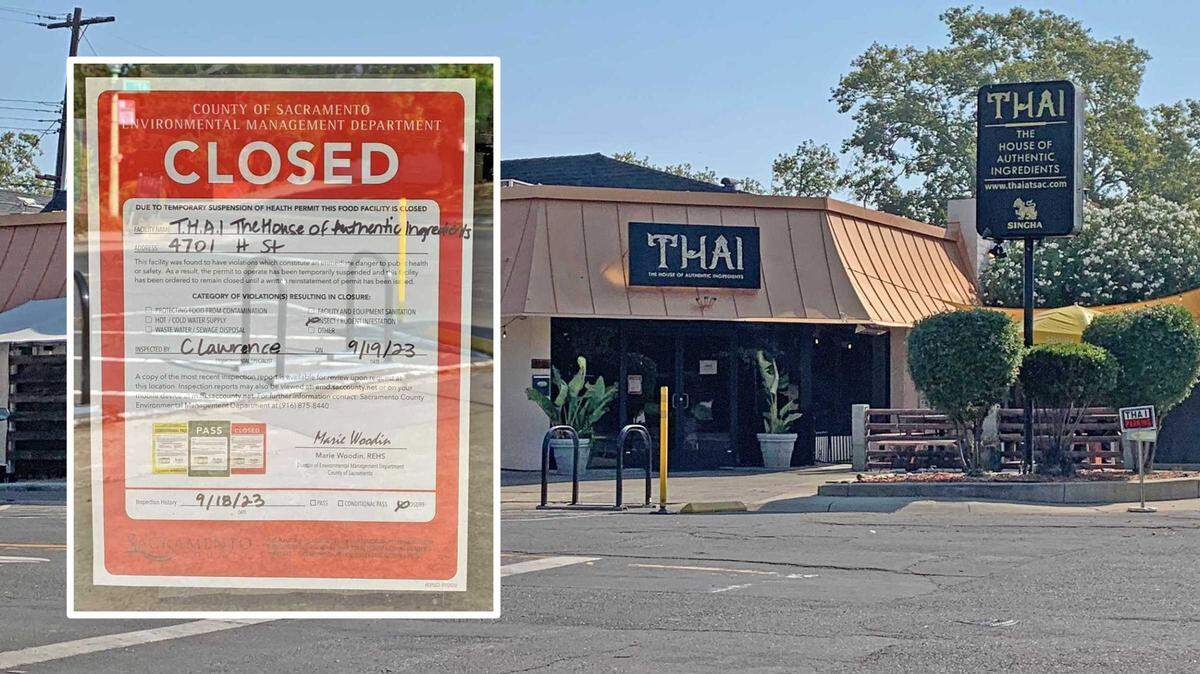
In Sacramento County, a color-coded placard program is in place. It requires food facilities to post colored placards indicating whether they have passed, conditionally passed or failed inspection.
The Los Angeles County and Merced County environmental health departments are two other agencies with a grading system in place.
Stanislaus County does not have a pass/fail or grading system. “It has been considered and is not a viable option at this time,” Kostlivy said.
What are the fines associated with having to reinspect a food facility?
While there is no pass/fail system in Stanislaus County, some food facilities are reinspected to check whether violations have been corrected. It is unclear whether reinspections are required by DER or if facilities request them in order to be able to show a clean bill of health.
There is no charge for the first reinspection, Kostlivy said. “If we are required to come back to conduct a third inspection, then we charge our hourly rate ($137),” he said.
What classifies a violation as “major?”
Sometimes, violations noted in inspection reports are marked as “major.” This means the violation causes an immediate risk of foodborne illness such as contamination, improper cooking, poor hygiene or inadequate temperature regulation, Kostlivy said.
.jpg)