
Celebration of life to be held Friday for former Modesto NAACP president
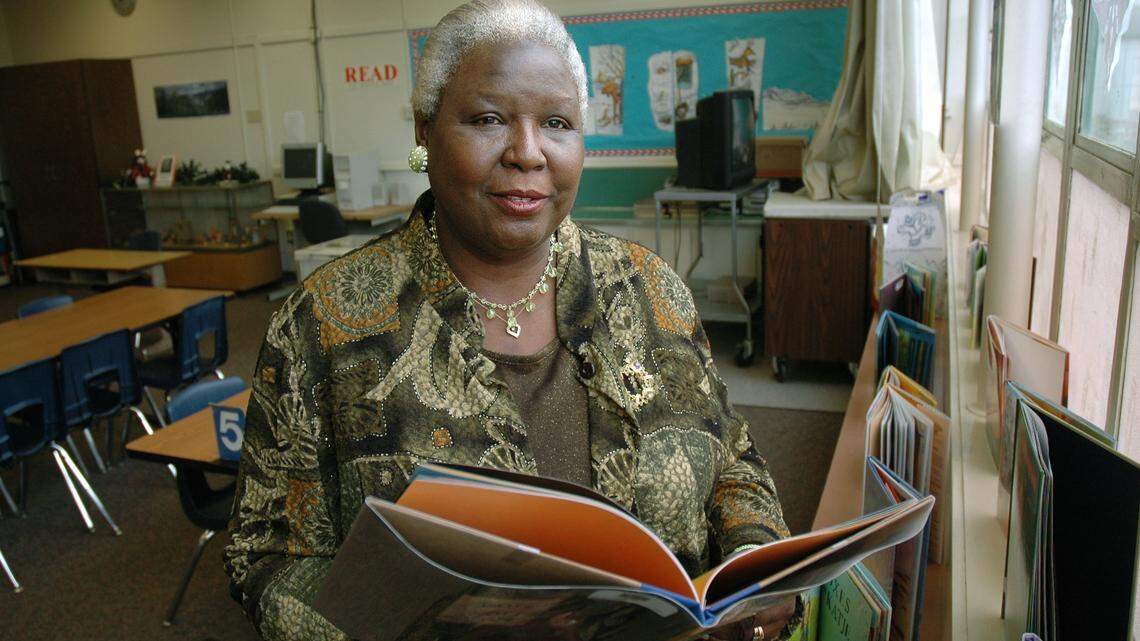
A celebration of life service will be held Friday for Gladys Williams, former president and gold lifetime member of the Modesto-Stanislaus Chapter of the National Association for the Advancement of Colored People.
The service will be held at the Revival Church in Modesto, 825 Seventh St., at 11 a.m.
Williams was born on Feb. 4, 1947. She died Nov. 27, 2025 — Thanksgiving Day — at the age of 78 at Memorial Medical Center after multiple health complications.
At a City Council meeting in November, Rachell LeVeige of the NAACP Religious Affairs Committee announced Williams’ death. “Ms. Williams has stood before the council numerous times over the past decades, fighting for equity, inclusion, our rights,” LeVeige said.
The Williams family created an NAACP Youth Membership Fund in her honor, dedicated to paying membership dues for any youth who wants to join the organization but cannot afford to pay.
“Gladys challenged systems, awakened consciences and expanded opportunities for generations yet unborn,” said current local NAACP chapter President Wendy Byrd.
From teaching to leading NAACP
Williams became a member of the NAACP as a child in Texas. She moved to California at age 17 to study at California State University, Fresno.
She began her teaching career in Visalia in the 1970s but left after one year because of the conditions in the school district, according to previous Bee reporting. In that community, she said she got her first taste of racism when she had trouble renting a room.
Her next job was teaching for Modesto City Schools, where she worked as an elementary school teacher for 35 years, plus 15 years as a retiree and part-time substitute. She was also a member of the Modesto Teachers Association, California Teachers Association and the Stanislaus Ethnic Minority Affairs Committee.
In 1998, Williams became president of the local NAACP chapter. At the time, she was also a first-grade teacher at John Muir Elementary School.
“People look at (the NAACP) as an organization for (Black) people. I look at it as an organization for people of all colors,” Williams told The Bee that year.
She said she wished to start a dialogue between all races and government leaders so the community can work together to bring change. Her priorities were improving the county’s unemployment rate and helping young people.
She added that she was interested in meeting the needs of people being forced off welfare, which she hoped to do by increasing the NAACP’s active membership, which was struggling at the time.
In total, Williams served as president for 10 years. During this time, she helped revise over 100 school policies toward reducing expulsion and suspension rates and disrupt the school-to-prison pipeline, particularly among Black students.
She advocated for “books instead of bars” and was a supporter of parent advocacy groups. She helped create the Dr. Parker Committee after data-based evidence showed that Black youth were being disproportionately impacted.
A legacy of civil rights
Williams started the “Not In Our Town” anti-hate campaign in Stanislaus County. She represented the NAACP in several “Say No To Hate Crime Rallies” in the early 2000s following the 9/11 terrorist attacks. She also served on a Resolutions Committee to successfully get a Congressional apology for slavery.
In a Modesto View feature from January 2025, Williams revealed she encountered racism when she tried to buy her first home in Modesto.
In the 1970s, a play at Modesto High School used white people to represent Black people through blackface. Odessa Johnson, the first Black teacher at Modesto High, went to file a complaint with the NAACP only to find that there was no longer a local branch.
“At that point, we began to meet in homes and started a Modesto/Stanislaus NAACP, branch 1048. That was an important turning point for our Black community,” Williams said in the Modesto View article. “As a result, we have been able to address the civil and human rights issues of Stanislaus County.”
The local branch was established in 1975.
Williams said she believed institutional racism to be the most important issue still facing the community in Modesto and that the only way to make change is to start talking and taking action.
In her advice to the young people of the community, Williams said the only way to make a difference is to get involved.
“Don’t let older people tell you that you can’t lead. If you never lead, you will never learn to lead. You are our future and we need to support you in becoming our leaders,” Williams said.
Williams said that she hoped her legacy will continue to exist through “Not In Our Town” and in the school communities.
“Most of all I hope to be remembered as a civil rights leader and a fighter for human rights,” Williams said.
This story was originally published February 18, 2026 at 3:52 PM.
