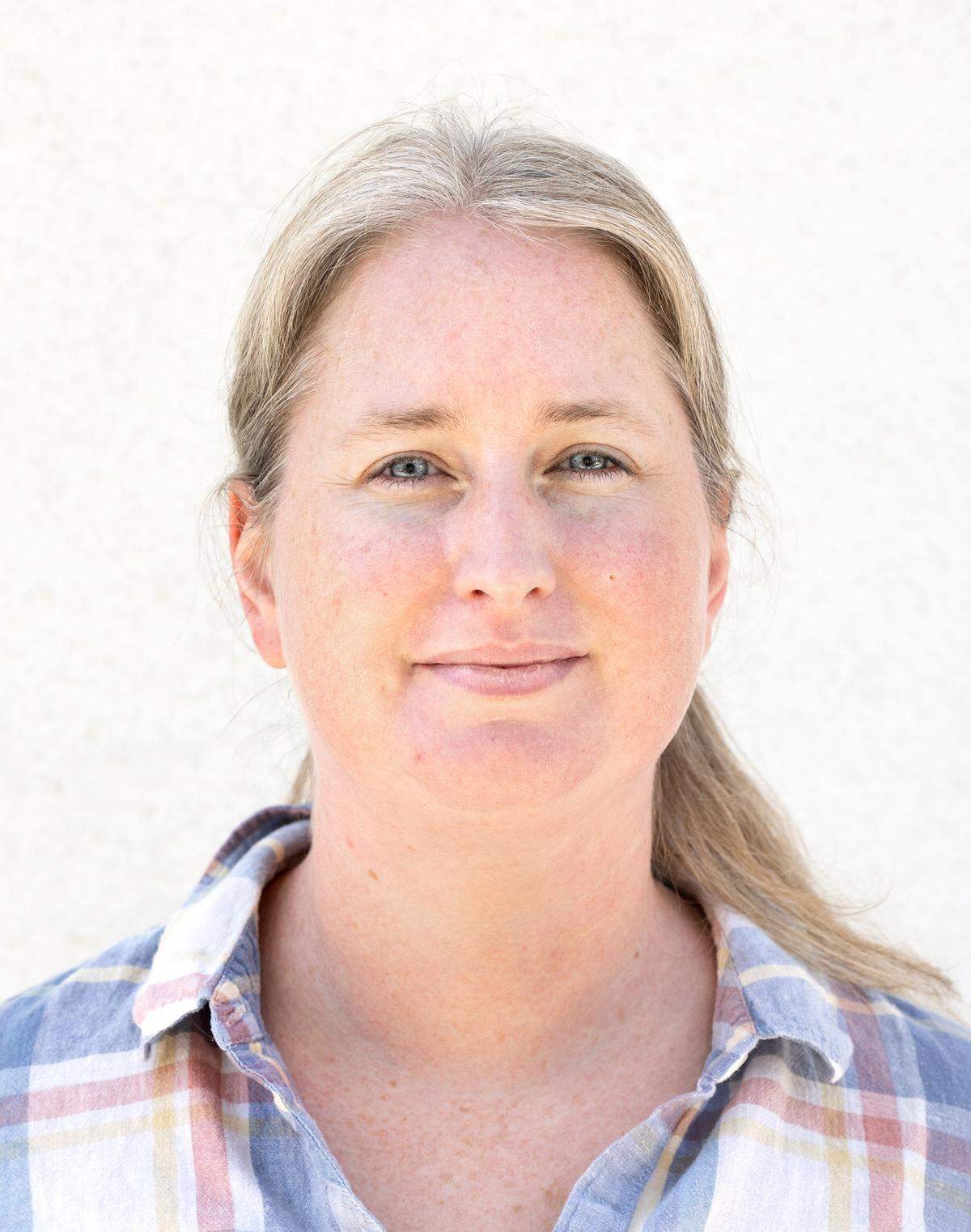
How a Modesto nonprofit helps blind and low-vision residents secure independence
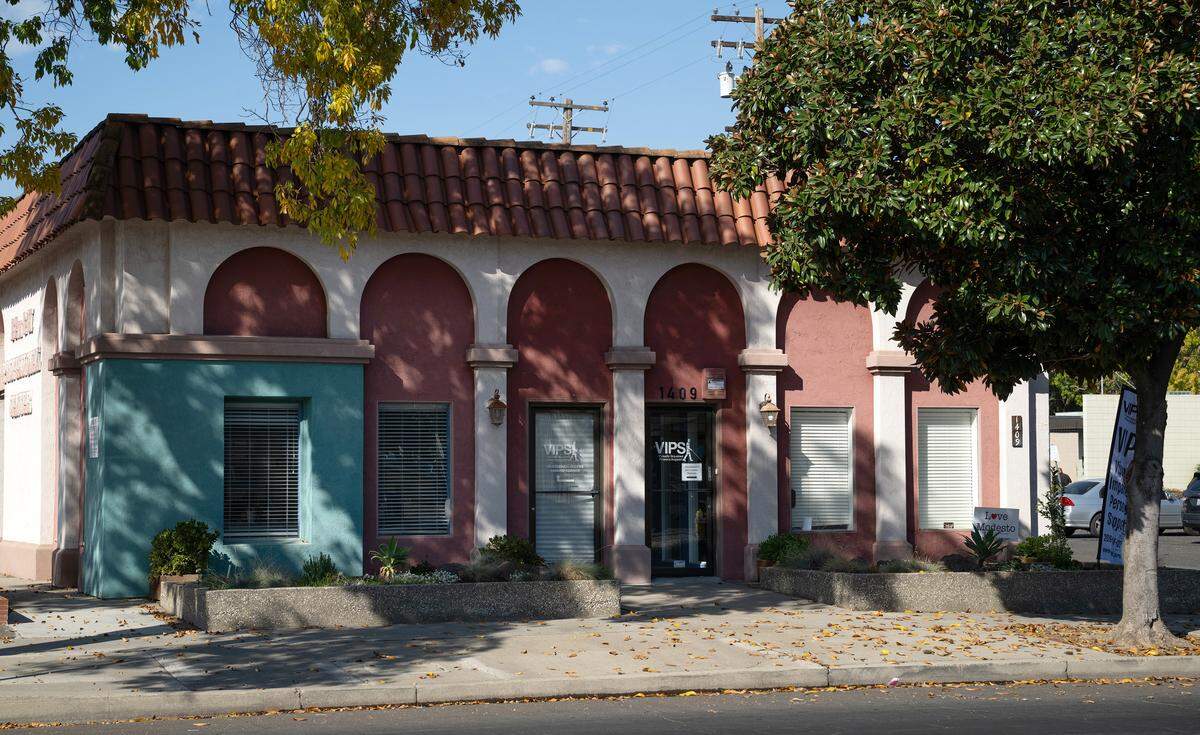
In an H Street office in downtown Modesto, a local nonprofit champions independence for residents of Stanislaus and Tuolumne counties who are blind or have low vision.
Isaiah Siordia, executive director of Visually Impaired Persons Support, said its programs help clients navigate their lives as independently as possible.
“We teach independent-living skills to our clients that are blind or visually impaired, and that’s a range of cooking, cleaning, daily living skills, personal hygiene — it could be filing documents to [taking part in] recreational activities or connecting to community resources,” Siordia said.
Many of the staff, including Siordia, have low vision or are blind themselves.
Though the nonprofit is over 20 years old, its new office on H street opened just two years ago. There, clients get set up with assistive technologies and training on how to use them, tailored to their specific needs.
“It’s especially imperative if you have had rapid deterioration of your vision, because now your home can be an unfamiliar environment and you lose the ability to navigate it, since you’ve lost one major sense,” Siordia said.
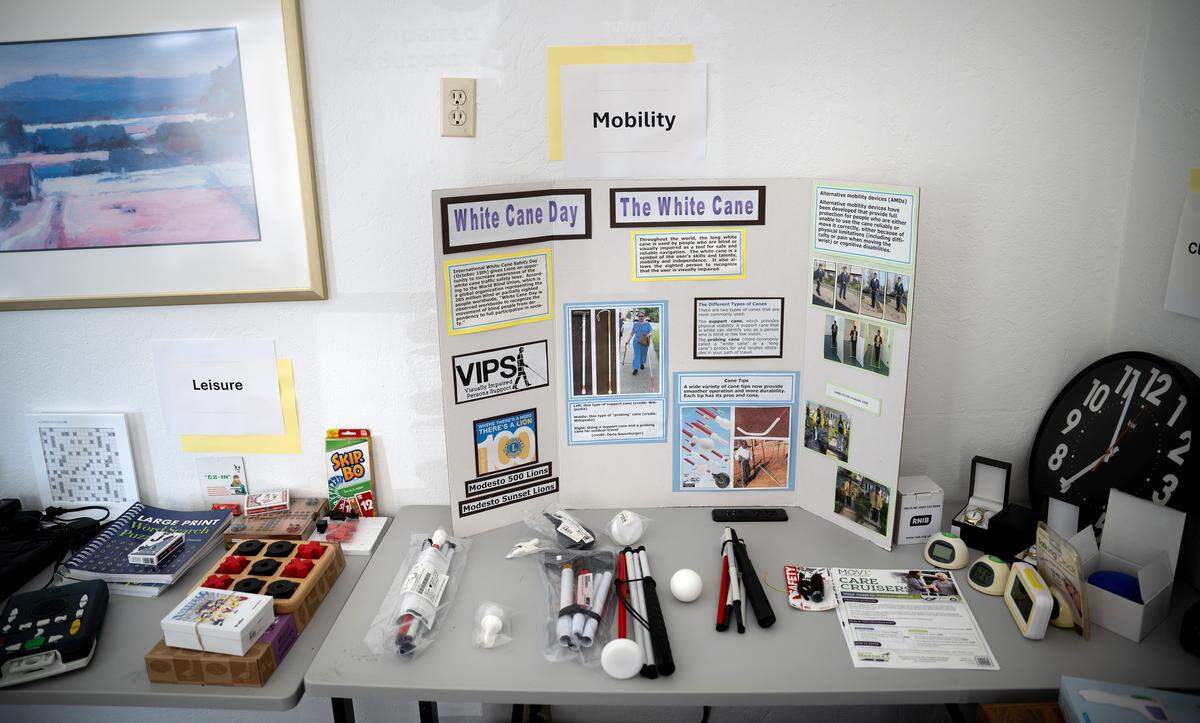
He trailed the back of his hand along the wall to show how clients learn to get around their home as part of orientation and mobility training. In some larger houses, he said, clients will use a white cane to figure out where things are.
Support helped man earn high school diploma
Patrick Spangler, 34, is a musician who plays guitar, harmonica and drums. He recently earned his high school diploma and will start classes at Modesto Junior College in the spring, studying chemical dependency with the aim of becoming a drug counselor. .
“I had two classes left and hadn’t been able to finish them,” Spangler said about finishing high school. “Then by going through VIPs, I was able to.” Spangler said.
Before this, Spangler said, he relied on other people for assistance including transportation, which put a hamper on where he could go and what he could do.
“Before, I wouldn’t get on the bus, I wouldn’t even think about it — so transportation has changed,” Spangler said.
One of the biggest differences before and after connecting with VIPs is now he can count his own money. “I have what’s called bill readers, so you take the corner of the dollar bill of whatever size and it tells you what currency it is,” Spangler said.
He also has an app on his phone that reads pill bottles and labels on his mail, which has been helpful to protect privacy.
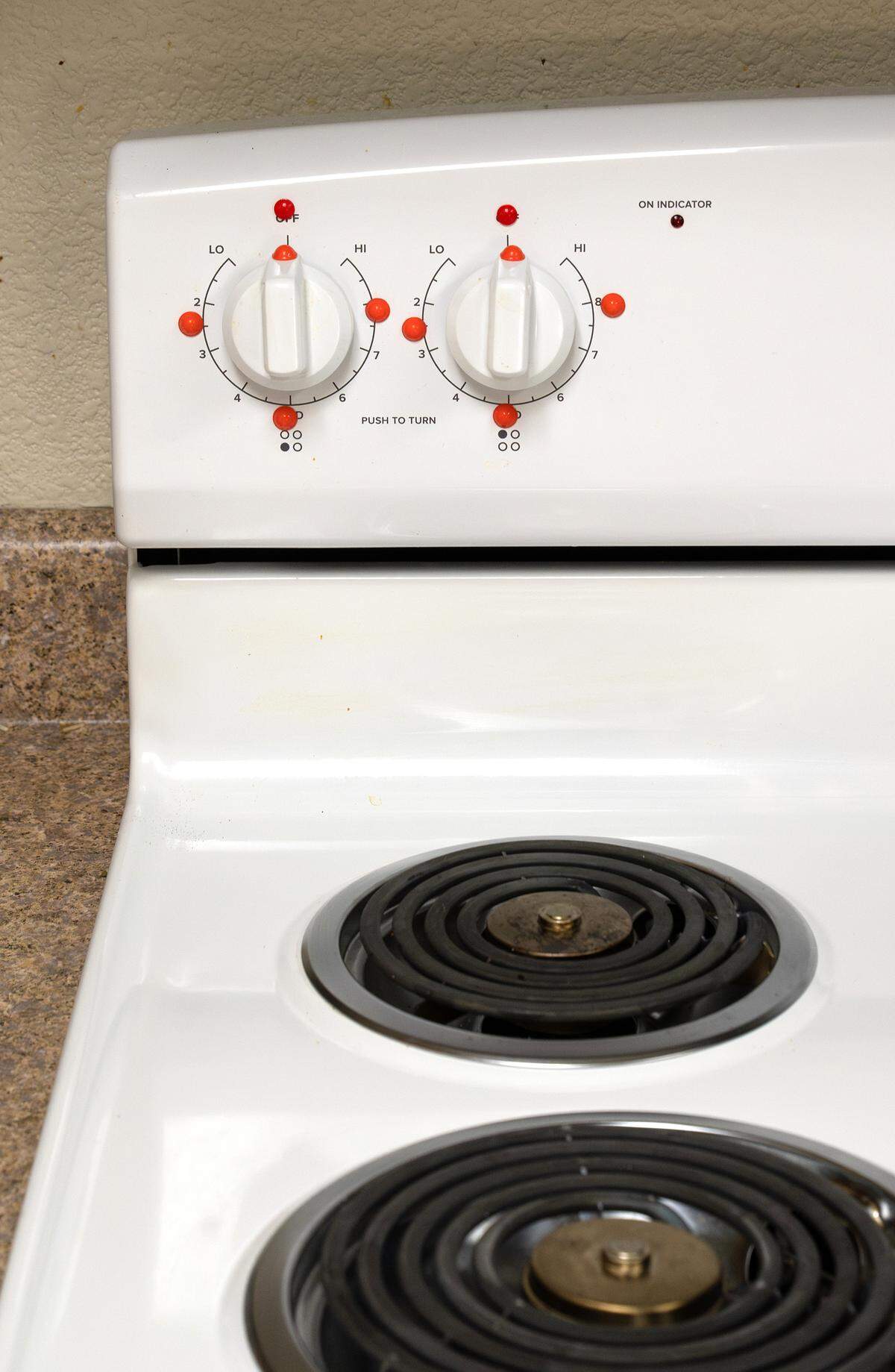
In the break room at VIPS, Siordia demonstrated a talking microwave oven that uses touch and sound cues to operate.
The majority of VIPS’ clients are 55 and older, and most of their needs are age-related. The organization also had 15 younger clients, 18 to 54 years old, and around 35 clients enrolled in its Department of Rehabilitation program, which covers job seekers 16 and older.
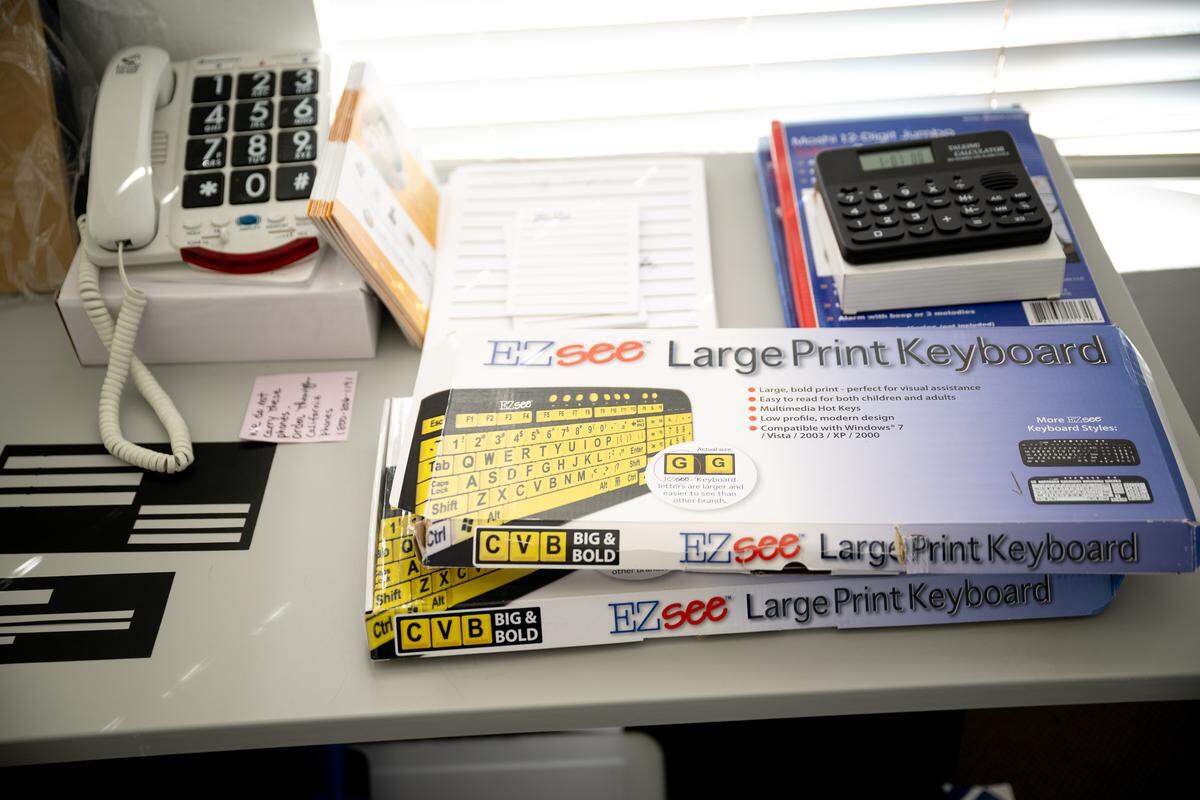
One room at VIPS is full of assistive tech, including large-button telephones, magnifiers, voice recorded labels and even glass discs that make a sound when water boils.
Additionally, VIPS helps set up apps and accessibility settings on clients’ smart phones.
A quick walk from their main office on 14th Street is VIPS’ original office. In the back of the building is a practical kitchen where clients can practice cooking and doing laundry.
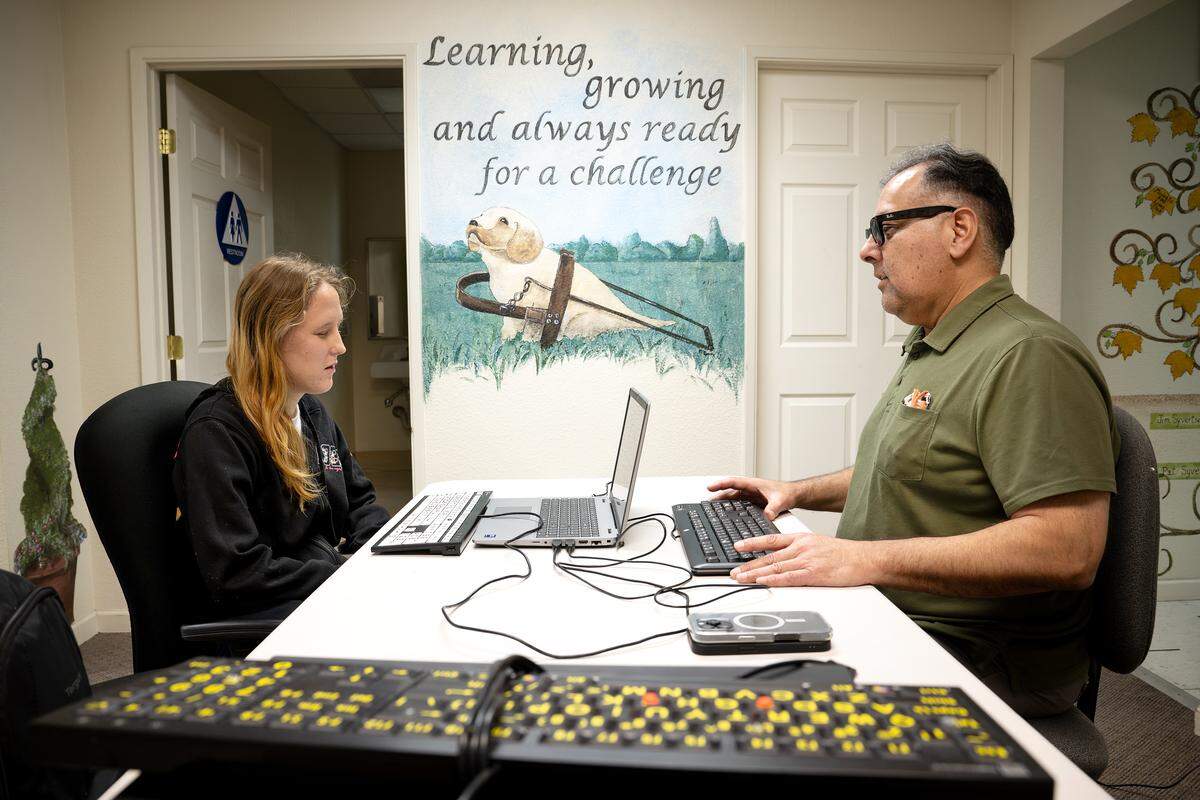
In the middle of the building, Mauricio Molina, the assistive technology instructor for VIPs, sat with his client Zowie Mason. He navigated a mental map of Mason’s screen and controlled her computer using a keyboard, teaching her how to operate a screen reader.
Mason, 24, is a Modesto native who lives with her two kids and attends University of Phoenix.
Molina is “absolutely hilarious, and honestly, he’s just amazing at what he does,” Mason said. “It just blows my mind the capabilities he has and what he’s able to teach. I really admire him for that. He’s taught me a lot.”
She started with VIPS a little over a year ago, using screen readers, magnifiers and tools that help her cook.
Training has woman exploring career options
Nevaeh Ross Burton, 21, moved to Modesto from Atwater a few years ago. Since then, she’s been training with VIPs and now attends Modesto Junior College. She’s considering whether she wants a career as a lawyer or a braille instructor.
“Right now, I am taking cooking training. I do it with Linda [Cervantes], she’s a really good instructor,” Burton said. “I take computer training with Mauricio, he’s a really good teacher as well. Without Mauricio, I’d be struggling in college.”
On top of the practical training, VIPS hosts support groups for the areas of Hughson, Turlock and Sonora, as well as a women’s support group that meets once a month.
Mason is a member of the support group for visually impaired women, which is run by Linda Cervantes, the center’s independent living instructor. The women meet once a month on Thursdays, bring snacks or do crafts and talk about subjects like self-care or the differences or similarities in their vision loss.
“I absolutely love it, I kind of help run it now, which is very, very fun,” Mason said.
Spangler said the friends he’s made are one of the bigger benefits of the program. “One of the other students graduated with me because she saw that I did it, she heard it was possible, so she went back and graduated as well,” Spangler said.
Siordia, who has had visual impairment his whole life, said the thing he likes most about his job is that he can help people. “I’m fortunate that I have that opportunity,” he said. “Not everyone gets the opportunity to help out in their line of work, but I’m very happy I get that opportunity.”
This story was originally published November 17, 2025 at 5:00 AM.